
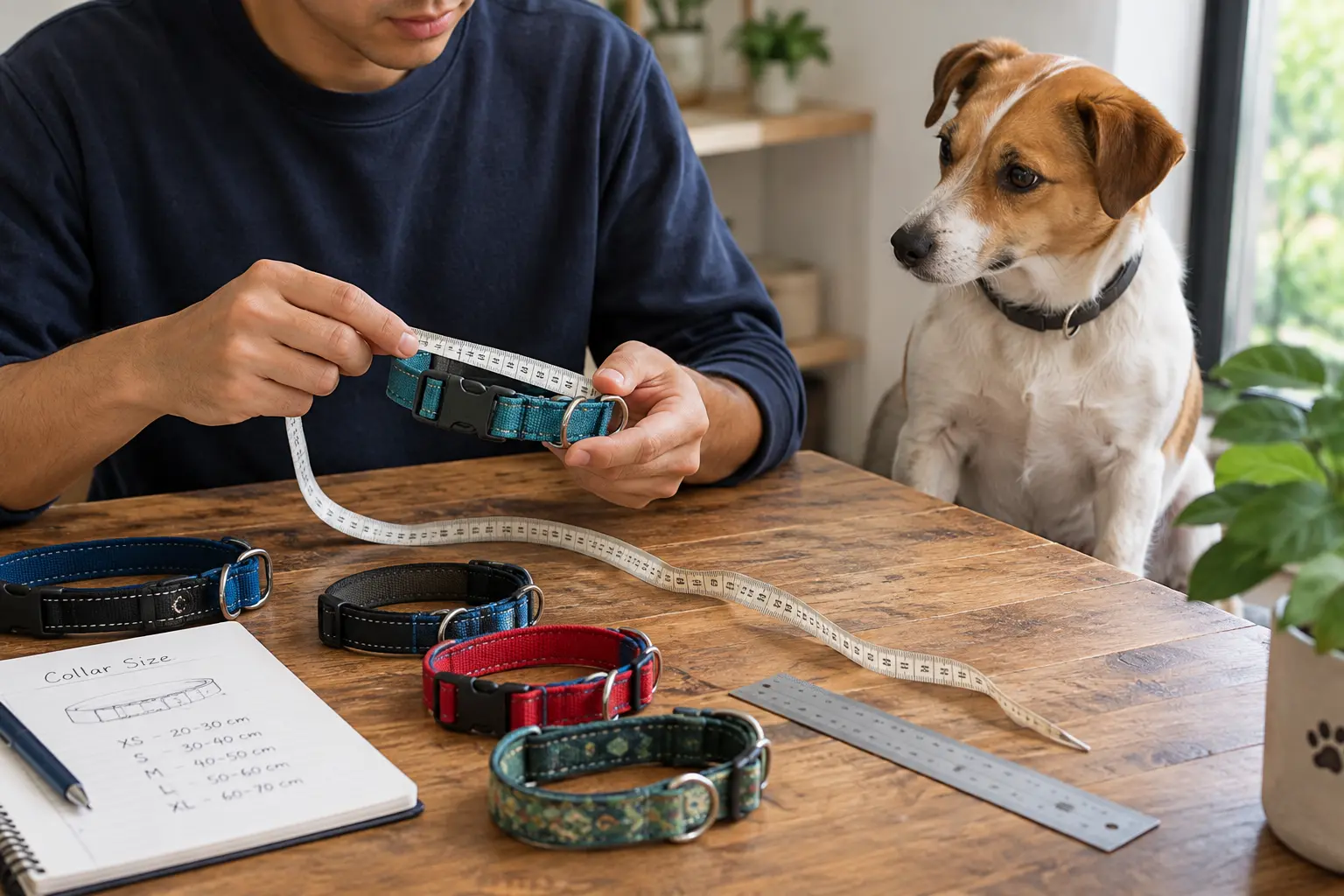
How to Measure a Dog Collar [The 2-Finger Rule]
Getting how to measure a dog collar right comes down to one accurate neck measurement and the two-finger rule. A collar that’s too loose can slip over your dog’s head, while one that’s too tight rubs and chafes.
Measure the Neck, Not the Head or Shoulders
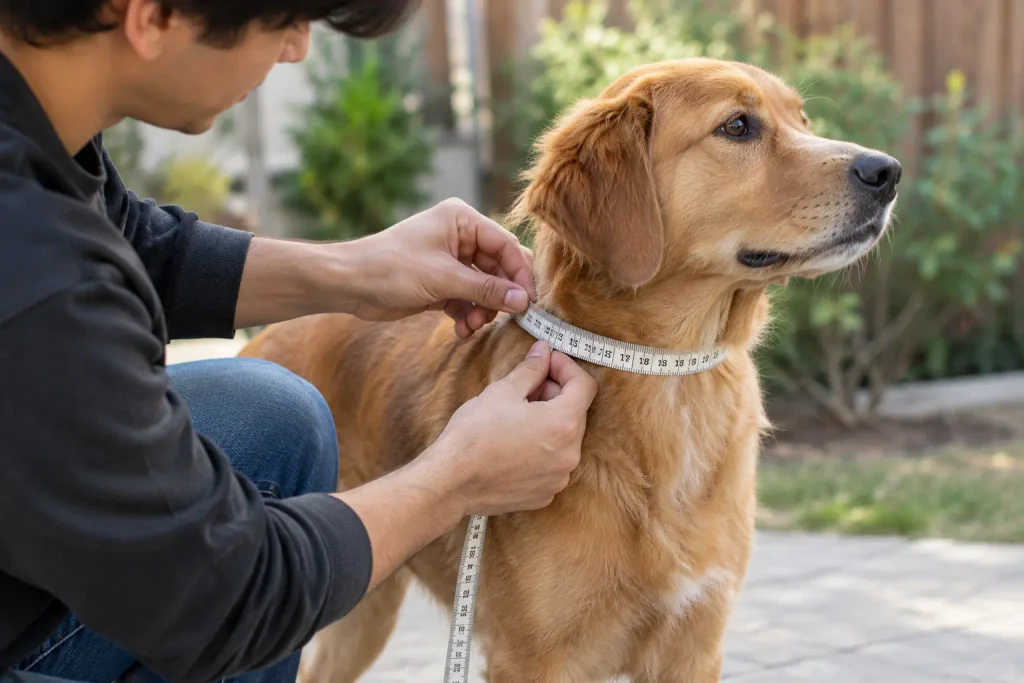
Wrap a soft fabric tape measure around your dog’s neck where the collar will actually sit, a couple of inches below the jawline, not near the ears or down at the shoulders. No tape measure? A piece of string works just as well. Wrap it snugly, mark where it overlaps, then lay it against a ruler for the number in inches.
Keep the tape snug against the skin without pulling or digging in. This is a raw measurement, not the finished fit. The room for comfort gets added next.
Apply the Two-Finger Rule Before You Buy
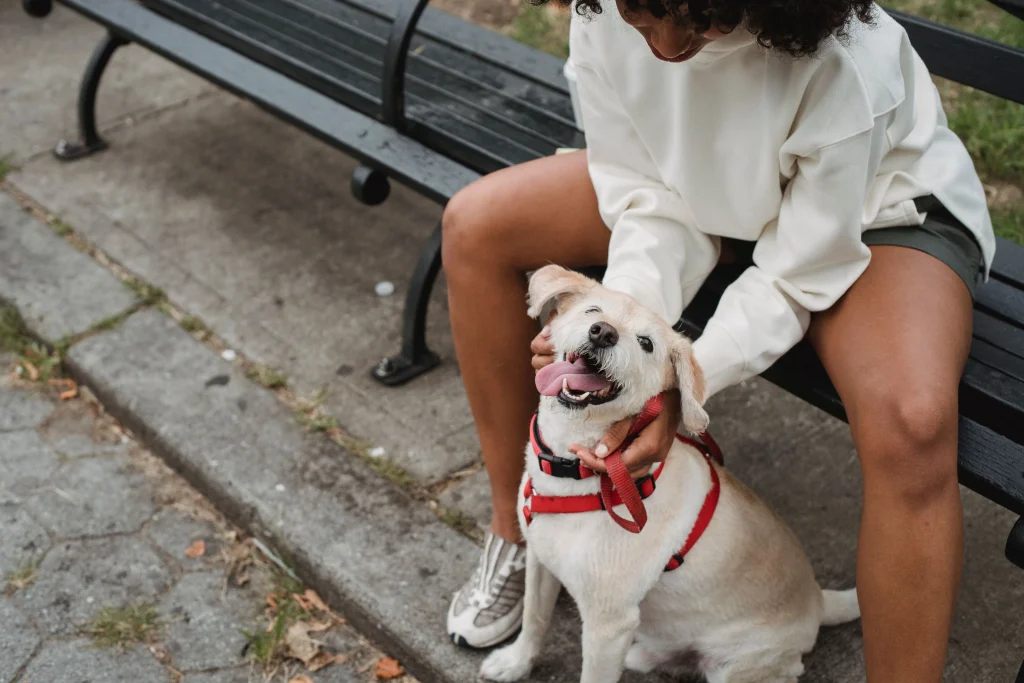
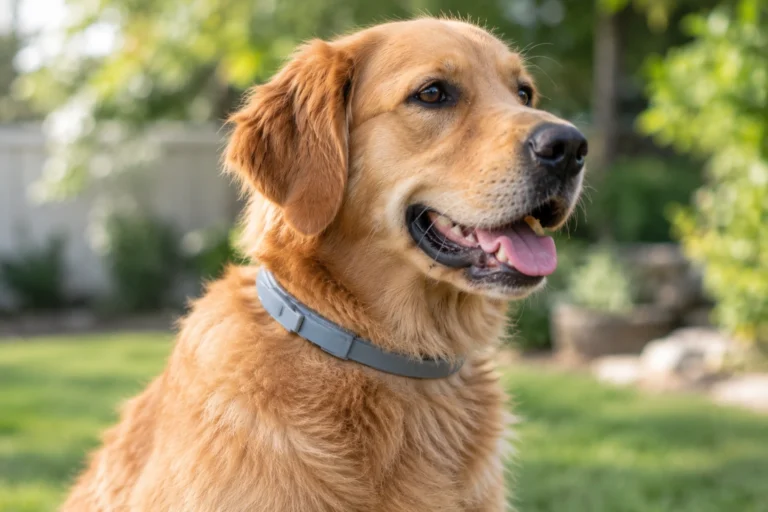
Once you have the neck measurement, the collar should be sized so you can fit two flat fingers between the collar and your dog’s neck once buckled. More than two fingers, and it’s too loose, risking a slip over the head. Zero fingers means it’s too tight.
No Tape Measure? Use What’s Already in the House
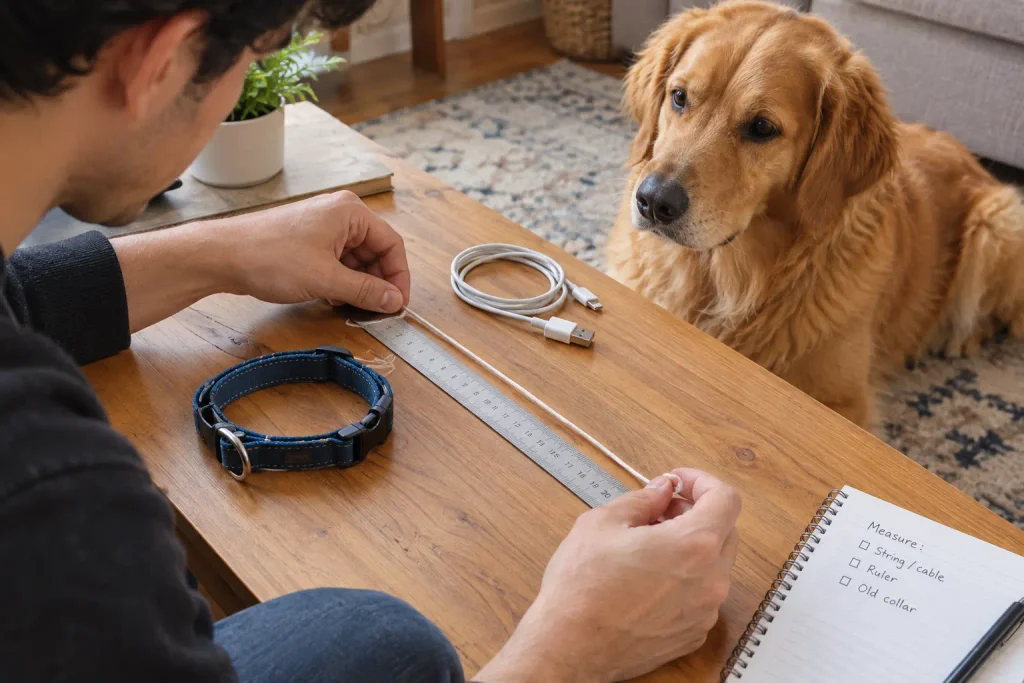
● An existing collar. Lay it flat and measure from the buckle to the hole you actually use, not end to end. Measuring end-to-end is one of the most common sizing mistakes.
● A phone charging cable. Wrap it gently around the neck, pinch the overlap point, then measure that length against a ruler.
Reading the Size Chart Without Guessing
Most collars list a range, like “14 to 20 inches. Land your dog’s measurement near the middle of that range rather than at the edge, which leaves room to adjust in either direction.
Fully grown dog, measurement between two sizes? Choose the smaller size to avoid excess straps. Still growing? Choose the larger size so they grow into it.
Collar Width Isn’t Just a Style Choice
Small and toy breeds do best in 3/8 to 5/8 inch width, since anything wider adds unnecessary weight to a small neck. Medium dogs typically wear 3/4 to 1 inch. Large or giant breeds benefit from 1 to 1.75 inches, which spreads pulling force across more of the neck instead of concentrating it on a thin strip.
Martingale, Chain, and Prong Collars Size Differently
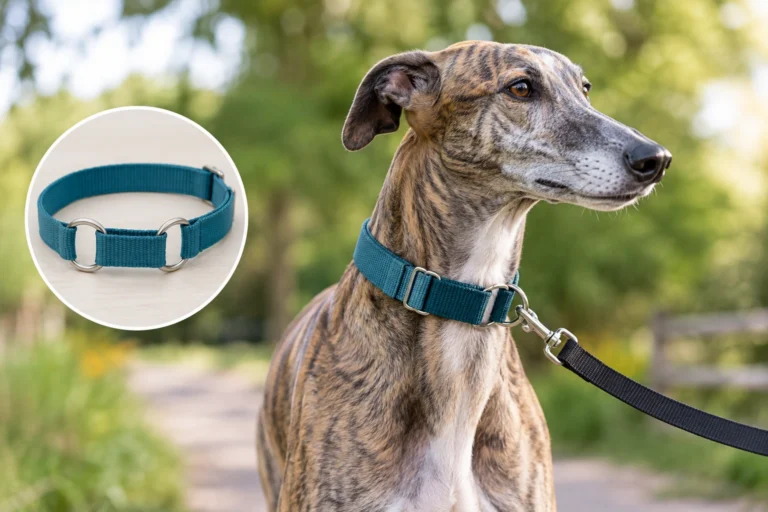
Martingale collars need extra care, since you check the fit at the tightened point, not the resting point. Measure the widest part of the skull to confirm it can’t slip over the head even when fully cinched. See our best martingale dog collar guide for picks.
Chain and prong collars typically need 2 to 4 inches added to the base neck measurement to account for the connector, so check the brand’s specific instructions rather than applying flat-collar rules.
Growing puppies should be re-measured every few weeks during the first year, since a properly fitted collar today can turn dangerously tight within a couple of months.
Mistakes That Ruin an Otherwise Correct Measurement
● Measuring an old collar end to end instead of the buckle to the hole actually used
● Ignoring a heavy coat, since a thick winter coat or a fresh summer cut can shift the effective measurement by an inch or more
● Buying by breed alone instead of the dog’s actual measurement, since individual dogs vary
● Skipping the two-finger check after buckling, even when the chart seemed to match
Collar Size by Rough Weight Class
| Dog size | Typical neck range | Typical width |
| Extra-small (Chihuahua, teacup breeds) | 8 to 11 in | 3/8 to 5/8 in |
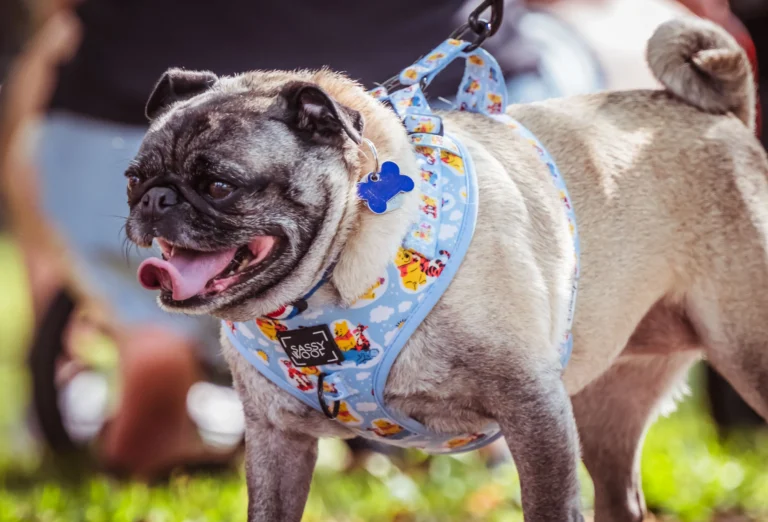
| Small (Pug, Beagle, French Bulldog) | 11 to 15 in | 5/8 to 1 in |
| Medium (Border Collie, Cocker Spaniel) | 14 to 20 in | 3/4 to 1 in |
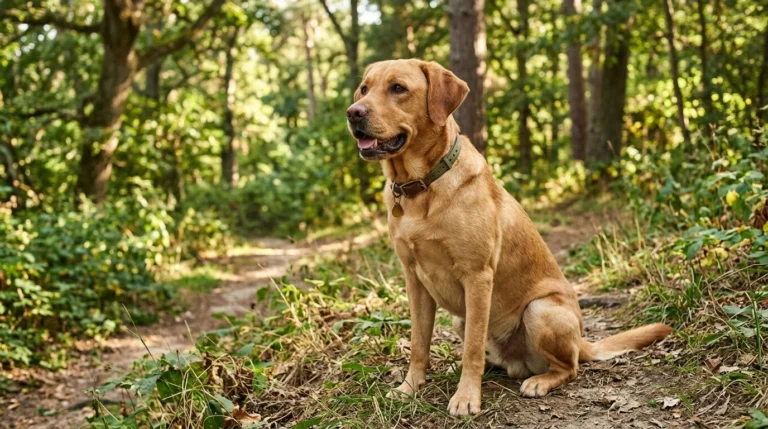
| Large (Labrador, German Shepherd) | 18 to 26 in | 1 to 1.5 in |
| Giant (Great Dane, Mastiff) | 22 to 30 in | 1.5 to 2 in |
For collar picks already sized to these ranges, see our best dog collar for large dogs and best collars for small dogs guides. If your dog pulls hard or has neck sensitivity, our harness vs. collar for dogs comparison covers when a harness makes more sense.
Conclusion
Sizing a dog collar correctly takes one accurate neck measurement, an honest two-finger check once buckled, and a size chosen near the middle of the product’s range rather than at the edge. Getting this right the first time saves a return shipment and keeps your dog comfortable and secure.
Frequently Asked Questions
Q: How do I measure my dog’s neck without a tape measure?
A: Use string wrapped snugly around the neck, then lay it flat against a ruler. A phone charging cable also works.
Q: How many fingers should fit under a dog collar?
A: Two flat fingers, once buckled. More means it’s too loose. None means it’s too tight.
Q: My dog’s measurement falls between two sizes. Which do I pick?
A: Smaller if fully grown, to avoid excess strap. Larger if still a growing puppy.
Q: How wide should my dog’s collar be?
A: 3/8 to 5/8 inch for small breeds, 3/4 to 1 inch for medium, and 1 to 1.75 inches for large or giant breeds.
Q: Do martingale or chain collars need extra sizing room?
A: Yes. Add 2 to 4 inches to the base neck measurement for the connector or chain assembly.
Q: How often should I re-measure my dog for a collar?
A: Every few weeks during a puppy’s first year, and after any noticeable weight change or coat shift in adults.
17 Comments