
Best Small Dog Harness [5 Picks That Actually Fit]
The best small dog harness is not a shrunken version of a large-dog harness. Small breeds have shorter backs, narrower chests, and far less body mass to cushion strap pressure, which means a strap that mildly annoys a Labrador can genuinely rub raw on a Chihuahua.
Below are five harnesses actually built around small-dog proportions, plus what to check before you buy.
Quick Comparison
Product | Best For | Style | Chest Range | Amazon |
|---|---|---|---|---|
Ruffwear Front Range | Overall pick | Dual-clip, foam-padded | From 13 in (XXS) | View on Amazon |
DJANGO Tahoe | Escape-prone dogs | Dual-clip neoprene, 4-point | Small and up | View on Amazon |
Voyager Step-In Air | Everyday ease | Step-in mesh vest | XS and up | View on Amazon |
Puppia Soft Harness | Sensitive skin | Over-the-head mesh | XS and up | View on Amazon |
Ruffwear Hi & Light | Active dogs, minimal bulk | Low-profile, dual clip | From 13 in (XXS) | View on Amazon |
Best Small Dog Harness
1. Ruffwear Front Range (Best Small Dog Harness Overall)
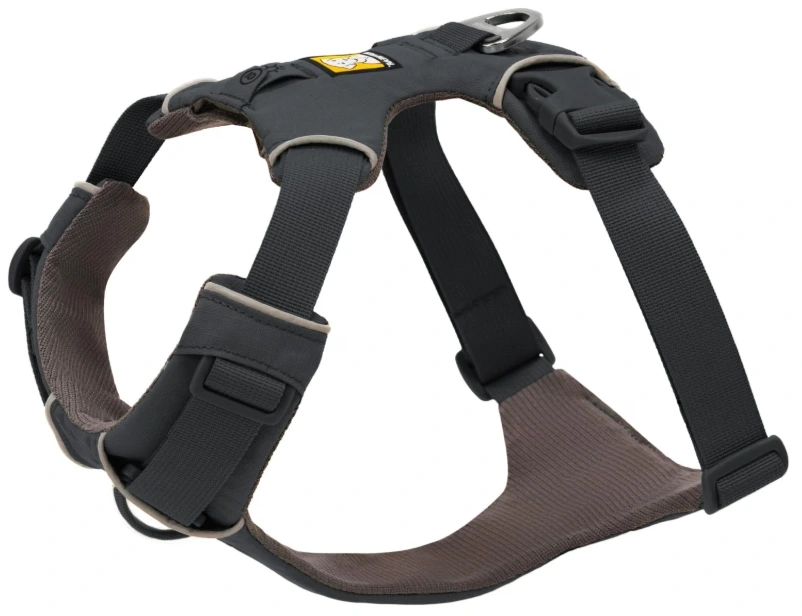

The reason this one tops most lists is its four points of adjustment, which matter far more on a small dog than a large one. Two dogs at the same weight can have completely different chest depths, and four adjusters let you actually dial that in instead of settling for close enough.
Foam padding runs through the chest and belly panels, and there are two leash clips: an aluminum V-ring on the back and a reinforced front clip for redirecting a puller.
| Pros | Cons |
|---|---|
| Four adjustment points allow a genuinely custom fit on odd-shaped small dogs. | Costs more than most small-dog harnesses |
| Dual clips cover both everyday walking and no-pull redirection with one harness. | Foam padding takes longer to dry after a wet walk. |
| Built-in ID pocket holds tags without the jingling that bothers sound-sensitive dogs. | Not designed for running, since the padding traps heat over distance |
Best for: owners who want one well-fitted harness that handles daily walks and light training.
2. DJANGO Tahoe (Best Escape-Proof Harness for Small Dogs)
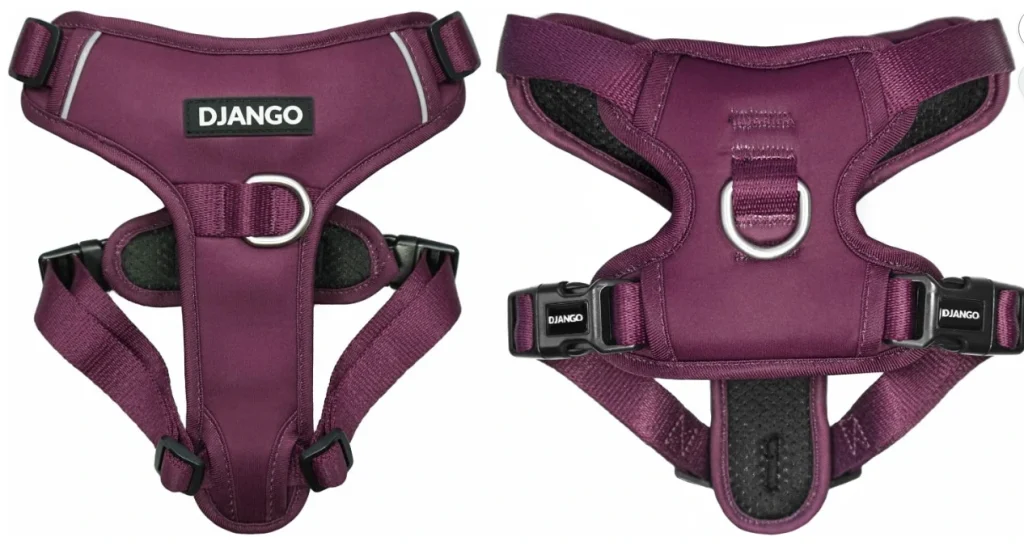
Small dogs, especially narrow-chested breeds like Jack Russells and Italian Greyhounds, are notorious for reversing out of a harness mid-walk. The Tahoe uses four adjustment points and a snug belly strap specifically to close that gap, and the weather-resistant neoprene body handles rain and mud without stiffening up.
| Pros | Cons |
|---|---|
| Four-point adjustment plus a secure belly strap makes backing out genuinely difficult. | Neoprene runs warmer than mesh in hot weather. |
| Weather-resistant neoprene holds up to rain and mud better than plain mesh. | Priced at the premium end for a small-dog harness |
| Two side-release buckles mean no stepping in and nothing over the head. | Sizing is strictly by chest girth, so guessing by breed leads to returns. |
Best for: small dogs with a history of slipping out and owners walking in wet weather.
3. Voyager Step-In Air (Best Step-In Harness for Small Dogs)
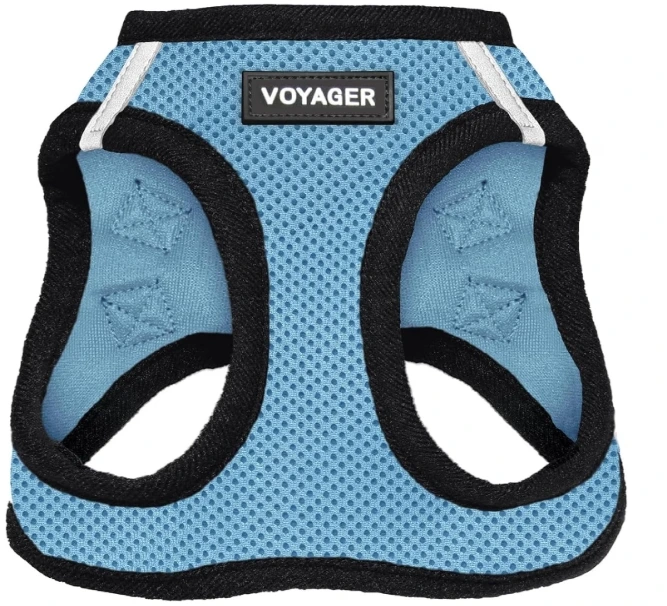
For dogs that object to anything going over their head, a step-in design removes the problem entirely. The dog places their front paws through two openings and the harness clips at the back. Breathable air mesh keeps small dogs cooler, and the design distributes leash tension across the whole vest rather than one strap.
| Pros | Cons |
|---|---|
| Step-in fit is noticeably faster and less stressful for head-shy dogs. | Single leash attachment, so no front-clip option for pullers |
| Air mesh construction stays cool and dries quickly after rain. | Hook-and-loop fasteners need occasional cleaning to hold their grip. |
| Two reflective bands add real visibility without extra bulk. | Not rated for strong pullers, even within the small-dog range |
Best for: everyday walks with a calm, small dog that dislikes over-the-head gear.
4. Puppia Soft Harness (Best for Sensitive Skin)
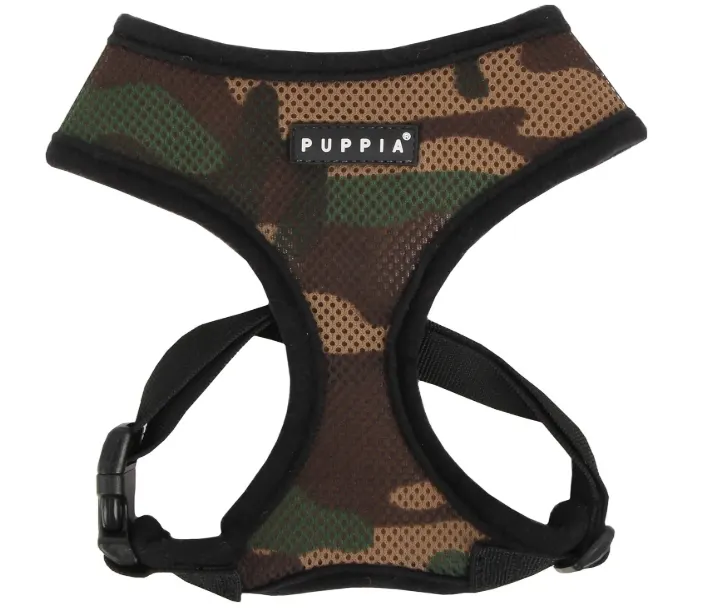
One of the longest-running small-dog harnesses on the market, the Puppia uses a triple-layered soft mesh that spreads pressure broadly across the chest. That wide contact area is what makes it a common recommendation for dogs with thin coats or skin that irritates easily.
| Pros | Cons |
|---|---|
| Triple-layered soft mesh is genuinely gentler on thin coats and sensitive skin. | Over-the-head design takes adjustment for head-shy dogs. |
| Wide chest coverage spreads pressure instead of concentrating it on narrow straps. | Back clip only, so it does nothing to redirect a pulling dog. |
| Machine washable, which matters for a harness worn on daily walks | Brand sizing runs specific and does not match generic small, medium, and large labels. |
Best for: small dogs with sensitive skin or thin coats that chafe in narrow-strap harnesses.
5. Ruffwear Hi & Light (Best Lightweight Harness for Active Small Dogs)
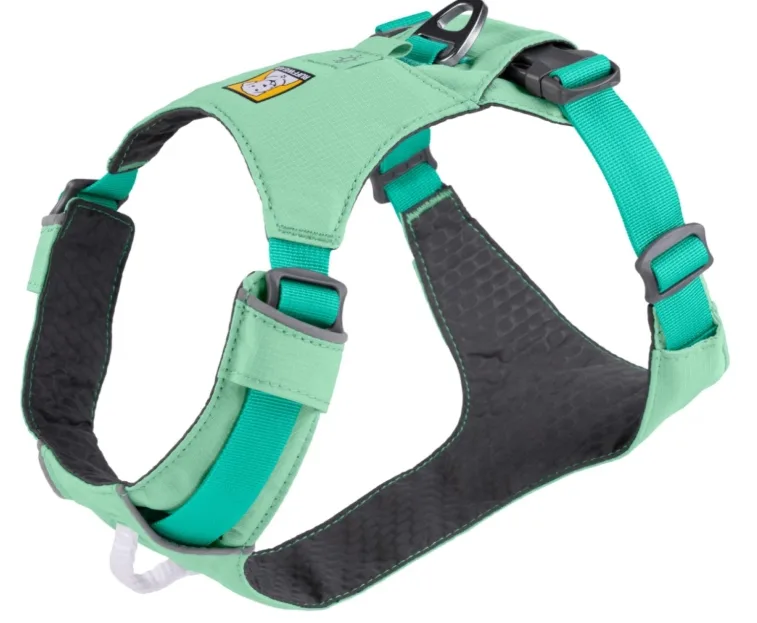
Where the Front Range prioritizes padding, the Hi & Light strips everything down to a minimalist, low-profile frame with almost no bulk. That makes it the better pick for running, warm-weather walks, and small dogs that resist wearing anything substantial. A debris-resistant liner keeps grass seeds and dirt from working into the fabric.
| Pros | Cons |
|---|---|
| Minimal profile that active small dogs barely notice wearing | Far less padding than the Front Range, so it suits shorter walks and runs |
| A debris-resistant liner stops grass seeds and dirt from collecting against the skin. | A thin profile offers less pressure distribution for dogs that pull hard. |
| Still includes two leash attachment points despite the stripped-down build | Premium pricing for what is a deliberately minimal harness |
Best for: running, hiking, and warm climates where a padded harness would overheat.
Buying Guide: How to Choose a Small Dog Harness
Y-Front, Not H-Front
This single detail matters more than brand. A Y-front harness has a strap that sits vertically down the chest, leaving the shoulders free to move. An H-front harness runs a horizontal strap straight across the chest, which sits directly over the shoulder joint.
On a large dog, the difference is manageable. On small dogs, and especially long-backed breeds like Dachshunds and Corgis, an H-front restricts the gait and can cause walk refusal. Choose Y-front unless you have a specific reason not to.
Armpit Clearance Is the Failure Point
Small dogs have less body mass to cushion strap pressure, so any strap that digs in on a big dog is significantly worse on a small one. The area behind the front legs takes the most friction.
Look for neoprene or fleece-lined straps in that zone, and check after the first walk for redness. If you see rubbing, the harness is either wrong-sized or the wrong shape for your dog.
Measure the Chest, Not the Dog’s Weight
Size by chest girth, measured around the widest part of the ribcage just behind the front legs. Weight is a poor proxy, since two 12-pound dogs can have very different chest depths.
Apply the standard two-finger rule once fitted, and check it again after the dog has walked, sat, and turned. Our dog collar sizing guide covers the measuring method.
Independent Adjusters Beat Shared Ones
Many budget harnesses use a single adjustment that moves neck and chest sizing together. That works fine on average-proportioned dogs and fails on everything else. Harnesses with separate neck and chest adjusters, like the Front Range and Tahoe above, fit a much wider range of body shapes.
Escape Risk
Narrow-chested small breeds are the most likely to reverse out of a harness. The fix is a snug belly strap positioned close behind the front legs, not further back. Before every walk, pull the harness gently forward over the head. If it moves, tighten it.
If your dog also pulls, our best no-pull harness for small dogs guide covers front-clip options, and our best no-pull dog harness guide explains how the redirect actually works. For step-by-step fitting help, see how to put a harness on a small dog. Most owners also keep a collar on for ID tags; see our best collars for small dogs guide, and our dog collar vs. harness comparison explains when each makes sense.
Price
Basic mesh and step-in harnesses run $12 to $20. Padded or dual-clip designs sit between $25 and $40. Premium harnesses from Ruffwear and DJANGO run $40 and up.
Conclusion
For most small dogs, the Ruffwear Front Range offers the best fit thanks to four independent adjustment points. Escape artists are safest in the DJANGO Tahoe, while head-shy dogs do better with the step-in Voyager Air. Dogs with sensitive skin suit the wide-contact Puppia Soft Harness, and active or warm-climate dogs are better matched with the minimal Ruff wear Hi & Light.
Frequently Asked Questions
Q: Are Y-front or H-front harnesses better for small dogs?
A: Y-front. The horizontal strap on an H-front sits across the shoulder joint and can restrict gait, especially on long-backed breeds.
Q: How do I stop my small dog escaping their harness?
A: Tighten the belly strap so it sits close behind the front legs, then pull the harness forward as a test before each walk.
Q: How should a small dog harness fit?
A: Two fingers should slide under any strap. Check again after the dog has walked, sat, and turned, since fit shifts with movement.
Q: Do small dogs really need a harness instead of a collar?
A: For walking, generally yes. Small breeds have delicate windpipes, and a harness moves leash pressure to the chest.
Q: What causes armpit rubbing on a small dog harness?
A: Wrong size or wrong shape. Look for neoprene-lined straps behind the front legs and check for redness after the first walk.
Q: Can my small dog wear a harness all day?
A: Most brands advise removing it between walks, since extended wear can cause matting or skin irritation under the straps.
5 Comments