
Best No-Pull Dog Harness: 5 Picks for Less Pulling
Finding the best no-pull dog harness comes down to one question: where does the leash attach? A harness that clips at the front of the chest redirects a dog sideways the moment they lunge forward, which is what actually interrupts pulling. One that only clips on the back gives a dog full leverage to drag you down the sidewalk.
Below are five harnesses that get the front-clip mechanics right, followed by a full buying guide covering fit, strength of pull, and comfort.
Quick Comparison
| Product | Best For | Closure Type | Leash Attachment | Amazon |
|---|---|---|---|---|
Pet Safe Easy Walk No-Pull Dog Harness | Overall pick | Quick-snap buckle | Front chest clip | View on Amazon |
Rabbitgoo Dual-Clip No-Pull Harness | Strong pullers | 3-buckle adjustable | Front and back clips | View on Amazon |
Amazon Basics No-Pull Dog Harness | Budget pick | Buckle | Front chest clip | View on Amazon |
Sporn No Pull Mesh Dog Harness | Small dogs | Slip-on, cord lock | Front chest ring | View on Amazon |
Julius-K9 IDC Power harness | Premium and escape-proof | Heavy-duty buckle | Back clip, side rings optional | View on Amazon |
5 Best No-Pull Dog Harnesses
1. PetSafe Easy Walk No-Pull Dog Harness (Best No-Pull Dog Harness Overall)
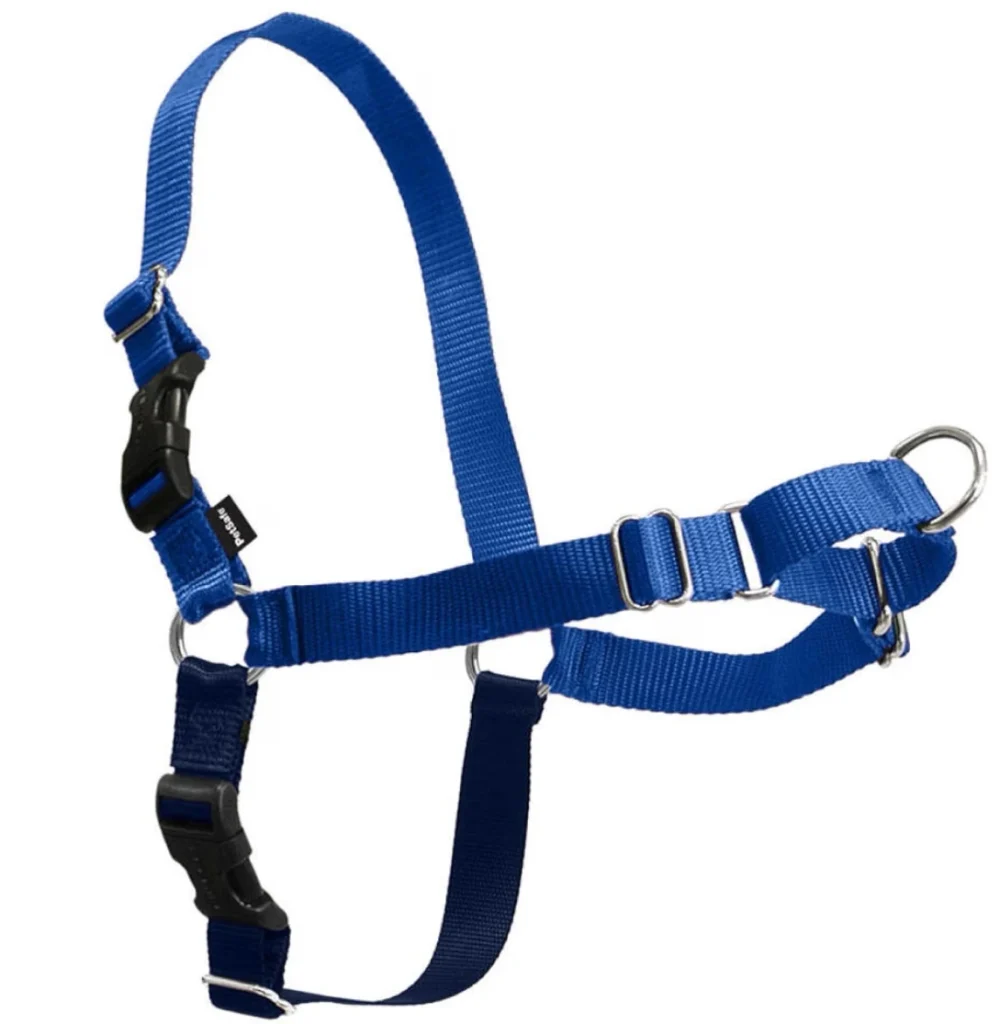

This harness uses a martingale loop design that tightens gently around the front legs when a dog pulls, then releases as soon as they stop. The leash clip sits at the center of the chest, so instead of gaining forward leverage, a pulling dog is steered sideways and off-balance. It’s built from breathable nylon with a lighter coverage area than most padded harnesses, which keeps dogs cooler on warm-weather walks.
| Pros | Cons |
|---|---|
| Martingale loop tightens gently and releases the moment pulling stops, so correction is instant rather than constant | No reflective stitching, so it’s less visible on evening walks |
| Quick-snap shoulder buckles make it fast to put on and take off, without going over the head | The chest strap can rub under the front legs on dogs with a deep chest if it isn’t fitted precisely |
| Minimalist coverage keeps the harness light and breathable in warm weather | Not intended as a backup harness for extremely strong pullers over 70 pounds |
Best for: dogs with a mild to moderate pulling habit who need consistent, gentle redirection on daily walks.
2. Rabbitgoo Dual-Clip Harness (Best No-Pull Harness for Strong Pullers)
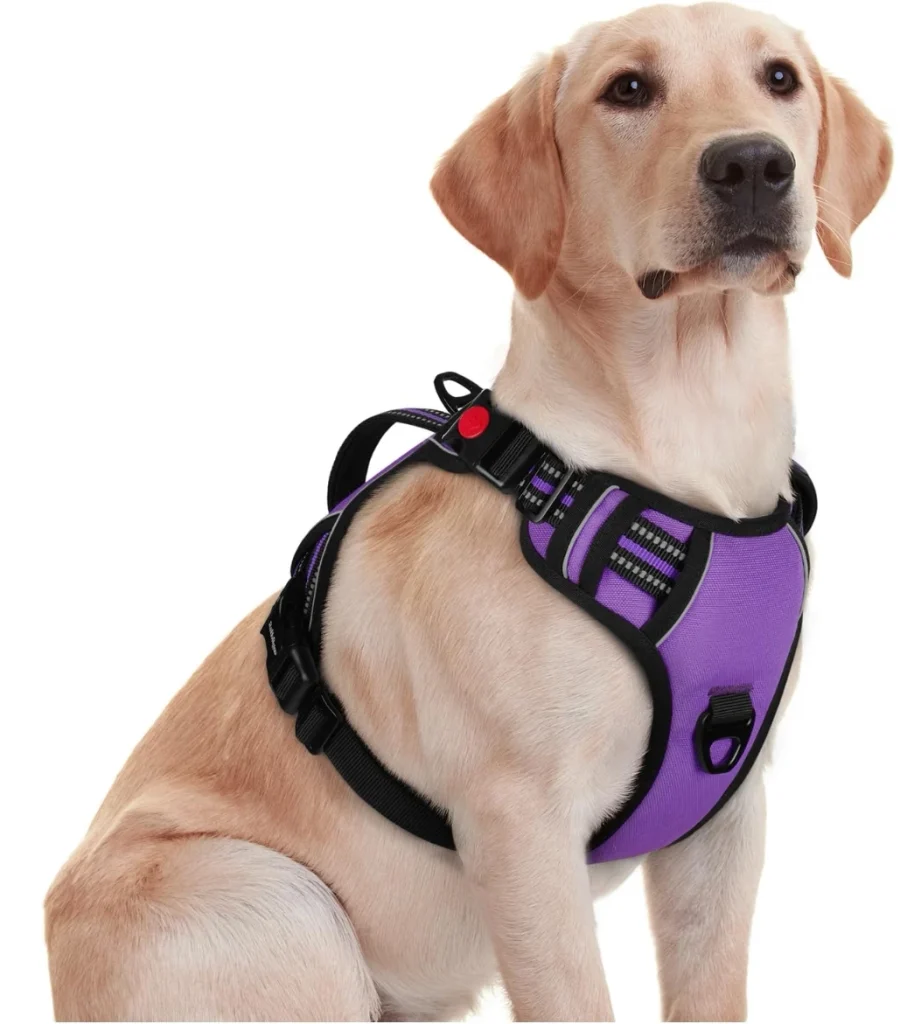
For dogs that pull hard enough to overpower a single front clip, this harness gives you two leash attachment points: a front O-ring for active no-pull training and a back D-ring for casual walks once the pulling settles down. It includes a padded handle on top for quick control in tight spaces, plus 4 adjustment points across the shoulders and chest for a more locked-in fit than a single-strap harness.
| Pros | Cons |
|---|---|
| Front and back clips let you switch between training mode and relaxed walking as manners improve | More straps mean a slightly longer process to put on than a slip-over harness |
| Padded top handle gives fast control near traffic or other dogs | Bulkier profile than minimalist harnesses, which some small or short-haired dogs may find warm |
| Four adjustment points create a snugger, more escape-resistant fit than single-strap designs | The handle adds weight that isn’t necessary for calm, well-mannered dogs |
Best for: medium to large dogs with a strong or persistent pulling habit.
3. Amazon Basics No-Pull Dog Harness (Best Budget No-Pull Dog Harness)
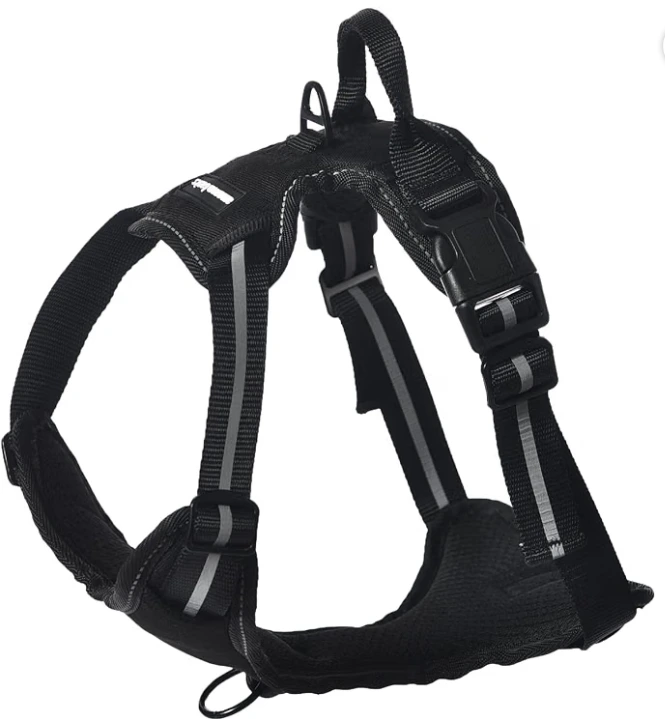
This is a straightforward, no-frills option for owners who want the core no-pull mechanics without paying for extra features. It’s a soft padded vest with a front-clip attachment, adjustable straps, and reflective stripes for basic visibility, all at one of the lowest price points among true no-pull harnesses.
| Pros | Cons |
|---|---|
| Genuinely affordable compared to name-brand no-pull harnesses | Build quality isn’t rated for years of heavy daily wear the way premium harnesses are |
| Reflective stripes add visibility that some pricier competitors skip | Fewer adjustment points than dual-clip options, so the fit is less precise on oddly shaped dogs |
| Padded vest spreads pressure across the chest rather than concentrating it on the straps | Sizing runs across standard small to large ranges rather than breed-specific cuts |
Best for: owners who want a functional no-pull harness for light to moderate pullers without a big investment.
4. Sporn Mesh Harness (Best No-Pull Harness for Small Dogs)
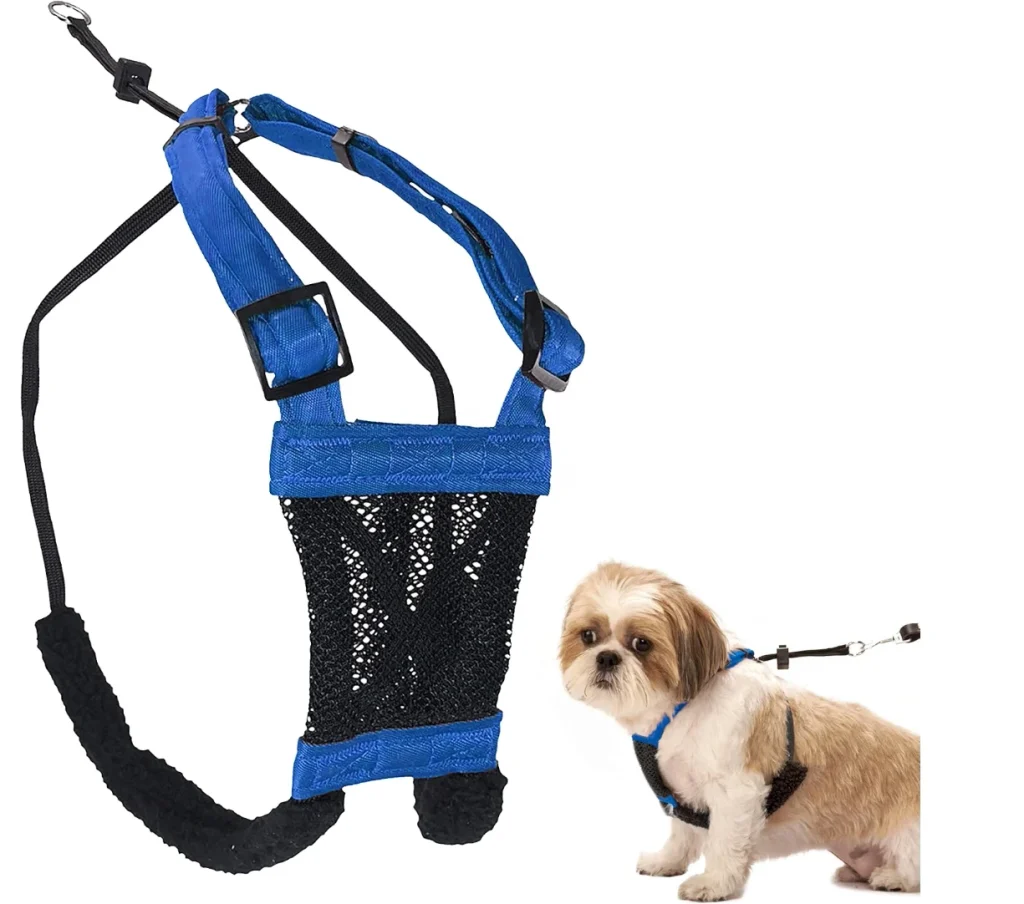
Instead of a front-clip chest design, this harness uses Sherpa-covered loops around the front legs that tighten gently when a dog pulls and loosen again when they stop, which works well on small breeds where a bulky chest plate would feel oversized. The mesh body stretches with the dog’s natural movement and keeps things breathable for toy and small breeds that overheat easily.
| Pros | Cons |
|---|---|
| Leg-loop design applies gentle, humane pressure without a heavy front plate | The slip-on design takes more practice to fit correctly than a buckle harness |
| Elastic mesh body flexes with the dog instead of restricting movement | Not intended for unattended wear or as a car restraint |
| Sized specifically for small breeds rather than scaled down from a large-dog cut | Some dogs resist the over-the-head application at first |
Best for: small and toy breed dogs who pull on walks and need a lighter, non-bulky no-pull design.
5. Julius-K9 IDC Power Harness (Best Premium No-Pull Harness)
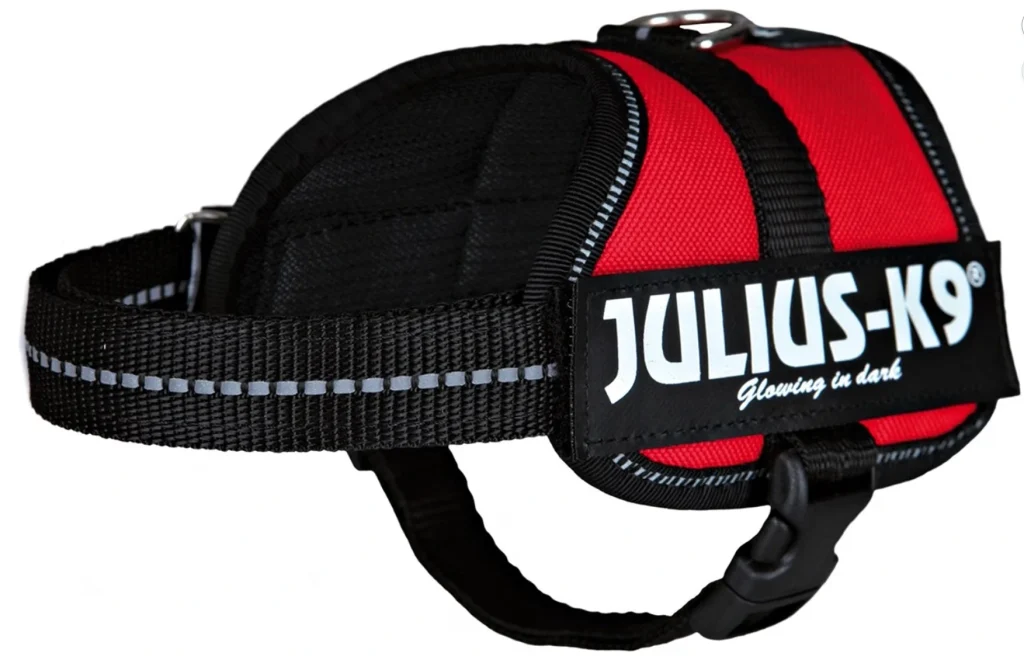
Built in Germany from heavy-duty webbing, this harness is rated to hold up to 300 kilograms of force before the buckle releases, and the harness body itself stays intact even at that load. It distributes pressure evenly across the chest and shoulders rather than concentrating it at one clip point, which reduces strain on a dog’s joints during a hard pull. Reflective piping along the edges and chest strap doubles as a visibility vest for early morning or nighttime walks.
| Pros | Cons |
|---|---|
| Rated to hold up to 300 kg of force before the buckle releases, which is well beyond what most harnesses claim | Priced well above most harnesses on this list |
| Even pressure distribution across the chest and shoulders reduces joint strain during a hard pull | Primary leash attachment is on the back, so it relies more on the snug fit than a front clip for no-pull control |
| Reflective edging functions as a real visibility aid, not just a decorative stripe | Sizing runs on the specific side, so measuring correctly matters more than usual |
Best for: owners who want a long-term, heavy-duty harness for large or working-style dogs and are willing to pay for it.
Buying Guide: How to Choose the Best No-Pull Dog Harness
Front Clip vs. Back Clip vs. Dual Clip
The leash attachment point is the single biggest factor in whether a harness actually reduces pulling. A front-clip harness redirects a dog sideways the instant they pull forward, which makes forward pulling physically less effective and, over time, less rewarding for the dog. A back-clip harness is more comfortable for casual walking but gives a determined dog full leverage to pull, so it’s better suited to dogs who already walk politely. A dual-clip harness gives you both options in one piece of gear, which is useful if you’re actively training a strong puller but also want a relaxed setup for calmer walks.
How Strong of a Puller Is Your Dog
Mild pullers usually do fine with a simple front-clip harness like the PetSafe Easy Walk. Dogs that pull hard enough to strain your arm or drag you forward generally do better with a dual-clip design, since the added back attachment and extra adjustment points create a more secure, harder-to-slip setup. For genuinely powerful breeds, a heavy-duty option with reinforced stitching and a high load rating is worth the extra cost.
Fit and Adjustability
A harness needs at least two adjustment points to fit properly, and more is generally better. The fit should be snug enough that you can slide two fingers flat under any strap but loose enough that your dog can move naturally and isn’t chafed at the armpits. Always measure your dog’s neck and chest girth before ordering, since sizing charts vary significantly between brands, and a size that fits one brand’s “medium” may run small or large in another’s.
Comfort and Breathability
Padded straps, especially around the chest and under the front legs, prevent the chafing that’s common with thin webbing straps. Breathable mesh liners matter most on larger harnesses that cover more surface area, since heat builds up faster under a bigger panel. Wider straps also tend to be more comfortable than narrow ones, since they distribute pressure over a larger area of the body instead of concentrating it in a thin line.
Durability
A no-pull harness gets used on every walk, in every kind of weather, so materials matter. Nylon and polyester webbing hold up well to rain and sun, while cheaper fabrics can degrade or stretch out of shape within a season. If your dog is a consistently strong puller, look for reinforced stitching at the leash attachment points specifically, since that’s where the most stress concentrates.
Collar or Harness
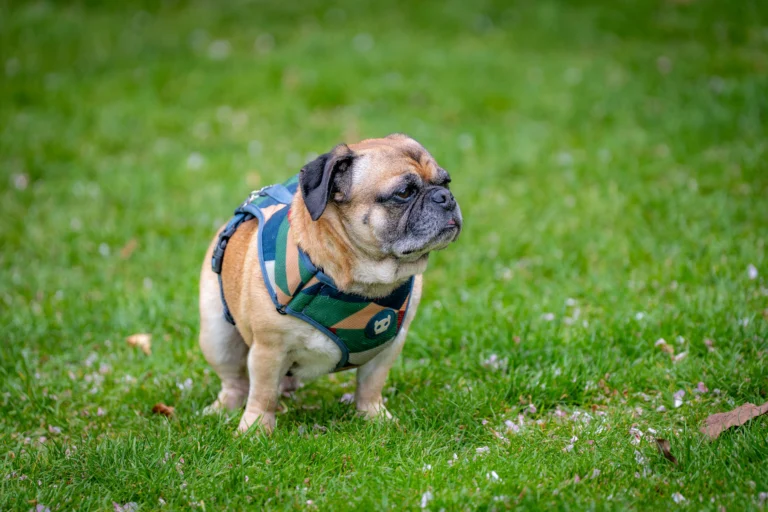
A harness distributes pressure across the chest instead of the neck, which makes it a safer choice for dogs that pull, have a sensitive trachea, or are brachycephalic breeds like pugs and French bulldogs. For a closer side-by-side comparison, see our dog harness vs. collar guide, and if your dog also needs a properly fitted collar for ID tags, our best dog collar for puppies guide covers options by age and size.
Price
Basic no-pull harnesses typically run $10 to $20. Mid-range options with dual clips, padding, and reflective trim generally fall between $20 and $35. Premium, heavy-duty harnesses built for large or working dogs, like the Julius-K9 above, run closer to $50 to $80, largely due to reinforced materials and load-rated hardware. If your dog is on the smaller or larger end of the spectrum, our best small dog harness and best harness for large dogs guides break down size-specific picks in more detail.
Conclusion
For most dog owners dealing with everyday pulling, the PetSafe Easy Walk No-Pull Dog Harness offers the most reliable mix of simplicity and effectiveness. Owners of stronger, more determined pullers get better control from the Rabbitgoo Dual-Clip Harness, while anyone shopping on a budget can start with the Amazon Basics No-Pull Dog Harness. Small breed owners are better served by the Sporn No Pull Mesh Harness, and owners who want a long-term, heavy-duty investment should look at the Julius-K9 IDC Powerharness.
Frequently Asked Questions
Q: Do no-pull dog harnesses actually work?
A: Yes, for most dogs. Front-clip designs steer a dog sideways when they pull, making forward pulling less effective and less rewarding.
Q: Front clip or back clip, which stops pulling better?
A: Front clip. It steers the dog off-balance when they lunge. A back clip is more comfortable but does little to interrupt a strong puller.
Q: How do I measure my dog for a no-pull harness?
A: Measure around the widest part of the chest, just behind the front legs. Compare it to the brand’s own chart, since sizing varies widely.
Q: Is a harness better than a collar for a dog that pulls?
A: Generally yes. A harness spreads pressure across the chest instead of the neck, reducing the risk of coughing or trachea strain.
Q: What size harness does my dog need?
A: Size by chest girth, not weight, since two dogs at the same weight can have very different builds. When unsure, size up.
Q: Can a no-pull harness hurt my dog if used incorrectly?
A: A loose or badly fitted harness can chafe at the armpits or let a dog back out. Recheck the fit every 2 to 4 weeks.
10 Comments