
5 Best Dog Collars for Puppies: [Sizing & Safety]
Finding the best dog collar for puppies is less about picking a cute pattern and more about buying for a dog that won’t stay the same size for long. A puppy’s neck can grow noticeably in a matter of weeks, their skin and coat are more sensitive than an adult dog’s, and they’ll test every buckle, D-ring, and stitch with chewing and play.
Below are five collars that hold up to that, followed by a full buying guide covering sizing, material, and safety features.
Quick Comparison
Product | Best For | Material | Neck Size Range | Amazon |
|---|---|---|---|---|
Joytale Feather-Light Dog Collar for Small Dogs & Puppies | Overall pick | Nylon webbing, 5/8 in width | 10 to 16 in | View on Amazon |
Joytale Feather-Light Puppy Collar for Extra Small Dogs | Toy and teacup breeds | Nylon, 3/8 in width | Extra-small sizing | View on Amazon |
PUPTECK Nylon Puppy Adjustable Collar | Budget-first collar | Lightweight nylon | 7.5 to 10.2 in | View on Amazon |
| WAUDOG Nylon Dog Collar with QR ID Tag | ID and safety | Nylon, breakaway-style buckle | Small to growing puppy sizes | View on Amazon |
Ladoogo Reflective Padded Dog Collar with Leash | Collar and leash set | Neoprene-padded nylon | Small to medium sizes | View on Amazon |
5 Best Dog Collar for Puppies
1. Joytale Feather-Light Dog Collar for Small Dogs & Puppies—(Best Dog Collar for Puppies Overall)
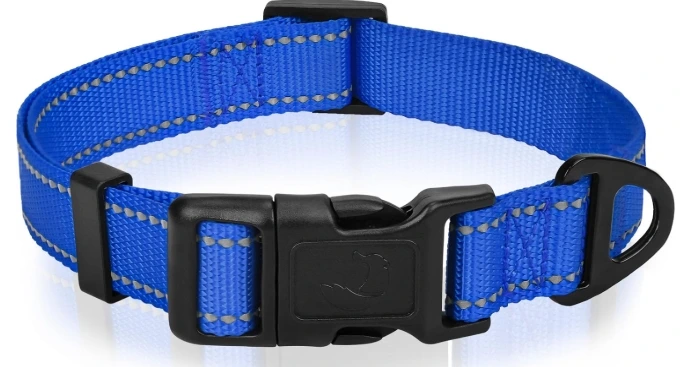

This collar pairs soft nylon webbing with a smooth sliding buckle, which lets you adjust the fit as your puppy grows instead of buying a new size every month. It uses a weatherproof metal D-ring for the leash and ID tags, a one-second quick-release buckle, and double-sided reflective stitching so your puppy stays visible from either angle on evening walks.
| Pros | Cons |
|---|---|
| A smooth sliding buckle lets you adjust the fit weekly as a puppy grows, instead of buying a new collar every month | Sized for the 10 to 16 inch range, so extra-small breeds may need the narrower version. |
| Double-sided reflective stitching stays visible from either angle, not just when a car’s headlights hit the front. | Not rated for heavy pullers, per the brand’s own guidance, so pair with a harness for strong dogs. |
| A one-second quick-release buckle makes it easy to take on and off during the fidgety puppy stage. | Nylon can hold odor over time if it isn’t rinsed after muddy walks. |
Best for: puppies of small to medium breeds who need daily comfort plus room to grow.
2. Joytale Feather-Light Puppy Collar for Extra Small Dogs—(Best Puppy Collar for Toy and Teacup Breeds)
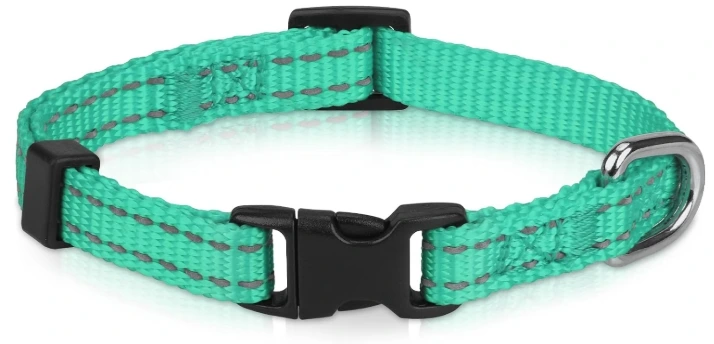
Built specifically for tiny necks, this collar uses a slim 3/8-inch width that keeps weight off a small puppy’s throat. It’s designed for Chihuahuas, teacup Yorkies, and other toy breeds that a standard puppy collar tends to overwhelm.
| Pros | Cons |
|---|---|
| A 3/8-inch width keeps weight off a teacup puppy’s throat, where a standard puppy collar sits heavy. | The narrow width is not rated for strong pullers, so a harness is a better fit for active toy breeds. |
| Sliding adjustment lets you tighten it in small increments, which matters when the neck is only a few inches around. | Sizing is limited to extra-small necks, so it won’t fit medium-small puppies for long. |
| Lightweight build that toy breeds tolerate from the first wear, without the bulk of a full-size collar | Slide adjustment needs occasional rechecking on very active puppies. |
Best for: Chihuahuas, teacup Yorkies, and other toy breed puppies with delicate necks.
3. PUPTECK Nylon Puppy Adjustable Collar – (Best Budget Puppy Collar)
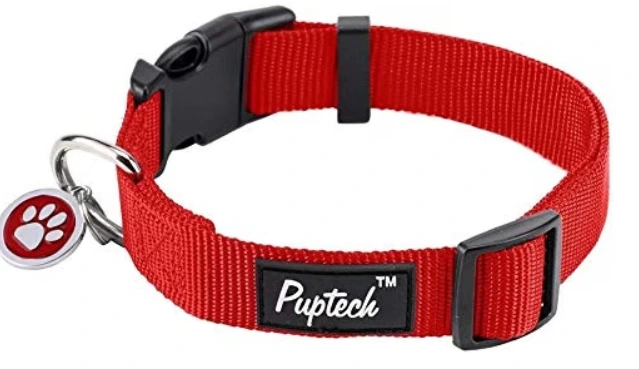
For owners who don’t want to invest heavily in a collar their puppy will outgrow in a few months, this is a straightforward, affordable option. It’s made of lightweight nylon, adjusts from about 7.5 to 10.2 inches, and includes a basic ring for an ID tag.
| Pros | Cons |
|---|---|
| Priced low enough that replacing it as the puppy grows doesn’t sting | Not built for years of daily wear the way a premium collar is |
| Adjusts from 7.5 to 10.2 inches, covering the first few months for most small and medium puppies | Limited color and style options compared to higher-priced picks |
| Tough enough nylon to survive a mouthy puppy chewing at it | No reflective threading, so it’s better suited to daytime walks. |
Best for: new puppy owners who want a functional starter collar before they know their dog’s adult size.
4. WAUDOG Nylon Dog Collar with QR ID Tag—(Best Puppy Collar for ID and Safety)
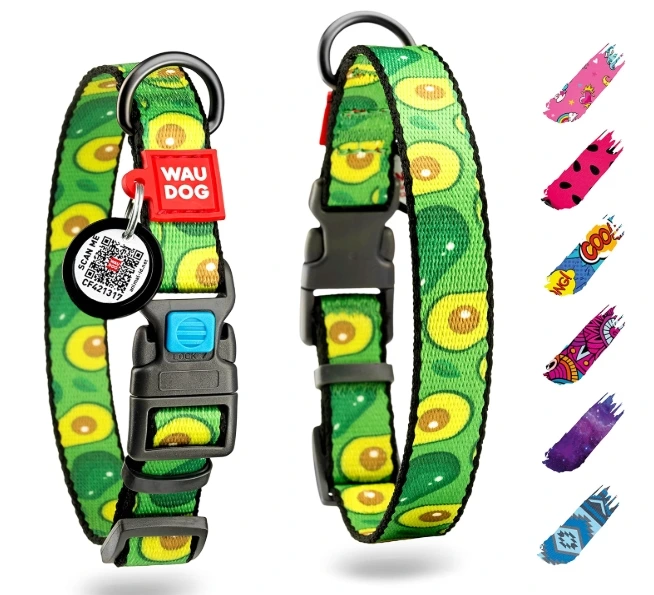
Puppies are quick, curious, and not yet reliably leash-trained, which makes identification a priority from day one. This collar has a built-in QR code ID tag that links directly to your contact details, made from wear-resistant nylon with a breakaway-style buckle and reflective threading for low-light walks.
| Pros | Cons |
|---|---|
| Built-in QR tag links straight to your contact details, so a finder gets them without needing an engraved tag or a phone call. | Breakaway design isn’t meant to hold up to hard leash pulling on its own. |
| The breakaway-style buckle reduces the risk of choking if the collar snags on something. | Sizing runs small to medium, so larger puppy breeds will need to size up quickly. |
| Reflective threading adds visibility for early morning or evening potty breaks. | A QR tag relies on the puppy being scanned by someone with a smartphone. |
Best for: new puppies still building leash manners, or any owner who wants backup identification alongside a microchip.
5. Ladoogo Reflective Padded Dog Collar with Leash – (Best Puppy Collar and Leash Set)
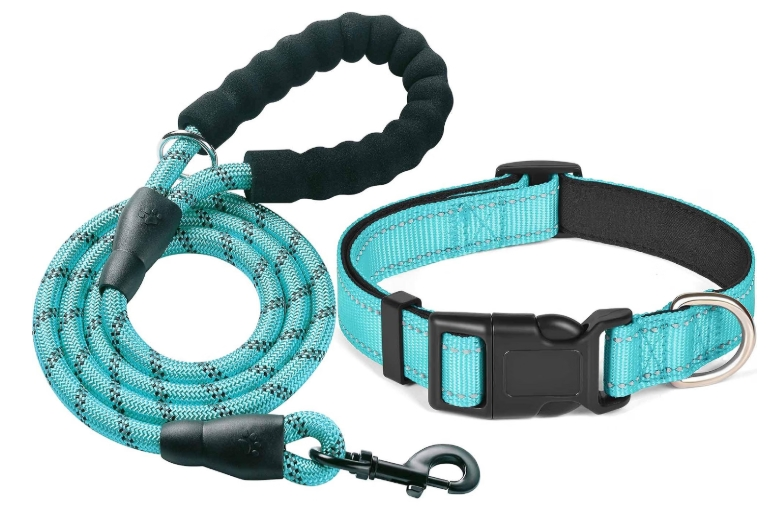
For owners building a puppy starter kit from scratch, a matched set saves a shopping trip. This collar is padded with soft neoprene for comfort, has reflective threading and a rust-resistant metal D-ring, and comes bundled with a 5-foot leash with a padded handle.
| Pros | Cons |
|---|---|
| Neoprene padding is gentler on a puppy’s neck than plain nylon webbing. | Padding adds slightly more bulk than a plain flat collar. |
| A bundled leash means one purchase covers both essentials. | Sized for small to medium puppies, so large-breed puppies will outgrow it faster. |
| Reflective threading and durable hardware hold up to daily walks. | Neoprene can hold moisture longer than plain nylon after a wet walk. |
Best for: new puppy owners who want a collar and leash in a single, ready-to-go set.
Buying Guide: How to Choose the Best Collar for a Puppy
Sizing and Adjustability
Puppies outgrow collars faster than almost any other gear you’ll buy for them. Look for a collar with at least 4 to 6 inches of adjustment range so it lasts more than a few weeks. Measure your puppy’s neck where the collar will actually sit, then leave room for two fingers between the collar and the skin. Recheck the fit every 1 to 2 weeks for fast-growing breeds like Labs, Goldens, and German Shepherds, and roughly once a month for slower-growing toy breeds.
Material
Nylon and polyester webbing are the standard choice for puppies because they’re light, inexpensive, and don’t restrict a growing dog’s movement. Leather offers more structure and ages well, but it’s stiffer out of the box, and puppies tend to chew through it during teething, so most trainers suggest waiting until a dog is fully grown before switching to leather. Neoprene-padded collars add cushioning that helps prevent chafing on puppies who wear their collar all day.
Safety and Breakaway Features
A quick-release or breakaway buckle is worth prioritizing for puppies specifically, since they’re more likely to get a collar snagged during play or exploration than an adult dog is. This type of buckle releases under pressure to prevent choking, though it isn’t meant to substitute for a leash-rated collar or harness during actual walks.
Comfort and Trachea Sensitivity
A puppy’s windpipe and neck muscles are still developing, so a heavy or stiff collar can put more strain on them than it would on an adult dog. A lightweight collar with smooth, non-abrasive stitching reduces this risk for everyday wear, but puppies that pull hard on a leash are usually safer in a harness that shifts pressure to the chest instead of the neck. For a closer comparison, see our dog collar vs. harness guide.
When to Introduce a Collar
Most trainers suggest introducing a lightweight collar around 8 weeks old, once a puppy is settled into their new home. Start with short, supervised sessions indoors so the puppy gets used to the feeling before a leash is attached.
Price
Basic nylon puppy collars typically run under $10. Padded, reflective, or QR-tag options usually fall between $10 and $18. Collar and leash sets run slightly higher, closer to $15 to $25, since they bundle two pieces of gear into one purchase. For general sizing across all dog sizes and breeds, our dog collar sizing guide walks through the full measuring process, and if your puppy is closer to full-grown, our best collars for small dogs and best dog collars for large dogs guide cover the next size up.
Conclusion
For most new puppy owners, the Joytale Feather-Light Dog Collar for Small Dogs & Puppies offers the best mix of comfort, adjustability, and everyday durability. Owners of true toy and teacup breeds get a better fit from the Joytale Extra Small Puppy Collar, while anyone shopping on a tight budget can start with the PUPTECK Nylon Puppy Adjustable Collar. Puppies still building leash manners benefit from the built-in ID on the WAUDOG QR Tag Collar, and owners assembling a full starter kit will get more value out of the Ladoogo Collar and Leash Set.
Frequently Asked Questions
Q: When can a puppy start wearing a collar?
A: Around 8 weeks old, once they’ve settled into your home. Start with short, supervised sessions before attaching a leash.
Q: What size collar does a puppy need?
A: Measure the neck directly and add two fingers of slack. Recheck every 1 to 2 weeks, since puppies grow at different rates.
Q: Is nylon or leather better for a puppy collar?
A: Nylon, in most cases. It’s lighter and cheaper, and puppies often chew through leather during teething.
Q: Are breakaway collars safe for puppies?
A: Yes. They release under pressure if snagged, lowering choking risk, but pair one with a leash-rated collar or harness for walks.
Q: Is a collar or harness better for a puppy?
A: A collar suits everyday ID and short leash use. A harness is gentler on a growing neck during actual walks.
Q: How often should I resize my puppy’s collar?
A: Every 1 to 2 weeks for fast-growing breeds in the first months, and about once a month for smaller breeds.

2 Comments