5 Best No-Pull Harness for Large Dogs [2026 Tested]
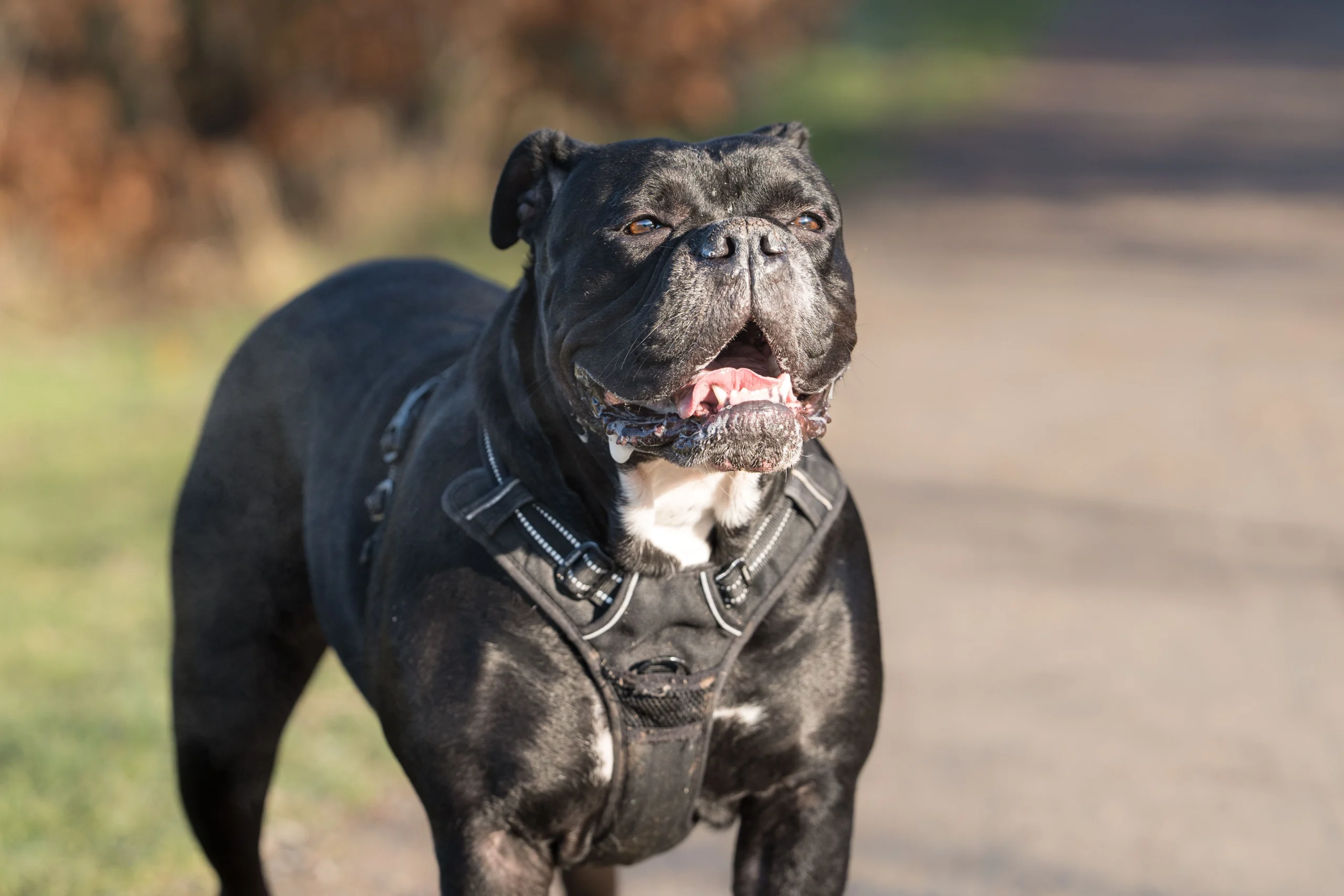
Finding the best no-pull harness for large dogs means looking for hardware and a leash attachment design built to handle real force, not just a smaller dog’s harness sized up. A powerful 60- to 100-pound dog can drag an owner off balance in seconds. Hence, the harness needs reinforced stitching, wide padded straps, and a front-clip or dual-clip design that actually interrupts pulling instead of just cushioning it.
Below are five harnesses built specifically for that job, followed by a full buying guide covering fit, clip type, and what separates a real no-pull design from a basic vest.
Quick Comparison
| Product | Best For | Clip Type | Weight Range | Amazon |
|---|---|---|---|---|
PetSafe 3 in 1 No-Pull Harness | Overall pick | Front, back, dual-clip | Large breeds | View on Amazon |
Sporn Ultimate Control Harness | Multiple control options | Front, back, dual-clip, handle | Large/XL | View on Amazon |
rabbitgoo Dual-Clip No-Pull Harness | Strong, determined pullers | Front and back | Large breeds | View on Amazon |
| Auroth Tactical No-Pull Harness | Working and heavy-duty dogs | Front and back with handle | Large breeds | View on Amazon |
PetSafe Easy Walk Comfort Harness | Sensitive or padded fit | Front martingale loop | Large breeds | View on Amazon |
Best No-Pull Harness for Large Dogs
1. Pet Safe 3 in 1 No-Pull Harness – (Best No-Pull Harness for Large Dogs Overall)
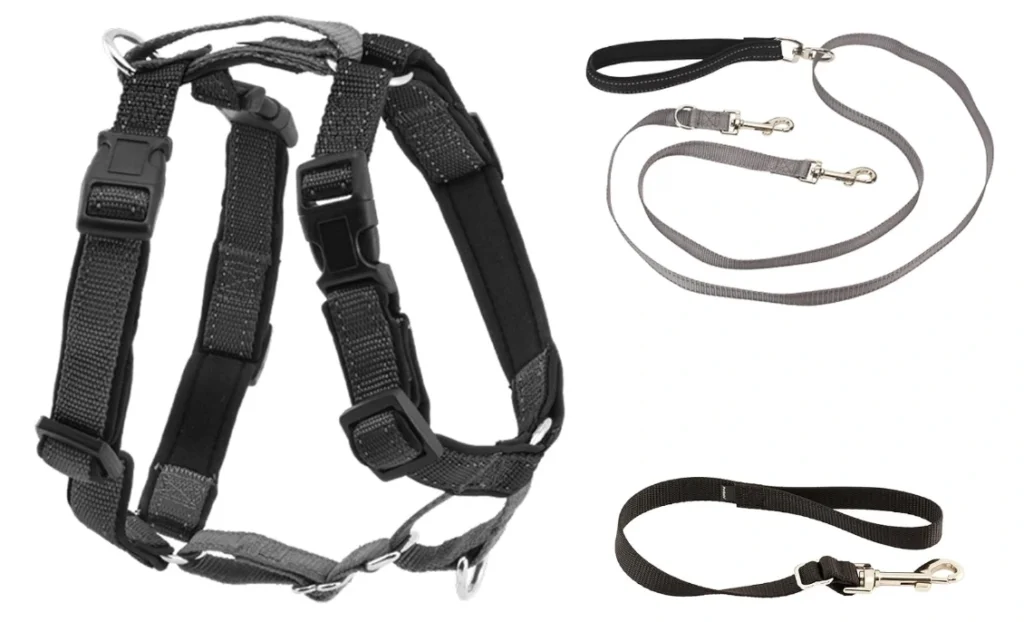

This harness gives you three ways to attach a leash: a front clip for active no-pull training, a back clip for relaxed everyday walks, and a seatbelt loop that doubles as a quick-access handle in the car. Five points of adjustment let you dial in a precise fit across a large dog’s chest and shoulders, and reflective nylon adds visibility for early morning or evening walks.
| Pros | Cons |
|---|---|
| One harness, three attachment points, handles training walks, casual strolls, and car rides without needing separate gear. | Priced higher than basic single-clip harnesses |
| Fully adjustable across five points, so it actually molds to a large dog’s chest and shoulder shape instead of a generic fit | Best no-pull results come from using it with PetSafe’s two-point control leash, sold separately. |
| Built-in reflective strips help keep your dog visible during dawn or dusk walks. | Sizing charts run specifically to the brand, so measuring first matters. Sizing runs noticeably large across most reports, so many owners size down from what the chart recommends. |
Best for: large dog owners who want one harness that handles daily walks, active training, and car rides.
2. Sporn Ultimate Control No-Pull Harness – (Best No-Pull Harness for Multiple Control Options)
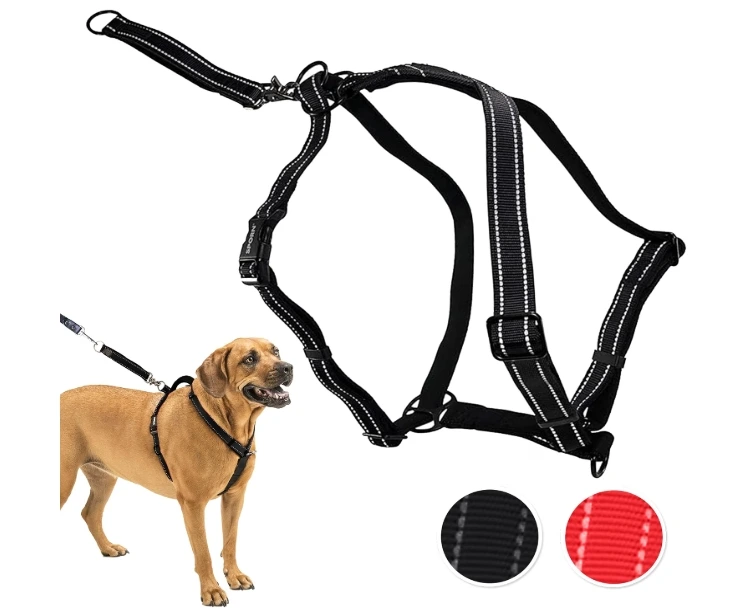
This is a genuinely 4-in-1 design: front-clip, back-clip, dual-clip, and an emergency grab handle, all on one harness built specifically for large dogs. It distributes pressure evenly across the chest and shoulders rather than concentrating it at the neck, and the padded construction is built to prevent the armpit chafing that can come with cheaper, thinner straps.
| Pros | Cons |
|---|---|
| Four separate clip configurations mean it adapts to nearly any walking, training, or control situation. | More straps and options mean a slightly longer learning curve when first fitting it |
| The grab handle gives you an extra layer of quick control in tricky spots, busy streets, other dogs, and sudden pulls. | Bulkier than a minimalist single-clip harness |
| Padded straps mean daily walkers won’t deal with the chafing that thinner harnesses tend to cause. | Only available in large/XL sizing, so it will not fit medium or small dogs. |
Best for: large dogs whose pulling behavior varies by situation, from calm walks to high-distraction environments.
3. Rabbitgoo Dual-Clip No-Pull Harness – (Best No-Pull Harness for Strong, Determined Pullers)
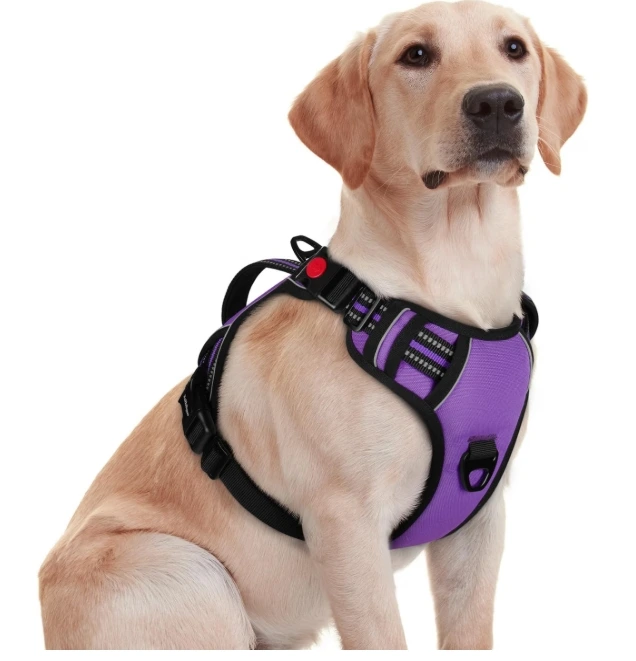
For dogs that pull hard enough to overpower a single front clip, this harness gives you two leash attachment points: a front O-ring for active no-pull training and a back D-ring for casual walks once the pulling settles down. It includes a padded top handle for quick control in tight spaces, plus four adjustment points across the shoulders and chest for a more locked-in fit than a single-strap harness.
| Pros | Cons |
|---|---|
| Switching between the front O-ring and back D-ring lets you go from active training mode to relaxed everyday walking with the same harness. | More straps mean a slightly longer process to put on than a slip-over harness. |
| The padded top handle gives you instant control when you need to react fast near traffic, other dogs, or crowds. | Bulkier profile than minimalist harnesses, which some short-haired dogs may find warm |
| Four points of adjustment lock in a snugger fit, making it harder for a determined puller to wriggle out. | The handle adds weight that isn’t necessary for calm, well-mannered dogs. |
Best for: medium to large dogs with a strong or persistent pulling habit that a single front clip can’t fully control.
4. Auroth Tactical No-Pull Harness – (Best No-Pull Harness for Working and Heavy-Duty Large Dogs)
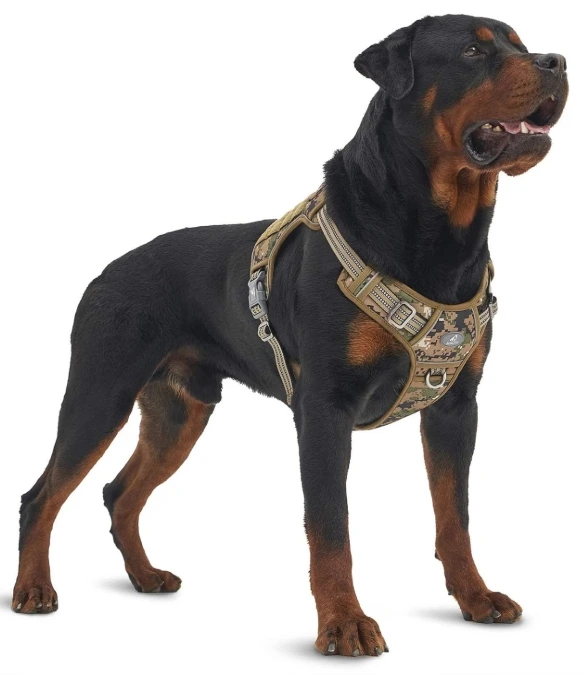
Built from durable nylon oxford with reinforced stitching, this harness is designed for dogs that see real daily wear, whether that’s training, hiking, or working. It includes both front and back D-rings for attaching a leash, a sturdy top handle for control, and reflective strips for visibility, along with hook-and-loop panels if you want to attach patches or ID.
| Pros | Cons |
|---|---|
| A reinforced nylon Oxford build is made to hold up under heavy daily use, training, hiking, or work. | Tactical styling won’t appeal to every owner looking for a simple everyday harness. |
| Front and back rings give you the flexibility to switch between no-pull training and everyday relaxed walks. | Bulkier and heavier than lightweight mesh options |
| The sturdy handle delivers real, reliable control for working dogs or high-energy large breeds. | Reflective strips are functional but less extensive than dedicated night-walking harnesses. |
Best for: owners of powerful, high-energy, or working-style large breeds who need gear built for heavy use.
5. PetSafe Easy Walk Comfort No-Pull Harness – (Best No-Pull Harness for Full-Body Padding)
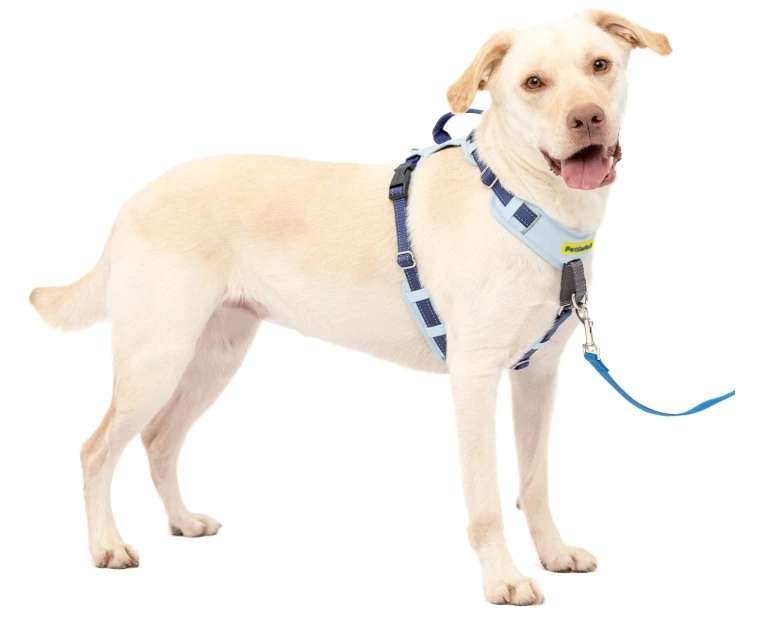
This harness pairs PetSafe’s patented front martingale loop with full-body padding, which spreads pressure more gently across the chest than the brand’s original minimalist design. It uses five points of adjustment and is built to start working from the first walk, with no separate training period required, which is useful for large dogs that are new to a no-pull harness.
| Pros | Cons |
|---|---|
| Full-body padding adds a level of comfort the brand’s original minimalist version doesn’t offer. | More coverage means more surface area to keep clean than a minimalist harness. |
| The front martingale loop gently redirects pulling from day one, so no training period is needed. | Priced above Pet Safe’s original Easy Walk design |
| Five points of adjustment let you fine-tune the fit across the chest and shoulders. | Not intended for dogs with an extremely strong, sustained pulling habit |
Best for: large dogs with sensitive skin or owners who want extra cushioning alongside no-pull control.
Buying Guide: How to Choose the Best No-Pull Harness for a Large Dog
How No-Pull Harnesses Actually Work
A front-clip harness redirects a dog sideways the instant they pull forward, which makes forward pulling physically less effective and, over time, less rewarding for the dog. This differs from a back-clip harness, which gives a strong dog full leverage to lean into the leash. For large, powerful dogs specifically, the front-clip mechanism matters even more, since there’s simply more force behind each pull.
Front Clip vs. Back Clip vs. Dual Clip
A dual-clip design gives you both a front and back attachment point, which is useful if you’re actively training a strong puller but also want a relaxed setup once the behavior improves. Several picks above, including the PetSafe 3 in 1 and RabbitGoo Dual-Clip, use this approach. For the mechanics of front-clip harnesses generally, see our best no-pull dog harness guide.
Hardware Built for Strength
Large, strong dogs put real, repeated force on buckles and D-rings, so plastic hardware and thin straps are a genuine weak point. Look for metal D-rings rather than plastic ones, reinforced stitching at the leash attachment points specifically, and straps generally 1 to 1.5 inches wide, which distribute pressure over more surface area instead of concentrating it across the shoulders.
Sizing by Chest Girth
Large dog harnesses should be sized off chest girth, not weight or breed alone, since two dogs of the same weight can have very different body shapes. Measure around the widest part of your dog’s chest, just behind the front legs, and compare that number against the specific brand’s size chart rather than a general “large” label. For a full breakdown of large-breed sizing and fit, see our Best Harness for Large Dogs guide.
Comfort and Padding
Padded straps, especially around the chest and under the front legs, prevent chafing on dogs that walk daily or for long stretches. A harness also spreads leash pressure across the chest and shoulders instead of the neck, which reduces the risk of choking or trachea strain that a collar can cause on a dog that pulls hard. For a closer comparison, see our dog harness vs. collar guide.
Fit and Escape Prevention
The fit should be snug enough that you can slide two fingers flat under any strap but loose enough for natural movement. Large, strong dogs that lunge hard are the most likely to test a loose fit, so multiple adjustment points and secure metal hardware matter more here than on calmer breeds.
Price
Basic no-pull harnesses for large dogs typically run $15 to $25. Dual-clip or multi-configuration options generally fall between $25 and $40. Heavy-duty or tactical-style harnesses built for working dogs, like the Auroth pick above, run closer to $30 to $50. If your dog also needs a properly sized collar for ID tags, our best dog collars for large dogs guide covers matching options.
Conclusion
For most large dog owners dealing with a determined puller, the PetSafe 3 in 1 No-Pull Harness offers the most versatile mix of control and comfort. Owners who want maximum flexibility across different situations should look at the Sporn Ultimate Control Harness, while dogs with a particularly strong, sustained pulling habit do better in the Rabbitgoo Dual-Clip Harness. Working or highly active large breeds are well suited to the Auroth Tactical harnesses, and dogs with sensitive skin benefit from the extra cushioning of the PetSafe Easy Walk Comfort Harness.
Frequently Asked Questions
Q: Do no-pull harnesses actually work on large, strong dogs?
A: Yes, for most dogs, though results are strongest when paired with basic loose-leash training. A front-clip or dual-clip harness redirects a large dog sideways when they pull, which makes pulling forward less effective and, with consistent use, less rewarding.
Q: What size no-pull harness does a large dog need?
A: It depends on chest girth rather than weight alone, since two large dogs of the same weight can have very different builds. Measure around the widest part of the chest, just behind the front legs, and compare that number to the specific brand’s size chart.
Q: Front clip or dual clip? Which is better for a large dog that pulls hard?
A: A front-clip attachment is generally more effective for active pulling, since it steers the dog off-balance. A dual-clip harness adds flexibility, letting you use the front clip during training and the back clip once your dog’s pulling improves.
Q: Is a no-pull harness safe for a large, powerful dog?
A: Yes, when properly fitted. Look for reinforced stitching, metal hardware, and wide straps rated to handle real force, since a harness built for a small dog won’t hold up to a determined 80-pound puller.
Q: How do I stop my large dog from backing out of a no-pull harness?
A: Make sure the fit is snug enough that you can only slide two fingers under any strap, and choose a harness with multiple adjustment points and secure metal buckles rather than a single strap.
Q: How long does it take a no-pull harness to reduce pulling?
A: Many dogs show a difference within the first few walks, since the harness physically interrupts the pulling motion. Consistent, gradual training alongside the harness typically produces lasting results within a few weeks.