
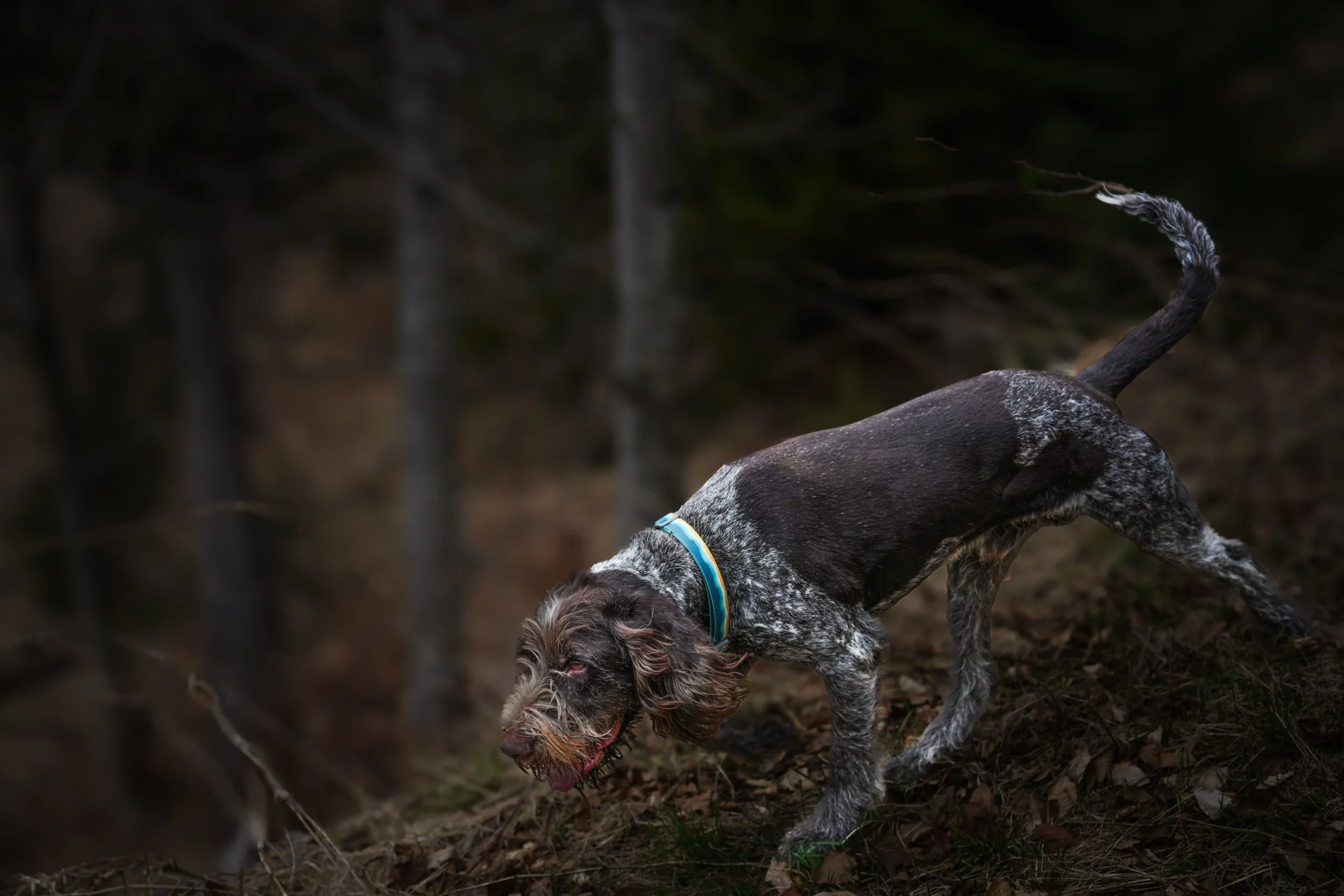
5 Best Dog Bark Collar: Top Picks for Better Control
The best dog bark collar does one job well: it corrects excessive barking consistently, without triggering on a neighbor’s dog, a doorbell, or a passing car. The real difference between a good bark collar and a frustrating one usually comes down to detection accuracy, since a collar that misfires on ambient noise teaches a dog nothing except confusion.
Below are five bark collars that detect reliably, followed by a full buying guide covering correction types, sizing, and safe use.
Quick Comparison
| Product | Best for | Detection Type | Correction | Amazon |
|---|---|---|---|---|
SportDOG NoBark 10 |
Overall pick |
Dual sensor (sound + vibration) |
Static, 10 levels | View on Amazon |
Garmin BarkLimiter Deluxe |
All coat thicknesses |
Accelerometer (throat vibration only) |
Static or vibration |
View on Amazon |
PetSafe Rechargeable Bark Collar |
Customizable correction |
Sound and vibration sensor |
Static, 15 levels, auto-adapting |
View on Amazon |
DogRook Humane No-Shock Bark Collar |
Shock-free training |
Microphone bark detection |
Beep and vibration only |
View on Amazon |
PetSafe Elite Little Dog Bark Control |
Small dogs |
Sound and vibration sensor |
Static, 10 levels |
View on Amazon |
Best Dog Bark Collar
1. SportDOG NoBark 10 – (Best Dog Bark Collar Overall)
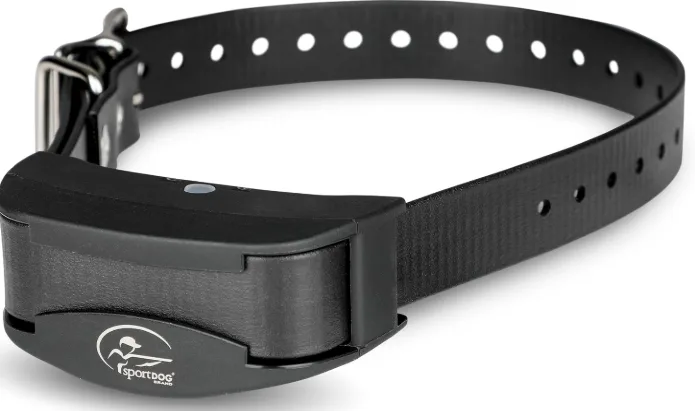

Built around SportDOG’s Silent Partner technology, this collar requires both the vibration of a dog’s vocal cords and the sound of a bark before it delivers a correction, which filters out other dogs, traffic, and ambient noise almost entirely. Two training modes, Progressive Correction and User Select, plus 10 static levels, give real flexibility for different temperaments.
| Pros | Cons |
|---|---|
| Dual-sensor detection genuinely reduces the false corrections that plague single-sensor collars | Static correction only, with no vibration-only or spray alternative on this model |
| 200 hours of battery life per charge is well above average for the category | Premium pricing compared to basic single-sensor collars |
| DryTek waterproofing rated submersible to 25 feet holds up to real outdoor use | Fits necks 5 to 22 inches, so extra-large breeds should confirm fit before buying |
Best for: owners who want the most reliable detection accuracy available in a bark collar.
2. Garmin BarkLimiter Deluxe – (Best for Thick-Coated Breeds)
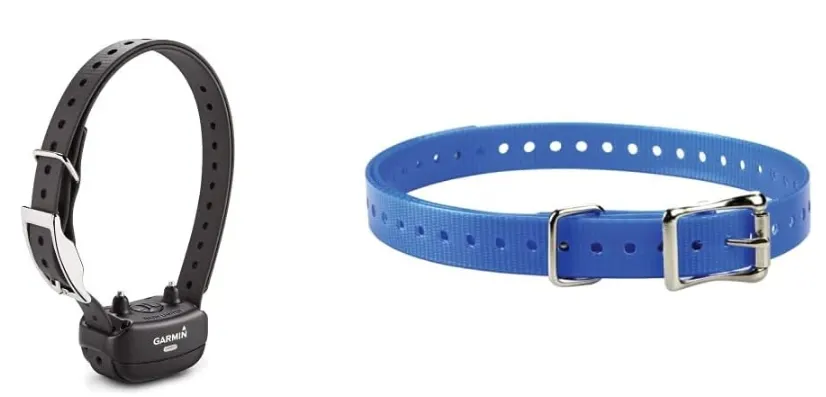
This collar detects barking through accelerometer-based vibration at the throat, rather than relying on sound, making it effective on dogs with heavy coats that can muffle a microphone-based sensor. Integrated stainless steel contact points are engineered to work across all coat thicknesses, and a built-in bark odometer tracks how often the collar is correcting.
| Pros | Cons |
|---|---|
| Vibration-only detection works reliably on thick or double-coated breeds that confuse sound-based collars. | Costs more than most competitors in this category |
| The bark odometer gives real feedback on whether the collar is actually reducing barking over time. | Compact size means a slightly shorter battery life between charges than bulkier models. |
| Offers a vibration-only correction mode as an alternative to static stimulation | Replacement parts and accessories are priced at a premium, consistent with the Garmin brand. |
Best for: owners of thick-coated or double-coated breeds where sound-based detection struggles.
3. PetSafe Rechargeable Bark Collar – (Best for Customizable Correction)
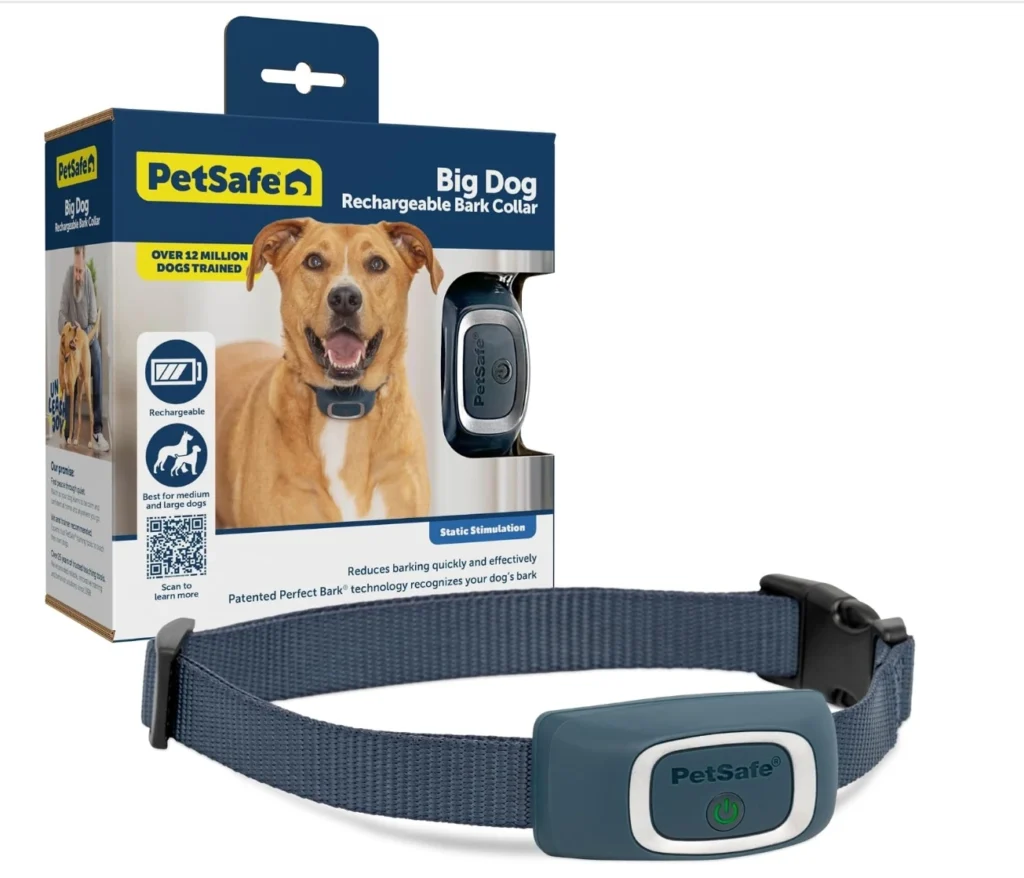
With 15 levels of automatically adjusting static correction, this collar starts each dog at the lowest setting and only increases if barking continues, then gradually reduces the level again once the dog stays quiet. That temperament-learning behavior gives owners more genuine fine-tuning than a fixed-level collar, without needing to reset anything manually.
| Pros | Cons |
|---|---|
| 15 auto-adjusting levels tune themselves to the dog rather than requiring manual trial and error | Some owners report the strap design limits adjustment room on smaller necks |
| Dual detection (sound and vibration) genuinely reduces false corrections from other dogs or noise | No separate vibration-only or tone-only mode; static is the only correction type |
| A USB rechargeable battery holds a charge for up to 40 hours from a 2-hour charge | A learning curve exists in understanding how the automatic adjustment behaves over time |
Best for: owners who want a collar that fine-tunes itself to the dog’s actual barking pattern rather than a fixed setting.
4. DogRook Humane No-Shock Bark Collar – (Best Shock-Free Option)
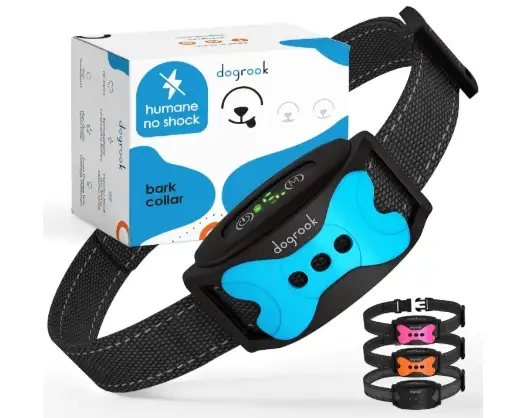
This collar relies entirely on beeping and vibration, with no static correction option at all, making it a common first choice for owners who want to address barking without any electrical stimulation. A microphone detects the dog’s specific bark pattern, and sensitivity adjusts across multiple levels to match different barking styles.
| Pros | Cons |
|---|---|
| A genuinely shock-free design appeals to owners who want a gentler first approach. | Without a shock option, it may be less effective on strongly motivated or high-drive barkers. |
| The rechargeable battery lasts up to 14 days per charge, reducing maintenance. | Microphone-based detection can be less precise than dual-sensor designs in noisy environments. |
| Fits a wide range of dogs from 12 to 110 pounds with one adjustable strap | Extra prong covers are included for long-haired dogs, but very thick coats may still reduce sensor contact. |
Best for: owners who want to try a shock-free approach before considering static correction.
5. PetSafe Elite Little Dog Bark Control – (Best for Small Dogs)
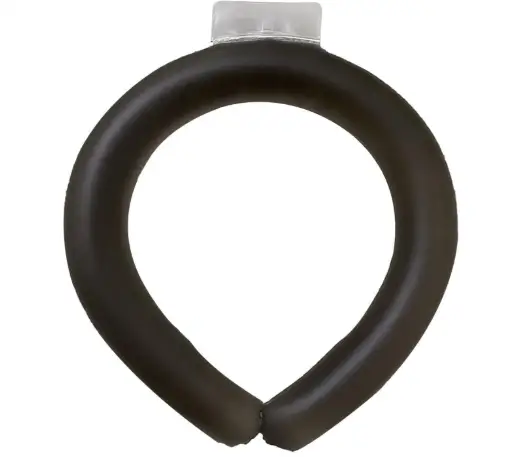
Calibrated specifically for dogs under 55 pounds rather than a scaled-down large-dog design, this collar uses PetSafe’s patented Perfect Bark detection to minimize corrections triggered by another dog’s bark or background noise. Ten levels of progressive correction only increase if the dog continues barking, which keeps the response proportionate.
| Pros | Cons |
|---|---|
| Calibrated specifically for small and medium dogs rather than adapted from large-dog hardware | A maximum neck size of 22 inches limits it to genuinely small and medium breeds. |
| Perfect Bark detection genuinely reduces false corrections from other dogs or noise. | Uses a replaceable PetSafe RFA-188 battery rather than USB rechargeable |
| Correction only escalates with continued barking, which keeps the response fair and proportionate. | Static correction only, with no vibration-only alternative on this model |
Best for: small and medium dogs that need a properly calibrated, appropriately sized collar.
Buying Guide: How to Choose a Dog Bark Collar
How Bark Detection Works
Bark collars detect barking in one of three ways. Sound-only detection uses a microphone and is the least accurate, since it can trigger on other dogs, doors, or loud noises nearby. Vibration-only detection senses the vibration of the dog’s own vocal cords through the collar’s contact points, which is more accurate and works well on thick-coated breeds, but won’t catch a bark if the collar sits loosely. Dual-sensor detection requires both sound and vibration together before correcting, which is the most reliable approach and the reason collars like the SportDOG NoBark 10 and PetSafe models above use it.
Correction Types
Static correction delivers a brief, adjustable electrical stimulation, similar in sensation to a mild static shock, and is the most common correction type in effective bark collars. Vibration offers a physical buzz without any static element, which some dogs respond to just as well. Ultrasonic tones emit a high-frequency sound audible to dogs but not most humans. Citronella or spray collars release a burst of scent the dog finds unpleasant. No correction type works for every dog, so if one type isn’t producing results after a couple of weeks of consistent use, switching types is often more effective than increasing intensity.
Sizing and Coat Thickness
Most bark collars list a neck size range and a minimum weight, both of which matter. A collar rated for dogs 8 pounds and up will not fit or correct appropriately on a 5-pound toy breed, and a collar sized for small dogs may not have contact points long enough to reach the skin through a large or double-coated breed’s fur. For thick or heavy coats, look for longer contact points or vibration-based accelerometer detection, which doesn’t depend on sound reaching a microphone. For general collar fit and measuring guidance, see our dog collar sizing guide.
Safety Features
Look for an automatic safety shut-off, which stops correction after a set time (commonly 30 to 80 seconds) even if barking continues, preventing overcorrection during an extended episode. Progressive correction modes, which start at the lowest level and increase only if barking continues, are generally considered a fairer approach than a fixed high-level correction from the first bark.
Using a Bark Collar Responsibly
A bark collar works best as part of a broader approach rather than a standalone fix. Most dogs respond within one to two weeks of consistent use, and the collar should generally only be worn during the specific situations where barking is a problem, not as a permanent, all-day accessory. Dogs that are deaf, extremely anxious, or barking due to pain or a medical issue are not good candidates for correction-based bark collars, and a vet or certified trainer is worth consulting first in those cases.
Price
Basic sound-detection bark collars typically run $20 to $35. Dual-sensor or accelerometer-based collars with adjustable levels usually fall between $35 and $70. Premium brands like SportDOG, Garmin, and Dogtra with advanced detection technology can run $70 and up.
Conclusion
For most dogs, the SportDOG NoBark 10 offers the most reliable detection accuracy thanks to its dual-sensor design. Owners of thick-coated breeds are better served by the Garmin BarkLimiter Deluxe, while those who want fine control over correction intensity should look at the PetSafe Deluxe Bark Control Collar. Owners who want to start with a shock-free option can try the DogRook Humane No-Shock Bark Collar, and small and medium dogs are best matched with the properly calibrated PetSafe Elite Little Dog Bark Control.
Frequently Asked Questions
Q: How does a bark collar know the difference between my dog barking and another dog barking?
A: The most reliable collars use dual-sensor detection, requiring both sound and vocal cord vibration before correcting. This filters out other dogs and background noise.
Q: Is a shock or vibration bark collar better?
A: Neither is universally better; static works well for strong barkers, and vibration or beep suits dogs that respond to gentler cues. If it’s not working after two weeks, switch types rather than raising the level.
Q: Can I use a bark collar on a small dog?
A: Yes but use a collar specifically calibrated for small dogs. A large-dog collar turned down isn’t a safe substitute.
Q: Do bark collars work on dogs with thick coats?
A: Sound-only collars often struggle with thick or double coats. Vibration or accelerometer-based collars work more reliably since they sense vibration directly.
Q: How long should a dog wear a bark collar?
A: Bark collars are meant for specific problem situations, not all-day wear. Most owners see improvement within one to two weeks of consistent use.
Q: Are bark collars safe for all dogs?
A: Most healthy dogs tolerate them well, but deaf, highly anxious dogs, or those barking due to a medical issue, are not good candidates. Check with a vet first.



7 Comments