5 Best Collar for Puppy Training: (2026 Review & Comparison)
Picking the best collar for puppy training sounds simple, until you learn that the most popular style doesn’t actually teach a puppy to stop pulling. Some collars only stop your puppy from slipping out, one type can strain a tiny neck if you choose wrong, and the gentlest option on this list isn’t a collar at all. Which one is right depends on your puppy’s size, age and pulling habits, and the wrong match can make every walk harder.
Below are the 5 top picks that show you who each one is really for, so keep reading before you buy.
Quick Comparison
| Product | Best for | Type | Sizing | Amazon |
|---|---|---|---|---|
PetSafe Martingale Collar | Overall pick | Martingale | S to L | View on Amazon |
Halti Optifit Headcollar | Strong pullers | Head halter | S to L | View on Amazon |
Ruffwear Front Range Harness | best harness | Front-clip harness | Sized by chest | View on Amazon |
PetSafe Petite Martingale | Toy and small breeds | Martingale | Petite 3/8″ | View on Amazon |
| Ruffwear Web Reaction | Premium martingale | Buckle martingale | 11″ to 26″ neck | View on Amazon |
Best Collar for Puppy Training
1. PetSafe Martingale Collar: Best Overall
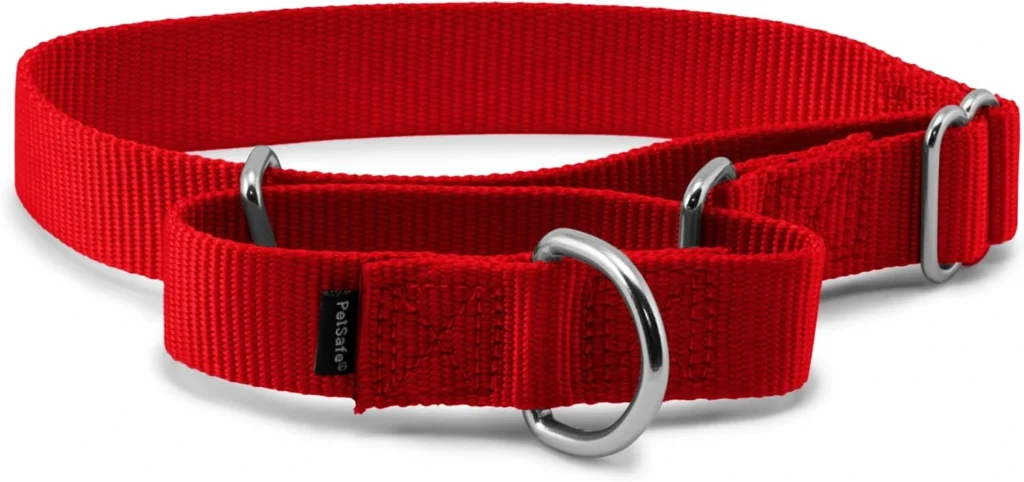

PetSafe Martingale Collar has a double-loop design that tightens slightly when a puppy backs away or pulls, so it can’t slip over the head, then loosens when the leash goes slack. It won’t teach loose leash walking on its own, but it keeps a wriggly puppy safely attached while you train. The quick-snap buckle makes it fast to put on, and the adjustable range covers a growing puppy for months.
| Pros | Cons |
|---|---|
| ● Tightens only enough to prevent escape, never chokes | ● Not meant for unsupervised or all-day wear |
| ● Quick-snap buckle makes daily use genuinely fast | ● Needs the right snug fit to work correctly, loose sizing reduces control |
| ● Adjustable range accommodates a growing puppy for months | ● Static martingale style, no reflective material on base version |
Best for: puppies that back out of flat collars or need gentle, consistent leash correction.
2. Halti Optifit Headcollar – (Best for Strong Pullers)
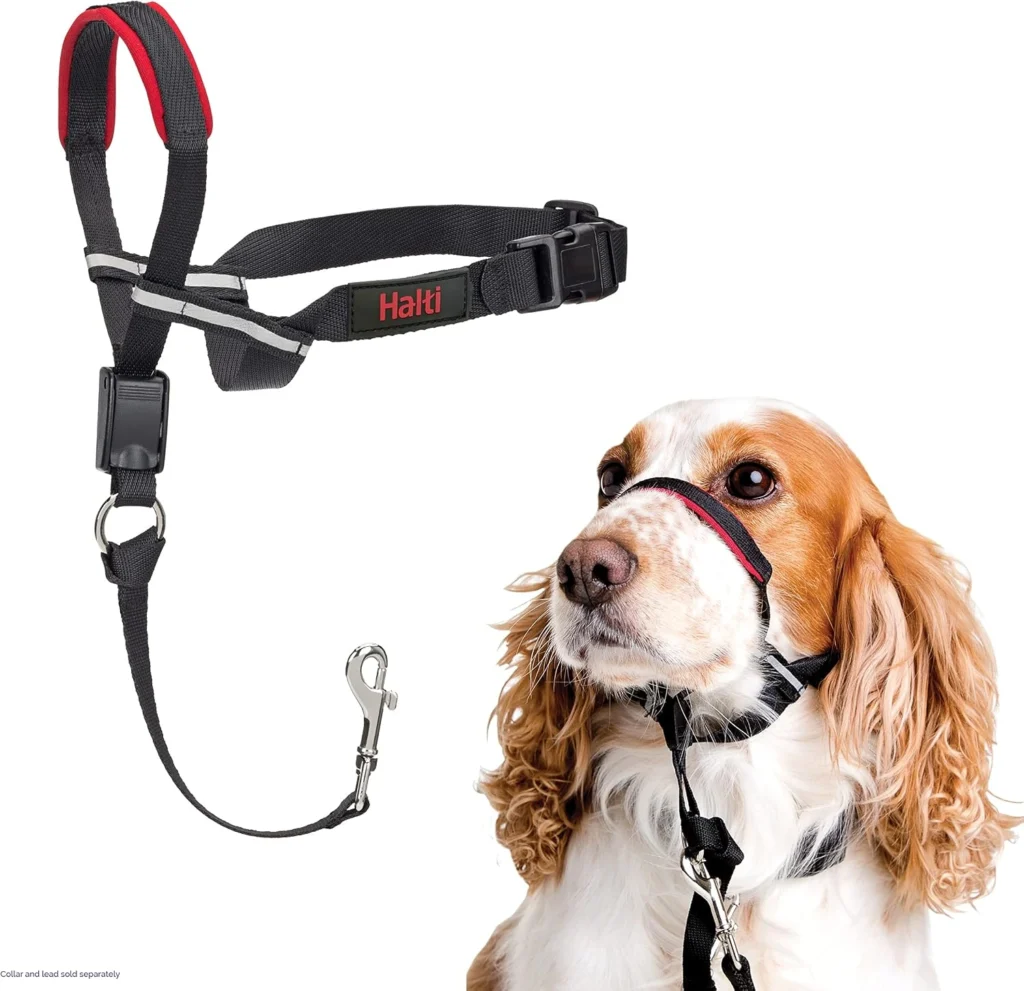
Halti Optifit Headcollar steers a puppy’s head rather than correcting at the neck, which gives far more control over a determined puller with minimal physical force. The uniquely contoured cheek straps keep it from sliding into the eyes or down toward the mouth, and it includes a safety link that connects to the puppy’s regular collar as backup.
| Pros | Cons |
|---|---|
| ● Head control stops pulling more effectively than neck-based corrections | ● Requires a real adjustment period, most puppies resist it at first |
| ● Contoured straps stay in place better than generic head halters | ● Not a standalone leash attachment, needs the included safety link |
| ● Backup safety link prevents a full slip if the halter comes loose | ● Pricier than a basic martingale collar |
Best for: puppies that pull hard and haven’t responded to gentler tools.
3. Ruffwear Front Range Harness: Best Harness for Puppies
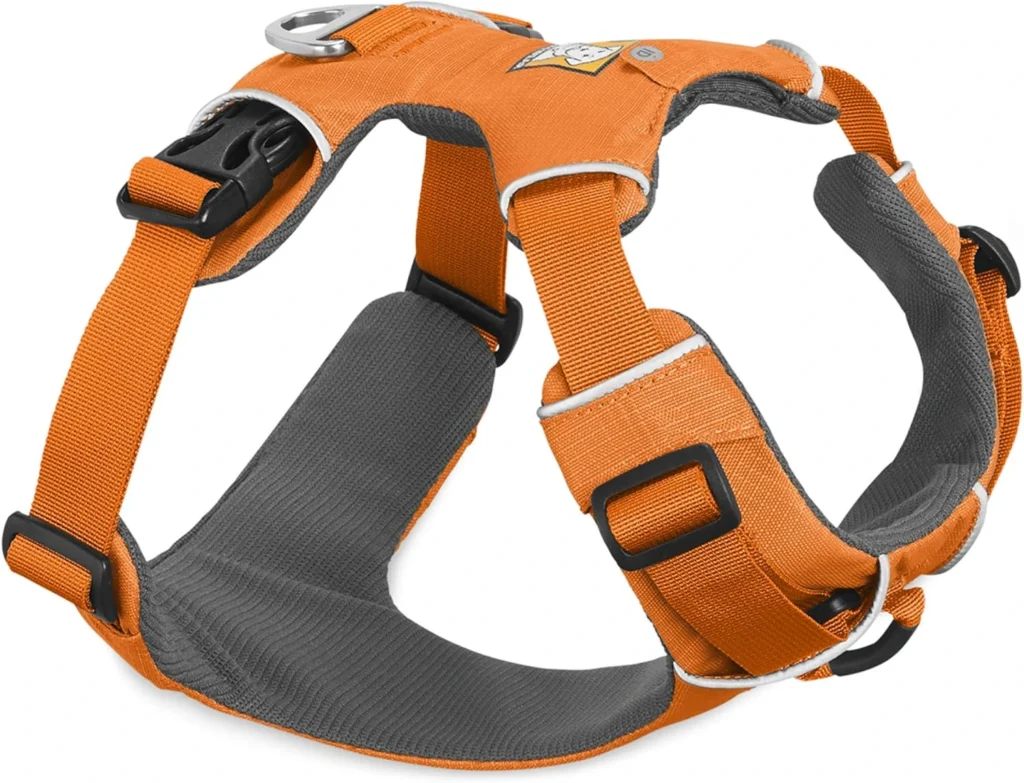
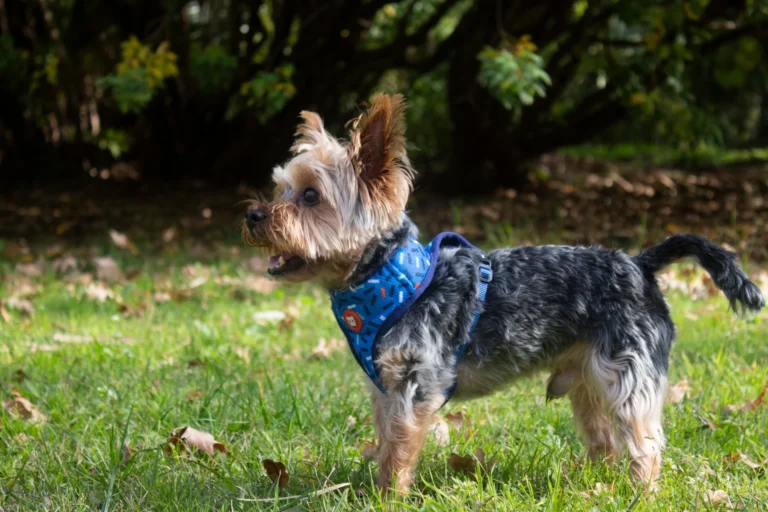
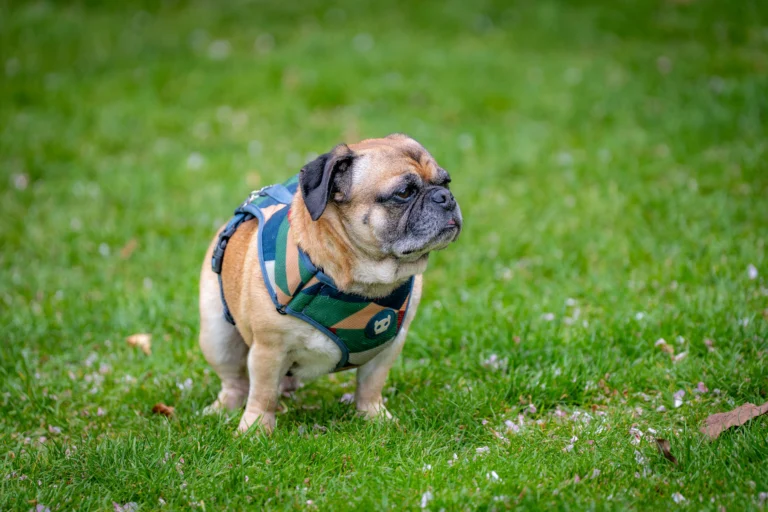
Ruffwear Front Range Harness is a padded, reflective harness with a front clip for walking and a back clip for relaxed strolls. Because the leash attaches at the chest, a pulling puppy gets turned sideways instead of straining against its neck, which makes it a gentle choice for the earliest leash sessions. It has multiple adjustment points, and buyers report it staying put on wriggly puppies.
| Pros | Cons |
|---|---|
| ● No neck pressure at all | ● Costs noticeably more than the collars on this list |
| ● Padded and reflective for comfort and visibility | ● Fast-growing puppies may need a second size |
| ● Front and back leash clips, fully adjustable | ● Reduces pulling but doesn’t remove the need for training |
Best for: Young puppies starting leash training and needing a comfortable, no-pull harness without neck pressure.
4. PetSafe Petite Martingale – (Best for Toy and Small Breeds)
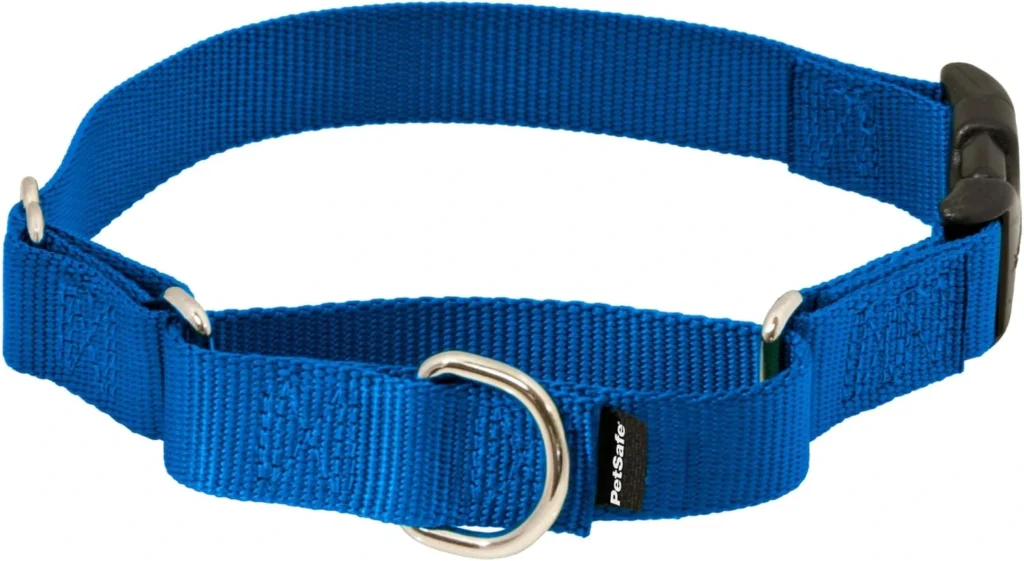
PetSafe Petite Martingale shrinks the standard martingale design down to a genuinely small scale, built for toy breed puppies that a medium-sized martingale would swallow whole. It keeps the same gentle tighten-and-release mechanism at a proportionally lighter weight and narrower strap.
| Pros | Cons |
|---|---|
| ● Scaled correctly for toy breeds, not just a medium collar turned down | ● Petite sizing means puppies outgrow it faster than a mid-size collar |
| ● Same escape-proof mechanism as larger martingale collars | ● Limited color range compared to the standard PetSafe martingale |
| ● Lightweight strap avoids adding bulk to a small neck | ● Not rated for dogs much past toy or small breed size |
Best for: toy breed puppies that need a properly scaled martingale, not a scaled-down one.
5. Ruffwear Web Reaction: Best Premium Martingale
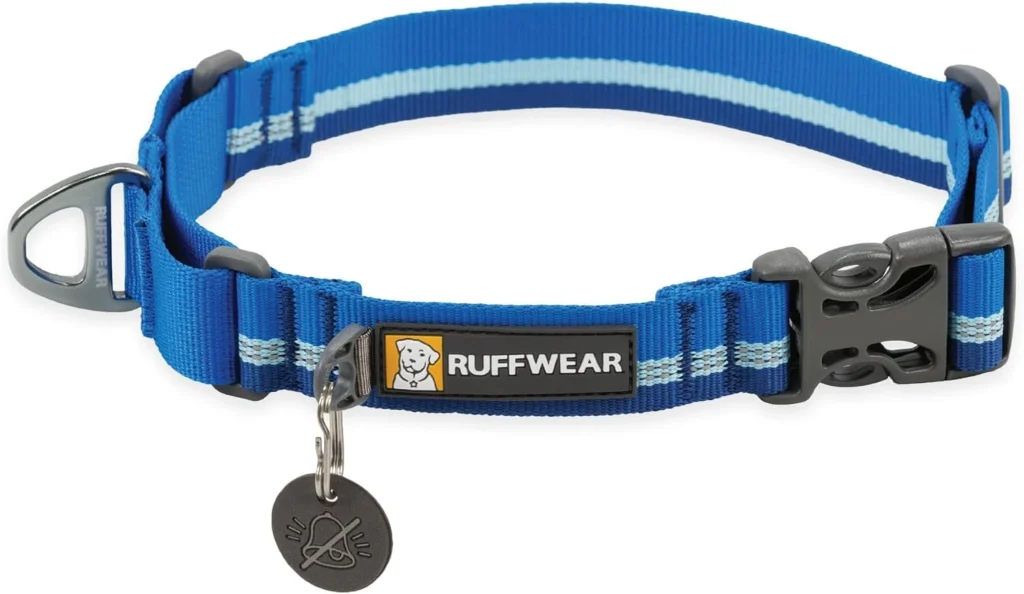
Ruffwear Web Reaction is a limited-cinch martingale with a side-release buckle, so you don’t have to pull it over your puppy’s head. Reflective webbing, an aluminum leash ring, a separate ID tag point and a tag silencer make it a step up from basic nylon collars. The cinch is only as tight as needed to stop backing out, which is exactly the job a puppy martingale should do.
| Pros | Cons |
|---|---|
| ●Buckle makes it easy on and off, even for head-shy puppies | ●Smallest size starts at 11 inches, too big for toy breeds |
| ●Reflective webbing for evening walks | ●Costs more than a basic PetSafe martingale |
| ●Separate ID tag ring plus silencer | ●Not ideal for hard pullers, since neck pressure adds up |
Best for: Medium and large puppies whose owners want a durable, premium-looking first martingale collar.
Buying Guide: How to Choose the Best Collar for Puppy Training
Martingale vs Head Halter
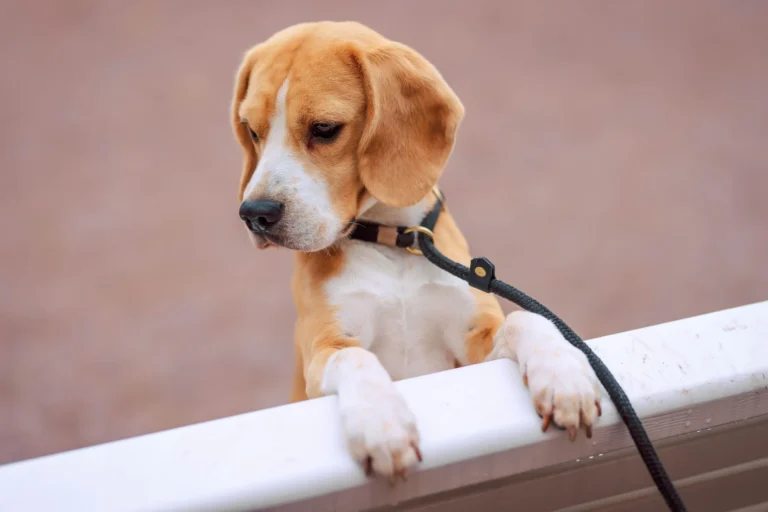
A martingale collar corrects at the neck with limited tightening, ideal as a first training collar for most puppies. A head halter redirects at the head, used when pulling is severe enough that neck pressure alone isn’t working. Our what is a martingale collar guide covers the mechanism in detail.
No-Pull Collar for Puppies: What Actually Works
No collar stops pulling by itself. For puppies that pull, a head halter or front-clip harness gives the most physical control, and reward-based loose-leash training does the rest. Avoid shock and prong tools, which can create fear around walking. Our explains how harnesses compare.
How to Fit Each Type
- Flat collar: you should fit two fingers under the strap.
- Martingale: fit it so the loop tightens snug without closing completely, and so it still slides over
the head only with effort when loose. - Harness: measure the chest and recheck every few weeks as your puppy grows.
Our dog collar sizing guide covers measuring a growing puppy correctly.
Everyday Wear vs Training Gear
Martingales and head halters are for supervised walks. Take them off afterward, and consider a
breakaway collar for ID tags at home. Many trainers also advise removing collars in the crate.
Consider a Harness First for Very Young Puppies
Many trainers recommend a harness over any collar for puppies still building basic leash comfort, since it avoids neck pressure entirely during the earliest sessions. Our what is a dog harness guide covers that option.
Conclusion
The PetSafe Martingale Collar covers most puppies as a first training collar. The Halti Optifit Headcollar steps in for genuinely strong pullers, the PetSafe KeepSafe Collar handles safe everyday wear between sessions, and the PetSafe Petite Martingale is scaled correctly for toy breeds rather than just sized down.
Frequently Asked Questions
Q: What is the best type of collar for training a puppy?
A: A martingale collar for most puppies. It corrects gently without choking and prevents backing out of the collar.
Q: Is a head halter safe for puppies?
A: Yes, when introduced gradually and fitted correctly. It gives more control for strong pullers than a neck collar alone.
Q: Can a puppy wear a training collar all day?
A: No. Training collars like martingales come off after sessions. A breakaway safety collar is better for everyday wear.
Q: When should I size up my puppy’s collar?
A: As soon as two fingers no longer fit comfortably under the strap. Recheck every few weeks during active growth.
Q: Should I use a harness instead of a collar for my puppy?
A: Many trainers recommend starting with a harness, then introducing a collar once basic leash comfort is established.
Q: What size martingale collar does a toy breed puppy need?
A: A petite or extra-small sizing, not a medium collar adjusted down. Proportional width matters as much as length.