
Types of Dog Collars: Which One Does Your Dog Need?
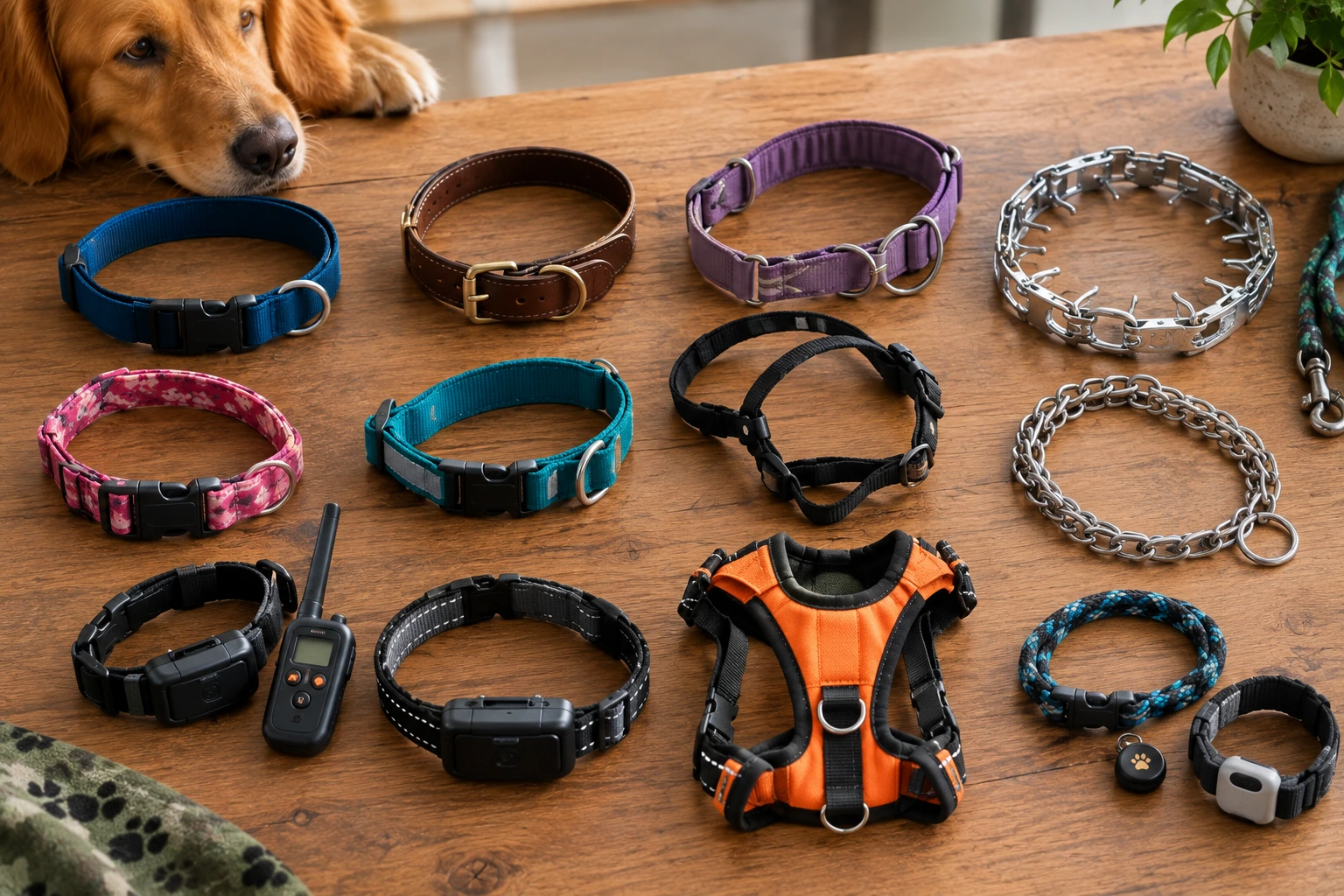
Most owners buy the wrong collar not because they chose badly, but because nobody explained what each type is actually built for. A flat collar and a martingale look similar on a shelf and solve completely different problems.
Below is what each of the main types of dog collars does, and the kind of dog it suits.
Everyday Collars

Flat Collar
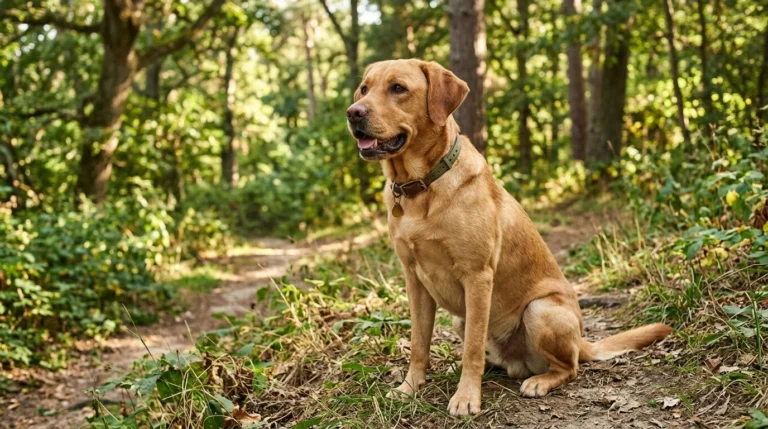
The standard collar: a nylon, leather, or fabric strap with a buckle or quick-release clip and a D-ring for tags and a leash.
Best for: calm, well-trained dogs and everyday ID tag wear.
Limitation: all pulling force lands on a narrow band across the throat, so a dog that pulls hard will cough, and a dog with a narrow head can back straight out of it. Our best dog collar for large dogs and best collars for small dogs guides cover picks by size.
Martingale Collar
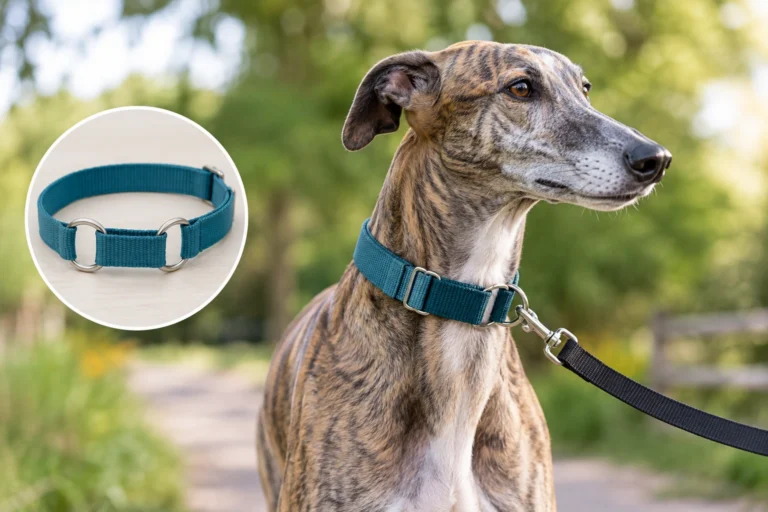
Two loops: a large one around the neck and a smaller control loop the leash attaches to. Pulling tightens the large loop to a fixed limit, then stops.
Best for: sighthounds and any dog that slips out of flat collars.
Limitation: supervised use only, since the loop can snag. Full details are in our What Is a martingale collar guide.
Breakaway Collar
A flat collar with a buckle designed to release under pressure, preventing strangulation if the collar catches on something.
Best for: dogs left unsupervised in yards or crates.
Limitation: the release mechanism means it isn’t safe for leash attachment on most models.
Training Collars
Head Halter
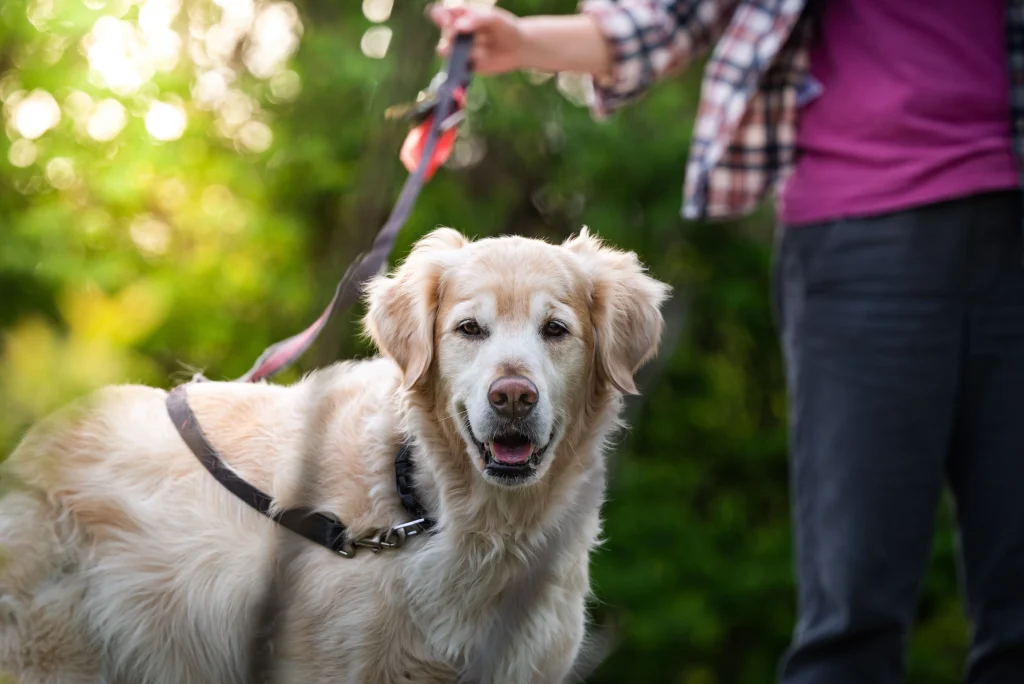
Fits around the muzzle and clasps behind the ears, steering the head rather than the neck. Keeps pressure off the trachea entirely.
Best for: strong pullers where the handler needs maximum directional control.
Limitation: many dogs resist it initially and need a gradual introduction. Some become subdued or panicky.
Prong (Pinch) Collar
Interlocking metal links with blunt inward-facing prongs that distribute pressure evenly around the neck.
Best for: leash training with large, strong dogs, under experienced guidance.
Limitation: highly fit-dependent, and unsuitable for aggressive, fearful, or small dogs. Our What Is a Prong Collar Guide covers correct fit in detail.
Slip Collar (Choke Chain)
A chain loop that tightens when the dog pulls, with no built-in stopping point.
Best for: largely superseded. Most modern trainers recommend a martingale or front-clip harness instead.
Limitation: unlimited tightening carries a genuine injury risk, which is the core reason it fell out of favor.
Electronic Collars
E-Collar (Remote Training Collar)
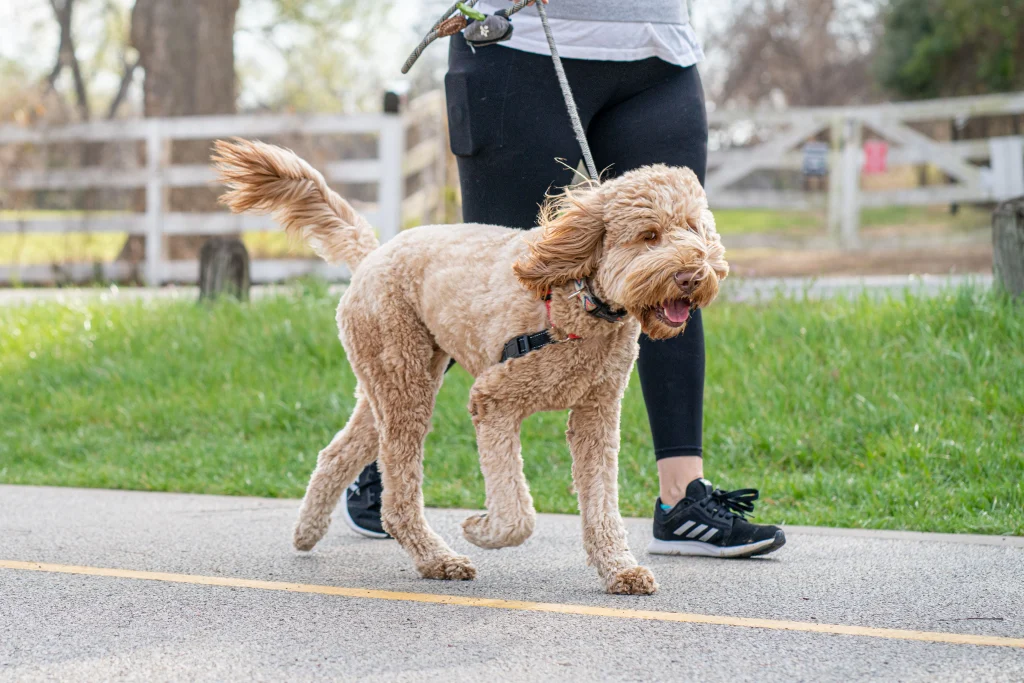
A receiver on the neck paired with a handheld remote, delivering tone, vibration, or adjustable static stimulation when the owner presses a button.
Best for: off-leash recall and distance training with a properly conditioned dog.
Limitation: requires training the dog on what the signal means first. See our What Is an e-collar for dogs guide.
Bark Collar
Activates automatically when it detects barking, using sound, throat vibration, or both.
Best for: excessive barking after other training methods have failed.
Limitation: addresses the symptom, not the cause. Poor candidates include puppies and anxious dogs. Our What Is a bark collar guide covers the correction types.
Specialty Collars
Flea and tick collars release anti-parasitic medication that spreads through the coat, giving up to 8 months of coverage. Our how flea and tick collars work guide explains the two delivery methods.
GPS and smart collars add location tracking or activity monitoring, usually as an add-on module rather than a standalone collar.
Choosing Between Them
The decision is simpler than the list makes it look. Work through it in this order:
- Every dog needs a flat or breakaway collar for ID tags. That’s the baseline, not a choice.
- Does your dog slip out of it? A martingale solves that specific problem.
- Does your dog pull hard? Try a front-clip harness before any correction collar. Our dog collar vs harness comparison covers when a harness is the better call.
- Still pulling after that? This is where head halters, prong collars, and e-collars enter the conversation, ideally with a trainer’s input.
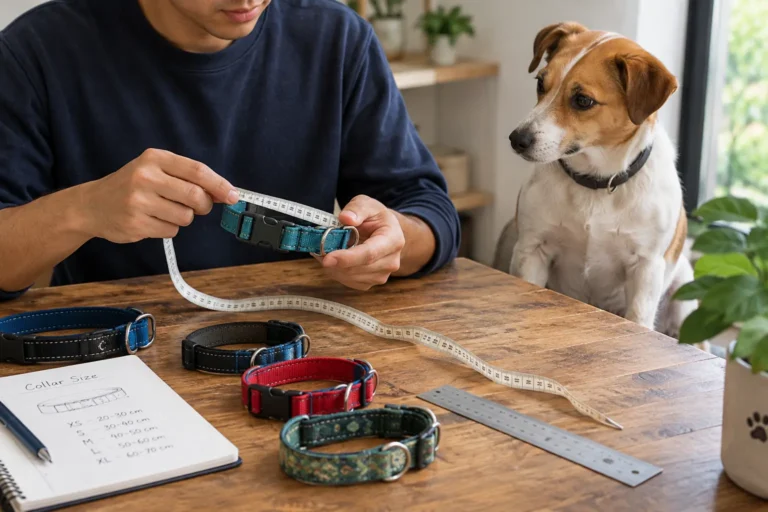
Whatever you choose, sizing matters more than type. Our dog collar sizing guide covers measuring.
Conclusion
There’s no single best collar, only a right collar for a specific dog and situation. Most dogs need a flat collar for ID and nothing more. Training collars exist for genuine problems that gentler tools haven’t solved, and they carry real requirements around fit and technique that a flat collar simply doesn’t.
Frequently Asked Questions
Q: What is the most common type of dog collar?
A: The flat collar, a simple buckled strap with a D-ring. It suits calm dogs and is the standard place to keep ID tags.
Q: Which dog collar is best for a dog that pulls?
A: Start with a front-clip harness rather than a collar. If that fails, a head halter or martingale gives more control without unlimited tightening.
Q: What’s the difference between a martingale and a choke chain?
A: A martingale stops tightening at a set point. A choke chain has no limit, which is why most trainers now avoid it.
Q: Is a prong collar safe?
A: Only with correct fit, sized snug and sitting high behind the ears. It’s unsuitable for small, fearful, or aggressive dogs.
Q: Can my dog wear a training collar all day?
A: No. Prong collars, bark collars, and e-collars go on for sessions and come off afterward. Only flat and breakaway collars suit all-day wear.
Q: What’s the difference between an e-collar and a bark collar?
A: An e-collar is remote-controlled by the owner. A bark collar activates automatically when it detects barking.

One Comment