How Flea & Tick Collars Work: 2 Types Explained
How do flea and tick collars work? A flea and tick collar is a plastic collar infused with antiparasitic medication that releases slowly onto your dog’s skin and coat. From there, the dog’s own skin oils carry the active ingredients across the body. It behaves less like a collar and more like a slow-release topical treatment that happens to be worn around the neck.
The important detail most product pages skip: not all flea collars work the same way, and the difference determines whether one is worth buying.
The Two Delivery Methods
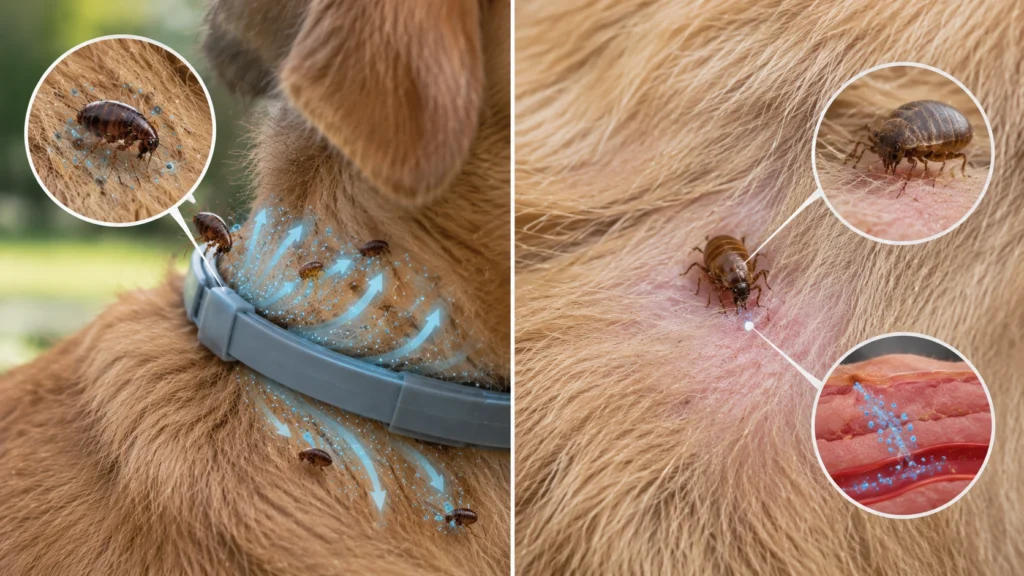
Contact-kill collars release ingredients that spread across the skin and coat. Fleas and ticks are affected when they touch the treated surface, meaning they don’t need to bite your dog first. Modern collars, including Seresto, work this way.
Absorption collars release ingredients that absorb into the fatty layer of the skin. Fleas are killed only after they bite. Protection is real, but your dog still gets bitten, which matters for dogs with flea allergy dermatitis.
For allergic dogs, a contact-kill collar is generally the better choice, since the goal is preventing the bite, not just killing the flea afterward.
How the Ingredients Spread Across the Body
The mechanism is the same one that makes topical spot-on treatments work.
Active ingredients move from the collar into the sebaceous glands, the oil glands in your dog’s skin. Those glands naturally lubricate the coat, and in doing so, they distribute the medication from the neck outward across the whole body, including the tail.
The difference from a topical treatment is timing. A spot-on delivers its full dose at once and lasts about 30 days. A collar releases the same kind of ingredients gradually over up to 8 months.
Which Collars Vets Actually Recommend
This is where the category splits sharply.
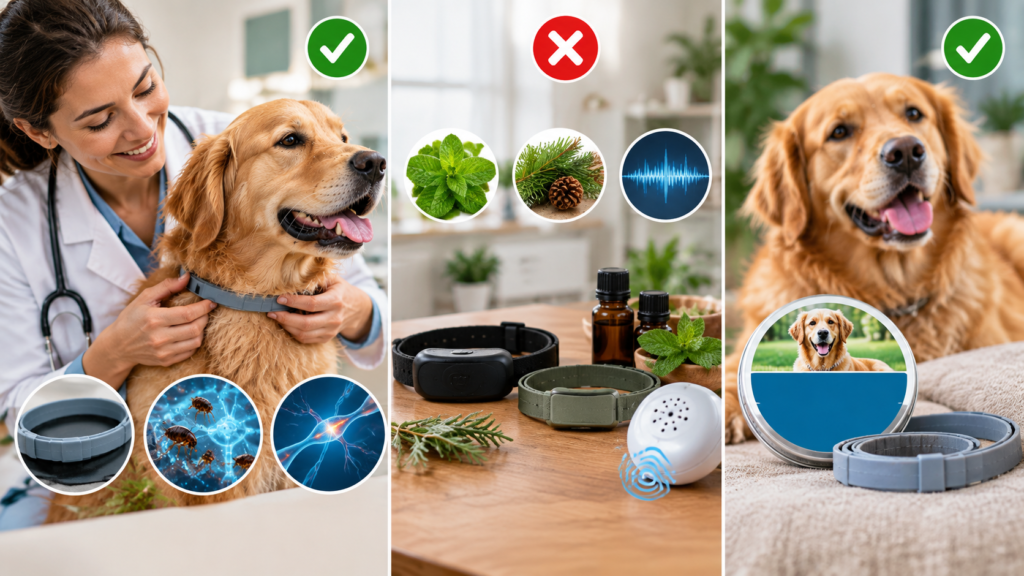
Medicated collars contain EPA-registered insecticides with published efficacy studies behind them. These are the ones vets recommend. Common active ingredients include imidacloprid and flumethrin, which target the nervous systems of fleas and ticks.
Essential oil and ultrasonic collars, marketed as natural alternatives, have no proven efficacy. Products relying on peppermint oil, cedar oil, or ultrasonic frequency have not demonstrated protection in controlled studies.
Among medicated options, Seresto is the collar with the most complete safety and efficacy study record, which is why it’s the most commonly vet recommended. Our Seresto collar review covers that product specifically, including the EPA review history.
How Long They Last and What Shortens It
Most medicated collars are rated for up to 8 months, compared to roughly 30 days for a topical. Two things reduce that in practice.
Water exposure. Most collars are water-resistant, not waterproof. Typical guidance is limiting bathing or swimming to about once per month.
Interrupted wear. The collar has to stay on continuously. Taking it off for stretches breaks the release cycle and reduces the total protection period.
The 360-Degree Contact Requirement
A detail that explains a lot of “the collar didn’t work” complaints: the collar needs complete, continuous contact around the neck to distribute ingredients properly.
A collar hanging loose, sitting over thick matted fur, or worn under another collar can leave gaps in coverage. Fit it with the standard two-finger clearance and make sure it sits against skin, not on top of a coat layer. Our dog collar sizing guide covers measuring.
Safety Points Worth Checking First
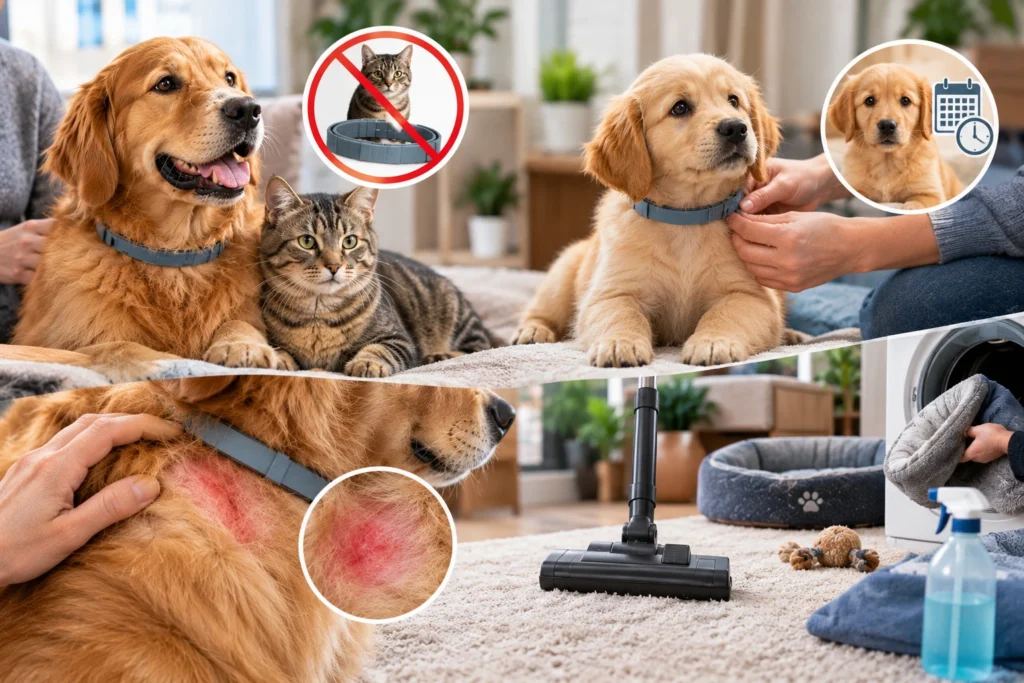
Species labeling matters. Some ingredients safe for dogs are highly toxic to cats. Never use a dog collar on a cat, and check labeling in multi-pet households.
Age limits apply. Most medicated collars are labeled for use from around 7 to 8 weeks of age, and puppies need the fit rechecked as they grow.
Monitor the first days. Skin irritation at the collar site is the most commonly reported reaction. Remove the collar and contact your vet if it appears.
Collars alone aren’t always enough. In an active infestation, most vets recommend combining a collar with environmental treatment of bedding and carpets.
Conclusion
Flea and tick collars work by using your dog’s own skin oils to spread medication across the body, giving up to 8 months of coverage from one application. The two things that determine whether one actually works are whether it’s genuinely medicated rather than essential-oil based and whether it maintains full contact around the neck. Talk to your vet before choosing, particularly in a multi-pet home.
Frequently Asked Questions
Q: Do flea and tick collars actually work?
A: Medicated collars with EPA-registered ingredients do. Essential oil and ultrasonic collars have no proven efficacy in controlled studies.
Q: How long does a flea collar last?
A: Most medicated collars last up to 8 months, compared to about 30 days for a topical treatment. Frequent swimming shortens that.
Q: How do flea collar ingredients reach the whole body?
A: They move into the skin’s sebaceous oil glands, which naturally spread them across the coat from the neck outward.
Q: Can my dog still get bitten while wearing a flea collar?
A: It depends on the type. Contact-kill collars affect fleas before they bite, while absorption collars only work after a bite occurs.
Q: Are flea collars safe for cats?
A: Only collars specifically labeled for cats. Some dog ingredients are highly toxic to cats, so never share collars between species.
Q: At what age can a puppy wear a flea collar?
A: Most medicated collars are labeled for use from around 7 to 8 weeks. Recheck the fit regularly as the puppy grows.