

How Do Shock Collars Work? What Dog Owners Should Know
How shock collars work comes down to two pieces of hardware talking to each other: a handheld transmitter and a receiver collar on the dog’s neck. Press a button, a radio signal travels between them, and the receiver delivers one of three outputs through two metal contact points against the skin. The mechanism is simple. Using it correctly is where most owners go wrong.
The Hardware: Transmitter, Receiver, Contact Points
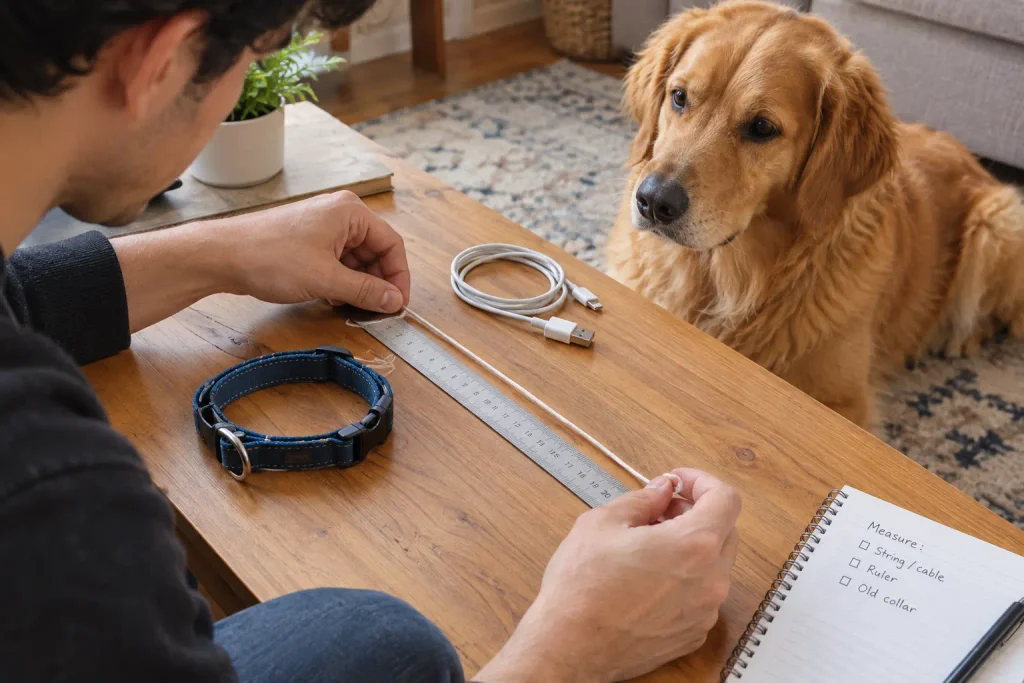
The transmitter is the remote in your hand, sending a radio signal at the press of a button. The receiver sits in the collar itself and picks up that signal. Two contact points, small metal probes pressed against the skin, deliver whatever output the transmitter selected.
That’s the entire physical setup. Everything else the number of levels, the correction type, and the range is built on top of this same basic loop.
Three Outputs, Not Just One
Modern collars deliver one of three signals, and confusing them is where the “shock” reputation comes from.
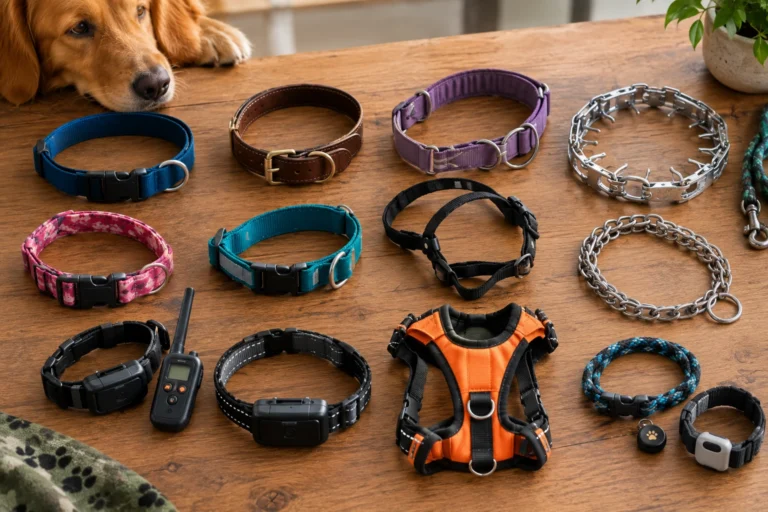
Static stimulation is the actual electrical pulse, adjustable across a wide range of intensity, from barely perceptible to strong. Vibration delivers a physical buzz with no electrical current at all. Tone is an audible beep, used purely as a marker with no physical sensation.
Quality collars offer all three and let you choose which one to use, rather than static being the only option.
Momentary vs Continuous Delivery

Most collars offer two delivery modes. Momentary sends a single, brief pulse each time you press the button, used to mark a specific moment, like the instant a dog breaks a stay. Continuous holds the stimulation as long as the button is held and is generally used more sparingly and for a shorter duration.
Momentary is the more common default for everyday training, since a single, well-timed pulse communicates more clearly than a sustained one.
Finding the Level Without Overshooting It
The correct process is to start at the lowest level and work up one step at a time, watching the dog rather than the dial. You’re looking for a small, subtle reaction, an ear flick, a head turn, or a brief pause, not a yelp or a flinch. Once you see that small response, that’s the level to train at. Going further than that isn’t more effective; it’s just stronger than necessary.
The Mistake That Makes Collars Stop Working: Becoming “Collar-Wise”

This is the part most guides skip entirely, and it’s the difference between a collar that works and one that quietly fails.
If a dog learns to associate the correction with the physical presence of the collar rather than with their own behavior, they become what trainers call collar-wise: well-behaved while wearing it, but back to old habits the moment it comes off. This happens when the collar is only ever used as a punishment device rather than paired consistently with a command or cue.
The fix is pairing every correction with a specific, consistent signal, a verbal command, or a particular leash cue, so the dog learns to respond to that signal rather than to the sensation of wearing hardware. Done correctly, the collar becomes a communication tool the dog generalizes past, not a device they only obey while it’s physically on their neck.
Conclusion
A shock collar works through a simple transmitter-and-receiver loop delivering static, vibration, or tone through two contact points. The mechanism itself is straightforward. What actually determines whether it works long-term is finding the lowest effective level and pairing every correction with a consistent cue so the dog learns the behavior rather than becoming collar-wise. For the full picture on modern e-collar technology, see our What Is an E-collar for Dogs guide.
Frequently Asked Questions
Q: What actually happens when a shock collar is activated?
A: The transmitter sends a radio signal to the receiver, which delivers static, vibration, or tone through two contact points on the neck.
Q: What is the difference between momentary and continuous stimulation?
A: Momentary delivers one brief pulse per button press. Continuous holds the stimulation as long as the button stays pressed.
Q: How do I find the right stimulation level for my dog?
A: Start at the lowest level and increase one step at a time until you see a subtle reaction like an ear flick, not a yelp.
Q: What does it mean for a dog to become “collar-wise”?
A: The dog associates good behavior with wearing the collar itself, not the command, and reverts to old habits once it’s removed.
Q: How do I avoid my dog becoming collar-wise?
A: Pair every correction with a consistent verbal command or cue, so the dog learns to respond to that signal, not the hardware.
Q: Is static stimulation the only output shock collars offer?
A: No. Quality collars also offer vibration and tone-only modes with no electrical stimulation at all.





One Comment