Best Bark Collar for Puppies: What Owners Should Know
Choosing the best bark collar for puppies isn’t as simple as picking the most popular option. Puppies bark for different reasons, including excitement, boredom, fear, or separation anxiety, so understanding the cause is the first step toward managing the behavior.
In this guide, we explore what to consider when comparing bark collars for puppies, including age, size, comfort, and response type. You’ll also learn why reward-based training is often a better starting point for young dogs and how to address barking while prioritizing your puppy’s safety and well-being.
Quick Comparison
| Product | Best for | Correction Type | Minimum Weight | Amazon |
|---|---|---|---|---|
PetSafe Basic Bark Control Collar | Overall pick | Static correction | 8 lbs | View on Amazon |
DogRook No-Shock Bark Collar | Best no-shock option | Vibration + beep | 12 lbs | View on Amazon |
Dogtra YS600 | Best premium pick | Sonic + vibration | Small/medium breeds | View on Amazon |
PetSafe Deluxe Little Dog Spray Bark Control | Very young puppies | Citronella spray | 5 lbs | View on Amazon |
SportDOG NoBark 10 | Widely available | Static + tone | Small to large breeds (8lb & above ) | View on Amazon |
Best Bark Collar for Puppies
1. PetSafe Basic Bark Control Collar – (Best Bark Collar for Puppies Overall)
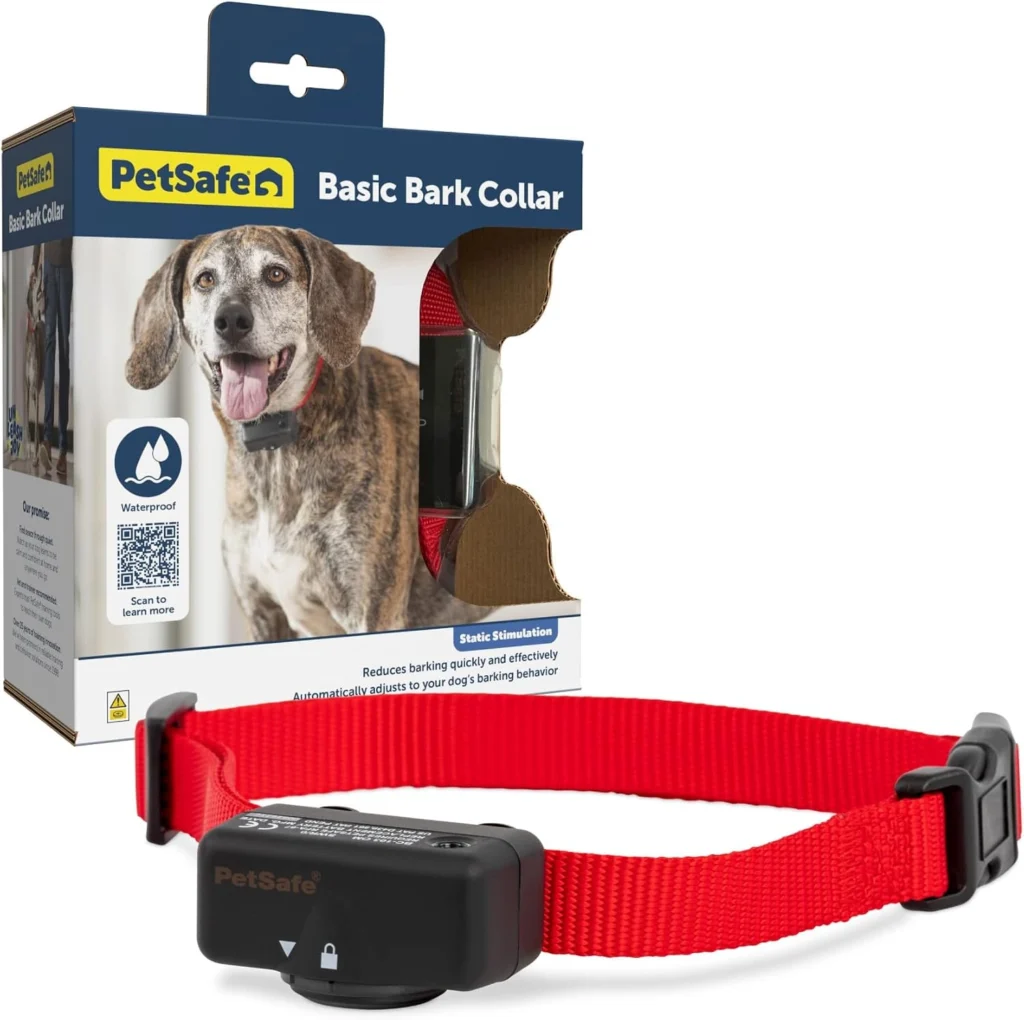

PetSafe Basic Bark Control collar features six levels of static correction and a built-in safety shutoff. It fits dogs weighing 8 pounds and up, is waterproof up to 3 feet, and uses a replaceable battery.
PetSafe recommends it for pets aged 6 months and older, with the product best suited to medium and large dogs.
| Pros | Cons |
|---|---|
Rated down to 8 lbs, covering most puppies past the very young stage | Static correction, so it is not the gentlest option on this list |
Automatically escalates only if barking continues, not on a single bark | Not adjustable to a vibration-only mode |
Fully waterproof and widely available at major retailers | Needs a snug fit to detect barking reliably on a growing puppy |
Best for: owners who want a proven, widely available bark collar for a puppy past the very youngest stage. For a general overview of this category, see our best dog bark collar guide.
2. DogRook No-Shock Bark Collar – (Best No-Shock Bark Collar for Puppies)
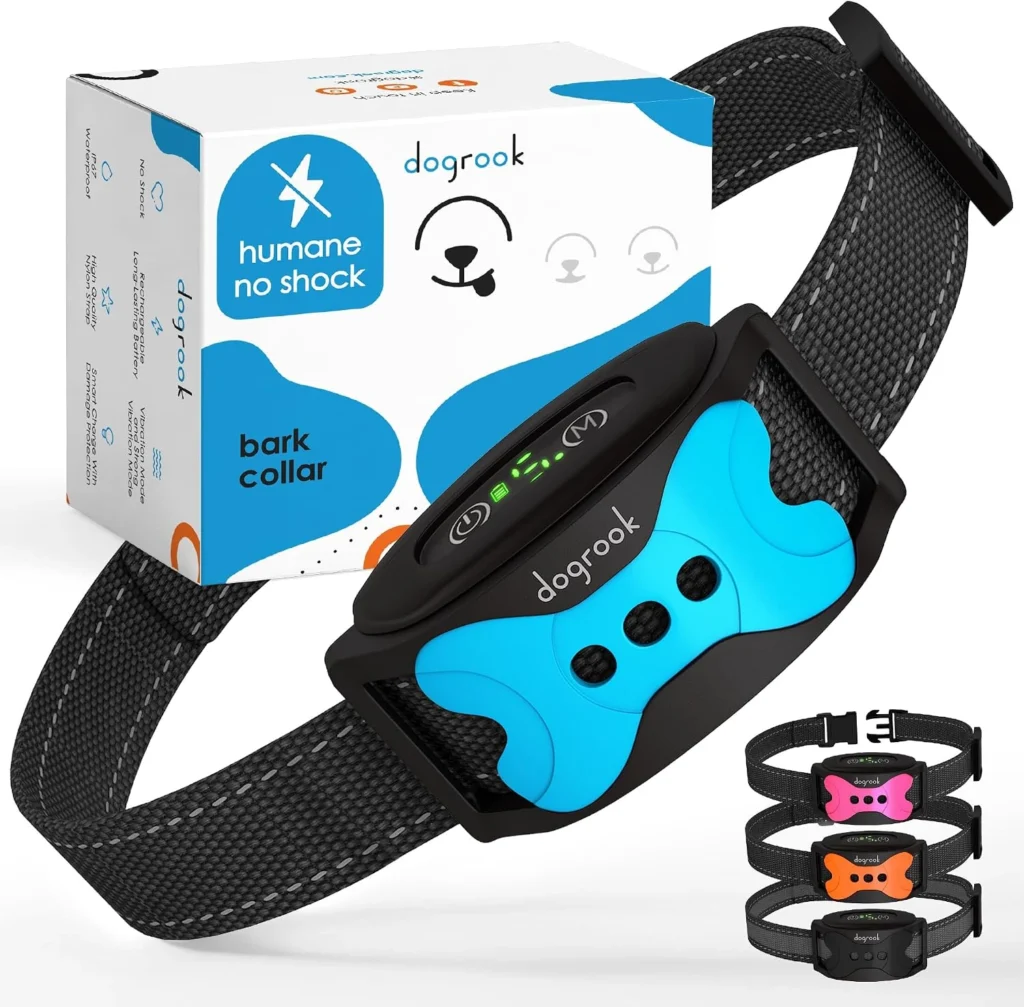
DogRook No-Shock Bark Collar skips static correction entirely in favor of vibration and beep alerts across 5 intensity levels, built for owners who want a puppy’s first bark collar to carry zero risk of shock.
It covers a wide 12 to 110-pound range on one adjustable unit.
| Pros | Cons |
|---|---|
No static shock at all, vibration and beep only | Minimum weight of 12 lbs rules out very young or toy-breed puppies |
5 intensity levels allow a genuinely gradual introduction | Some persistent barkers need more than vibration alone. |
One unit adjusts across a wide 12 to 110 lb range | Battery life is shorter than premium Sonic models |
Best for: owners who want a zero-shock introduction to bark correction for a puppy old and heavy enough for the minimum weight.
3. Dogtra YS600 – (Best Premium Bark Collar for Puppies)
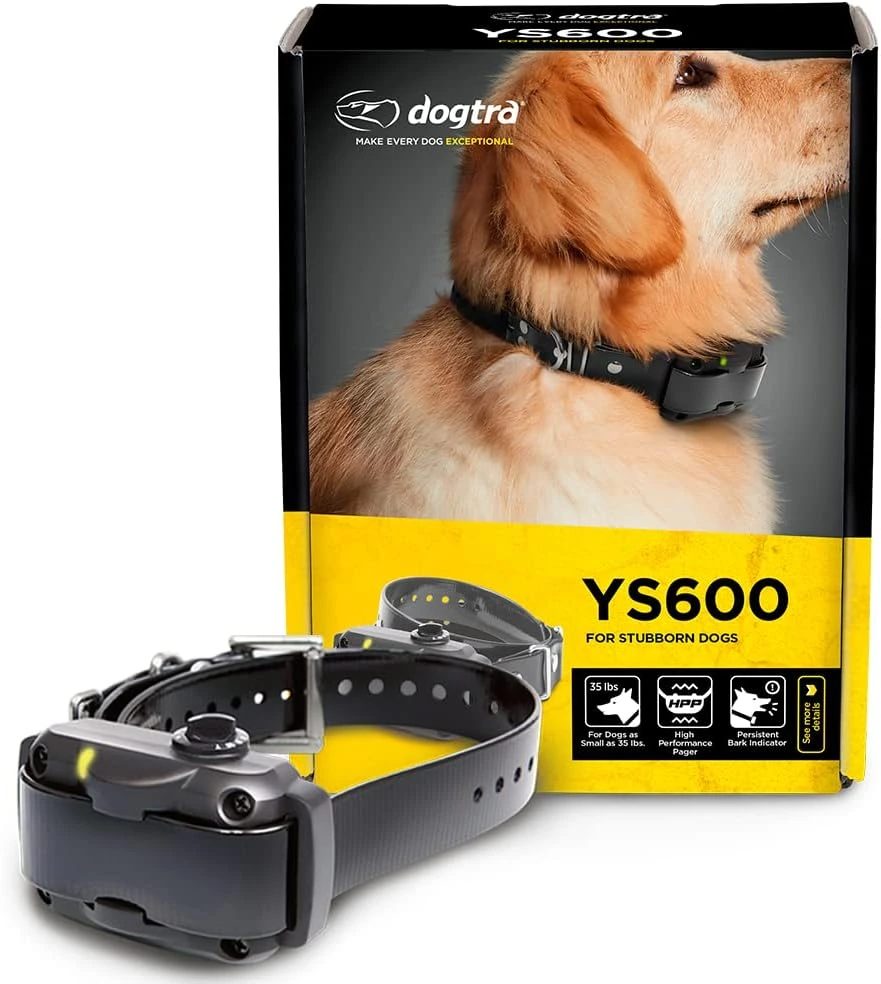
Dogtra YS600, part of Dogtra’s established No-Bark line, uses a sonic plus vibration correction instead of static shock and detects barking through a dual-sensor system designed to avoid false triggers from other dogs barking nearby.
It is the premium pick for owners who want Dogtra’s build quality without any electrical correction at all.
| Pros | Cons |
|---|---|
Sonic and vibration correction only, no static shock | Priced above the budget and mid-range picks here |
Dual-sensor detection reduces false triggers from other dogs | Best suited to small and medium breeds specifically |
Backed by Dogtra’s established training-collar reputation | Less widely stocked than PetSafe or SportDOG at retail |
Best for: owners who want a trusted premium brand’s no-shock bark collar for a small or medium puppy.
4. PetSafe Deluxe Little Dog Spray Bark Control – (Best Bark Collar for Very Young Puppies)
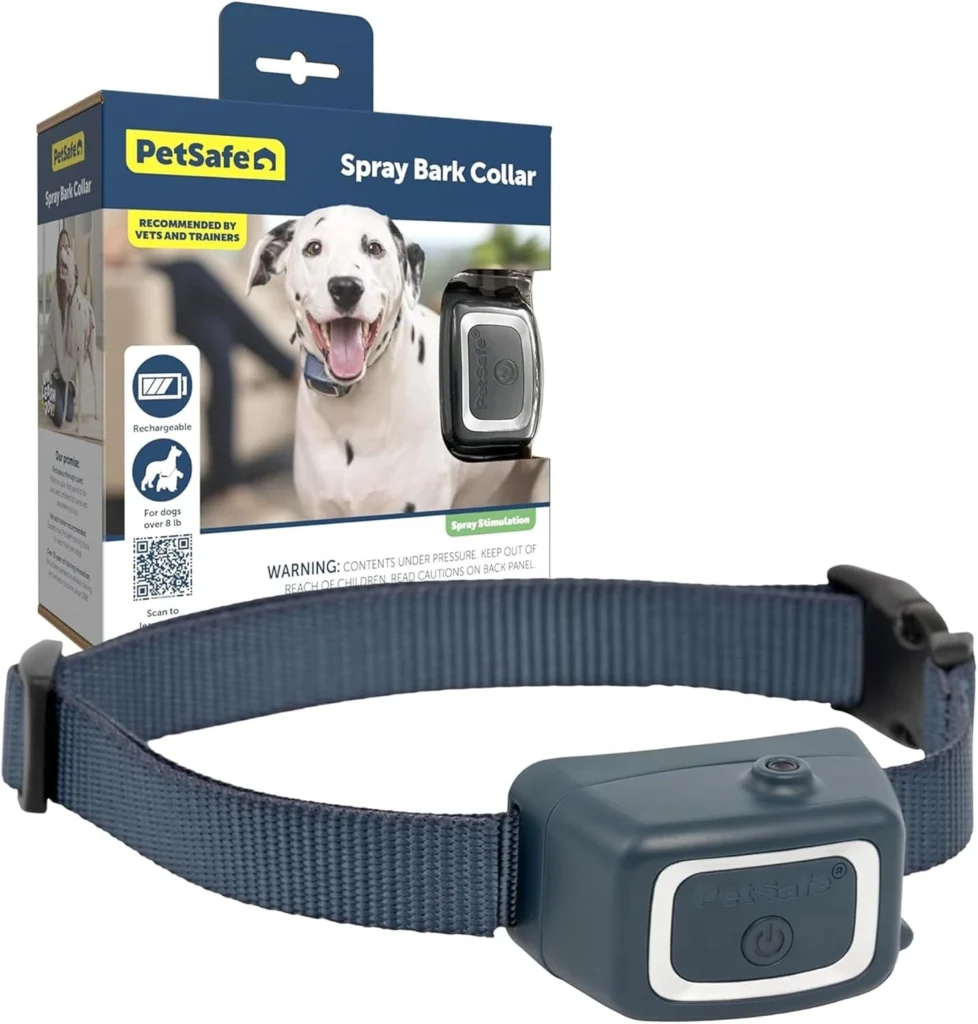
The PetSafe Spray Bark Collar uses a burst of spray to interrupt barking without static electrical correction. It offers citronella and unscented spray options, along with rechargeable battery power for everyday use.
Its adjustable design fits dogs weighing at least 8 pounds, making it an option for owners looking for a spray-based alternative to traditional bark collars.
| Pros | Cons |
|---|---|
Dual-detection technology helps reduce corrections triggered by unrelated noises. | Needs regular citronella cartridge refills |
Scent-based correction with zero electrical or vibration sensation | Water-resistant construction does not make it suitable for swimming. |
Purpose-built for small and toy breeds, not a scaled-down large collar | Effectiveness can vary between dogs, and the collar does not address the underlying reason for barking. |
Best for: very young or toy-breed puppies where even vibration correction feels like too much, too soon. For everyday collar sizing once training starts, see our best dog collar for puppies guide.
5. SportDOG NoBark 10 – (Best Widely Available Bark Collar for Puppies)
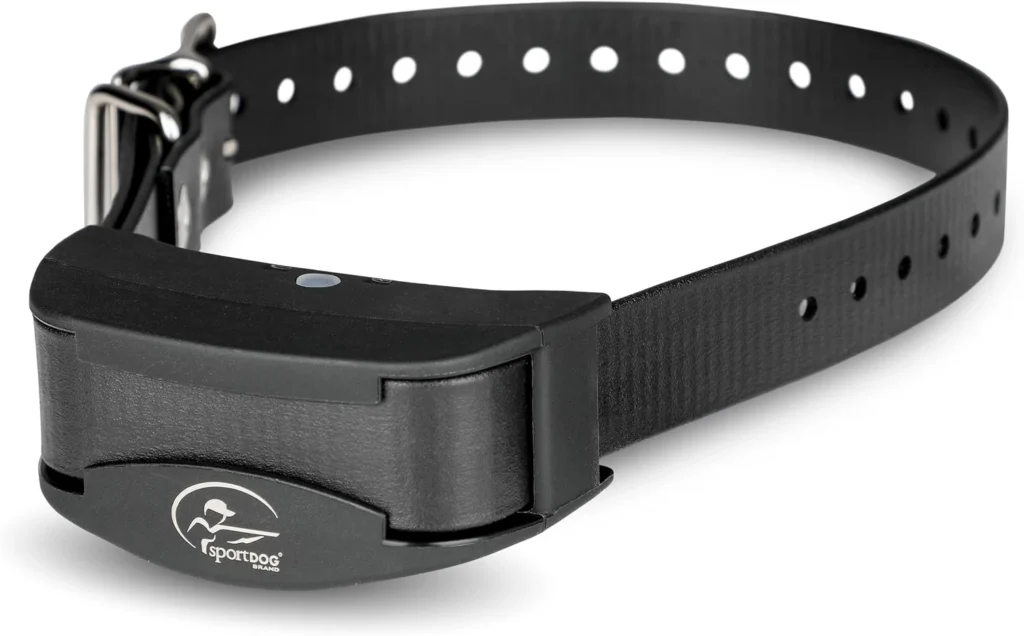
SportDOG NoBark 10 is rechargeable, waterproof, and submersible and spans 10 adjustable levels of static and tone correction across small, medium, and large breeds on one unit. Its wide retail availability makes it easy to replace or exchange quickly if sizing needs adjusting as a puppy grows.
| Pros | Cons |
|---|---|
10 adjustable correction levels cover a wide range of puppy sizes. | A static correction option is present, so it is not a no-shock design. |
Waterproof and fully submersible, unlike basic splash-resistant collars | Learning the full level range takes more setup than single-mode collars. |
Rechargeable and widely stocked for quick replacement | The receiver runs slightly bulkier than dedicated small-breed collars. |
Best for: owners who want one adjustable, widely available collar that can keep working as a puppy grows into adulthood. For a comparison of what distinguishes this category, see our what is a bark collar guide.
Buying Guide: How to Choose a Bark Collar for a Puppy
Check the minimum weight before anything else.
Most bark collars are rated no lower than 8 lbs, and a handful, like the PetSafe Little Dog Spray model, go down to 5 lbs. Never use a collar below its stated minimum.
Prefer vibration, sonic, or scent correction for the youngest puppies.
A puppy still learning basic cues responds well to a gentler cue like vibration or citronella scent before any static correction is introduced.
Look for gradual escalation, not an instant strong correction.
Collars like the PetSafe Basic Bark Control only increase intensity if barking continues, rather than jumping straight to a high level on the first bark.
Fit the collar snugly but not tight.
A loose bark collar misses barking altogether on a growing puppy’s thinner neck, while a too-tight fit causes discomfort. Recheck the fit every couple of weeks as the puppy grows, the same way you would with a puppy training collar.
Rule out a medical cause for excessive barking first.
Teething discomfort, separation anxiety, or an underlying health issue can all be driven by a barking collar alone, which will not fix it. If barking is sudden or extreme, check with a vet before relying on a collar.
Conclusion
For most puppies past the youngest stage, the PetSafe Basic Bark Control Collar is the safest, most widely available default. Owners who want zero static correction do best with the DogRook No-Shock Bark Collar or the premium Dogtra YS600, the smallest or youngest puppies are safest in the PetSafe Deluxe Little Dog Spray Bark Control, and owners who want one collar to grow with the puppy get the most flexibility from the SportDOG NoBark 10.
Frequently Asked Questions
Q: At what age or weight can a puppy wear a bark collar?
A: Most bark collars set a minimum weight rather than an age, commonly starting around 8 lbs, though a few spray or vibration models go as low as 5 lbs.
Q: Are vibration bark collars safer than static ones for puppies?
A: Vibration- and scent-based collars carry no electrical correction at all, making them a gentler starting point for a young or small puppy.
Q: Why does my puppy’s bark collar keep going off around other dogs?
A: Basic microphone-only sensors can pick up nearby barking. Dual-sensor models, like the Dogtra YS600, reduce this by also detecting the vibration of your own dog’s bark.
Q: How long can a puppy wear a bark collar each day?
A: Most manufacturers recommend no more than 8 to 12 hours of continuous wear, with breaks to check the skin underneath for irritation.
Q: Should I try training before using a bark collar on a puppy?
A: Yes. A bark collar works best alongside basic training, not as a replacement for it, especially for a puppy still learning general obedience.
Q: Can a bark collar stop barking caused by anxiety?
A: Not reliably. A collar addresses the barking itself, not an anxiety-driven cause, so persistent anxious barking is worth discussing with a vet or trainer first.