5 Best Harness for Lab Puppy: Find the Right Fit
Choosing the best harness for a Lab puppy means finding one that offers a comfortable fit, room to adjust as your puppy grows, and reliable control during daily walks. We compared harnesses based on adjustability, front-clip options, comfort, and ease of use to find the best options for different needs and budgets. The PetSafe Easy Walk is our overall pick, with alternatives for growing puppies, active walkers, very young puppies, and budget-conscious owners.
Below are our 5 top picks for Lab puppies, including the best options for comfort, control, and adjustability.
Quick Comparison
| Product | Best for | Closure Type | Adjustment | Amazon |
|---|---|---|---|---|
PetSafe Easy Walk Dog Harness | Overall pick | Front-clip, buckle | 2 | View on Amazon |
Kurgo Tru-Fit Smart Harness | Growing puppies | Front + back clip | 5 | View on Amazon |
TRUE LOVE No-Pull Dog Harness (TLH56512) | Active pullers | Quick-release buckle | 4 | View on Amazon |
Puppia Soft Vest Harness | Very young puppies | Step-in, Velcro + buckle | 1 | View on Amazon |
Voyager Step-In Air Mesh Harness | Budget pick | Step-in, Velcro + buckle | 1 | View on Amazon |
Best Harness for Lab Puppy
1. PetSafe Easy Walk Dog Harness – (Best Harness for Lab Puppy Overall)
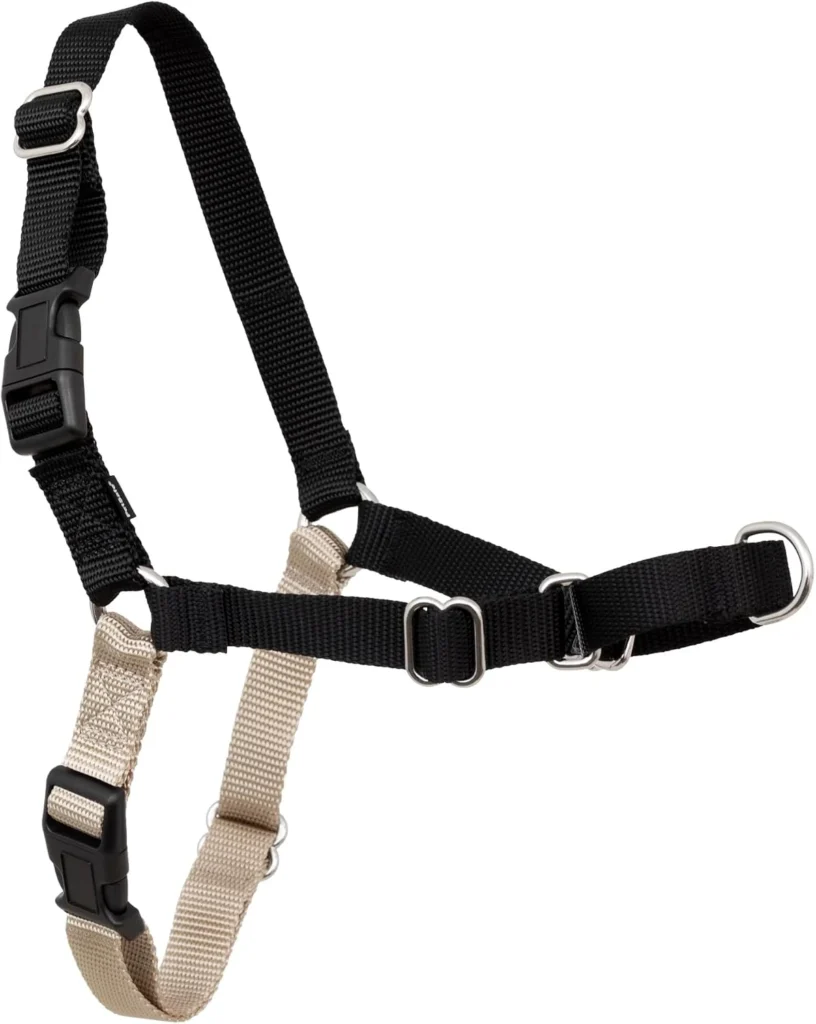

PetSafe Easy Walk uses a patented front-clip loop that gently redirects a pulling dog back toward the handler instead of letting the chest drive forward, which is exactly the pulling pattern a growing Lab puppy develops fast.
The martingale-style loop tightens slightly under tension without choking, and the design has stayed a trainer-recommended staple for no-pull work for close to two decades.
| Pros | Cons |
|---|---|
Front-clip design specifically interrupts pulling instead of just containing it | Only 2 adjustment points, so sizing between sizes can be imprecise |
Priced well below most structured training harnesses | Chest strap can rub under the front legs if not fitted snugly |
Available in XS to XL, covering a Lab puppy through most of its growth | No back clip, so it is not ideal for calm leash walking alone |
Best for: owners who want a proven, affordable no-pull design for a puppy that is already starting to pull.
2. Kurgo Tru-Fit Smart Harness – (Best Harness for a Growing Lab Puppy)
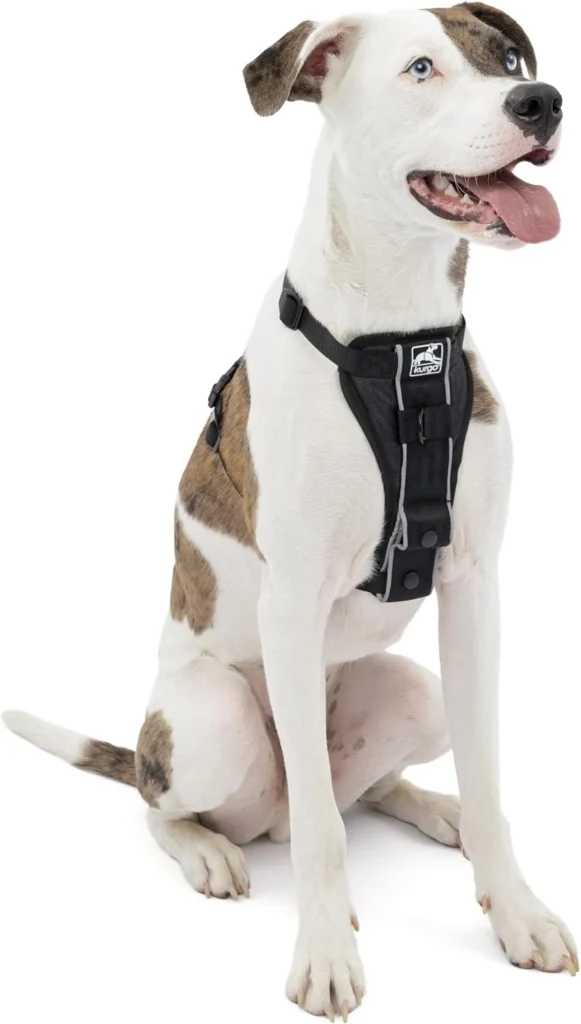
Kurgo Tru-Fit Smart Harness has 5 separate adjustment points across the neck, chest, and girth, which matters more for a Labrador than almost any other breed since Labs can add several inches of chest girth in a matter of weeks.
It includes both a front D-ring for no-pull training and a back D-ring for calmer walks, plus a built-in carabiner for clipping to a car seatbelt.
| Pros | Cons |
|---|---|
5 adjustment points give real room to grow without buying a new harness every month | Padded chest plate adds some bulk compared to a simple vest |
Front and back D-rings cover both training and everyday walking | Priced higher than basic step-in harnesses |
Carabiner clip doubles as a basic car-safety attachment point | Full crash-test certification is a separate, pricier Kurgo line |
Best for: owners who want one harness that fits through several growth stages instead of resizing every few weeks. For the full adult-size range once your Lab stops growing, see our best harness for large dogs guide.
3. TRUE LOVE No-Pull Dog Harness – (Best Harness for Active, Pulling Lab Puppies)
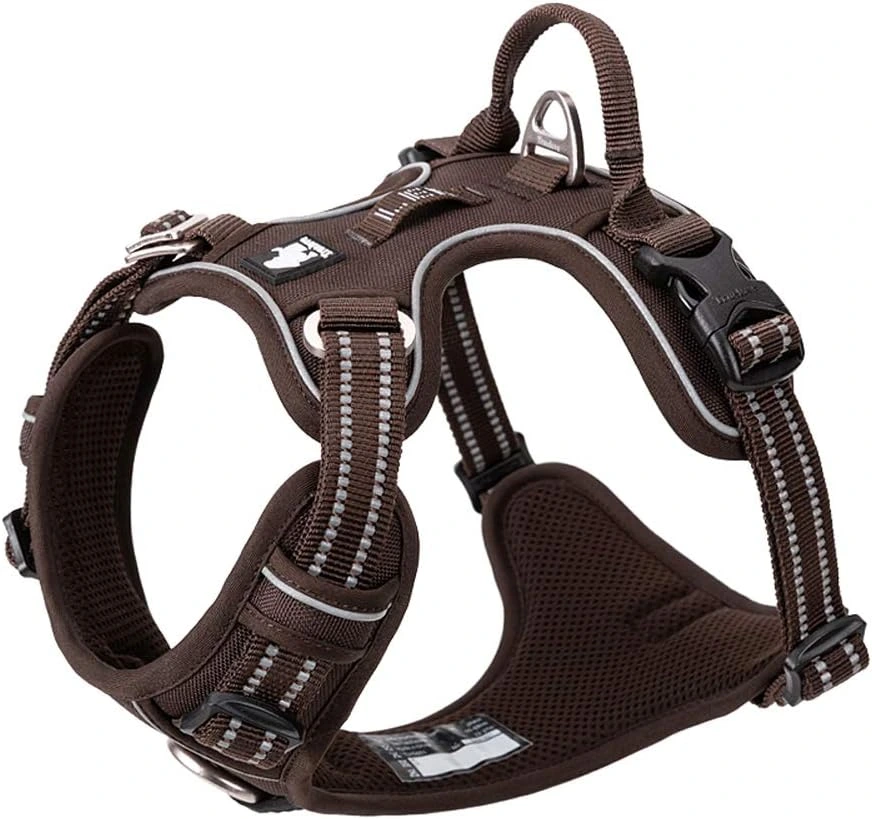
The TRUE LOVE No-Pull Dog Harness is designed for comfortable daily walks and better leash control. It features padded contact areas, reflective material, and durable nylon webbing for everyday use.
Dual leash attachment points and a back handle give owners additional control during walks. Its adjustable fit makes it worth considering for growing puppies, provided you select the correct size.
| Pros | Cons |
|---|---|
Dual leash attachment points for flexible leash placement | Correct sizing requires measuring your puppy |
Reflective material improves visibility in low light | The padded design may feel bulkier than a lightweight mesh harness |
Padded chest and belly areas for comfort | May require some time for puppies to get used to wearing it |
Best for: owners of an active Lab puppy who want extra handling support, reflective visibility, and front-and-back leash attachment options for everyday walks. Before ordering, see our how to measure a dog collar guide to help you measure your puppy correctly.
4. Puppia Soft Vest Harness – (Best Harness for Very Young Lab Puppies)
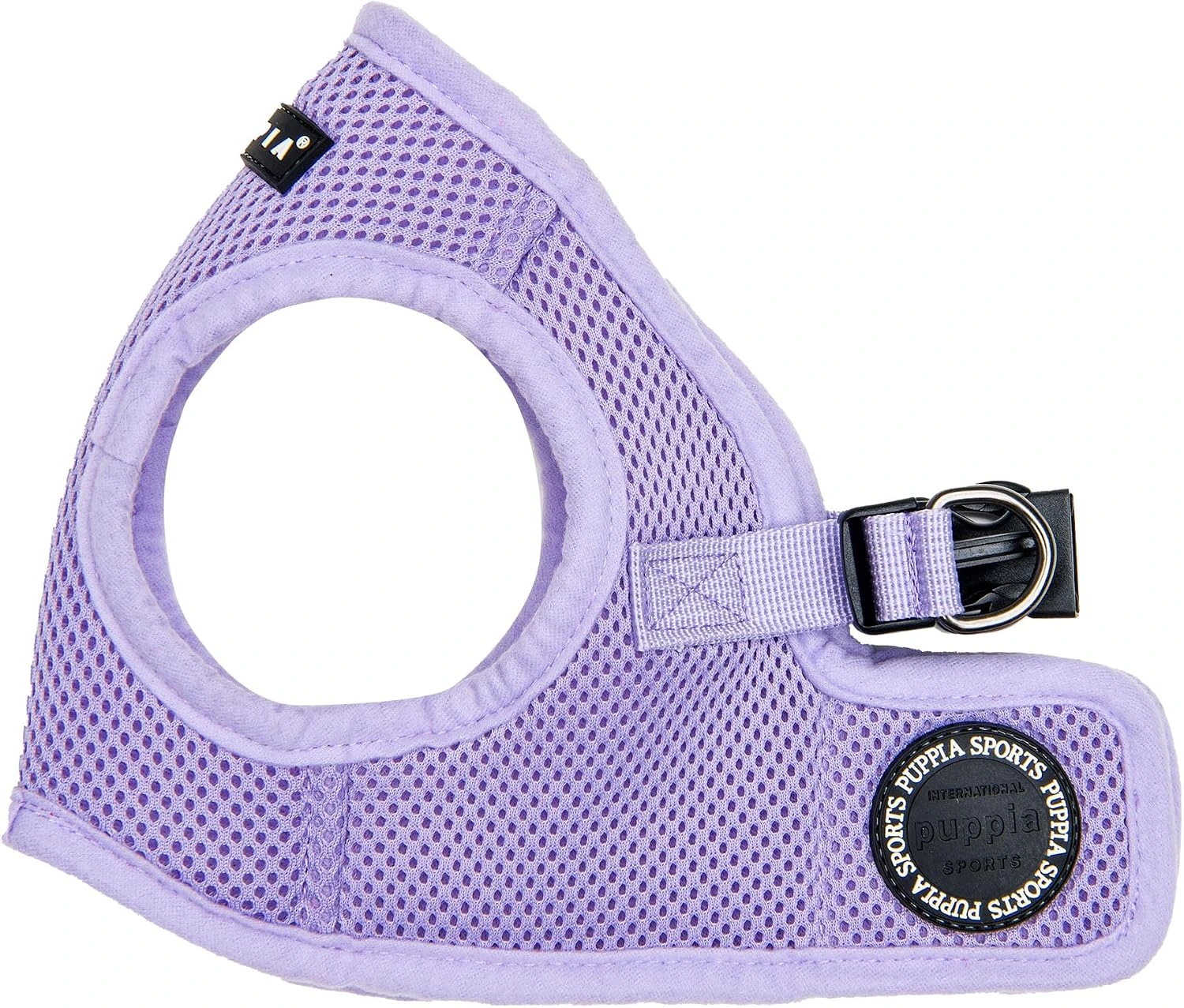
Puppia Soft Vest Harness skips the overhead-loop style entirely in favor of a step-in design, where the harness lays flat on the ground and the puppy simply steps through before the Velcro and buckle close over the back.
That matters for an 8 to 16-week-old Lab puppy that is still nervous about anything passing over its head or ears.
| Pros | Cons |
|---|---|
Step-in design avoids the head-and-ear stress young puppies often show with overhead harnesses | Single adjustment point means it is outgrown faster than the Kurgo pick |
Soft air mesh is gentle on sensitive young puppy skin | Not built for serious pulling once a Lab passes roughly 25 lbs |
Lightweight enough that puppies barely notice wearing it | Velcro closure wears out faster than metal buckle hardware over time |
Best for: very young Lab puppies still getting used to wearing a harness at all, before structured no-pull training starts. For everyday collar sizing once your puppy graduates to one, see our best dog collar for puppies guide.
5. Voyager Step-In Air Mesh Harness – (Best Budget Harness for Lab Puppies)
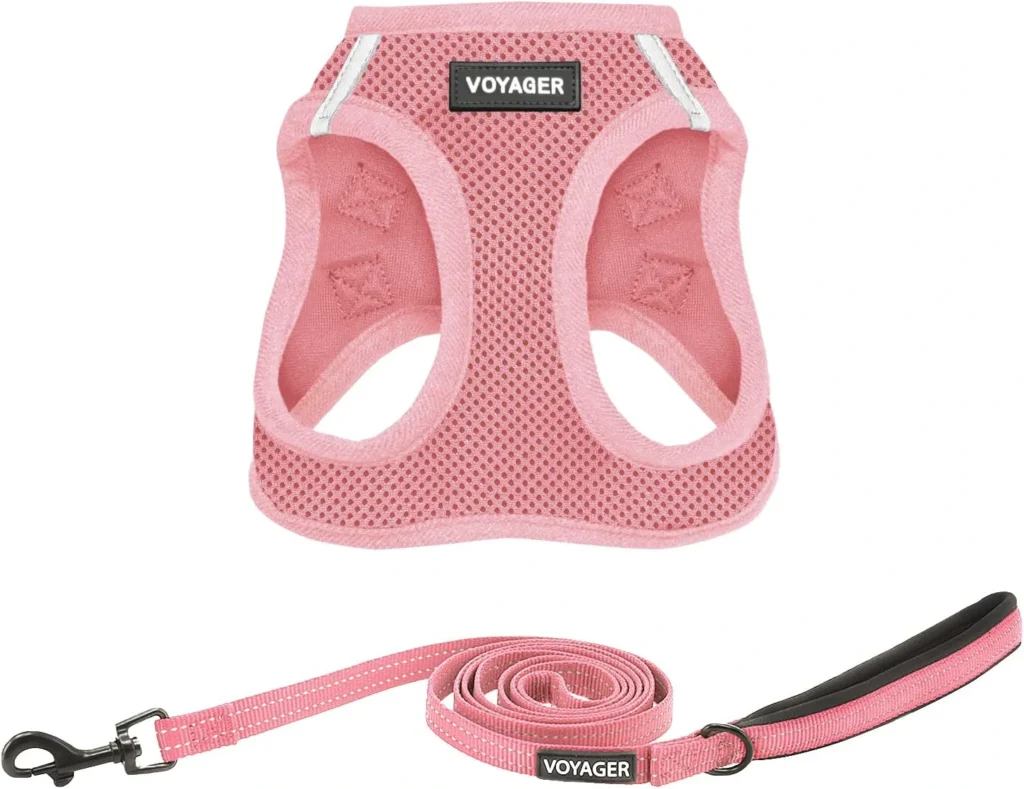
The Voyager Step-In Air Mesh Harness is a lightweight, breathable harness designed for comfortable everyday walks.
Its step-in design, reflective bands, and secure buckle system make it a practical choice for small dogs.
This set also includes a matching 5-foot leash with a neoprene handle for a comfortable grip.
It’s a good option for owners looking for an affordable harness and leash combo for daily use.
| Pros | Cons |
|---|---|
One of the lowest-priced harnesses in this category | No front-clip, so it offers little help once real pulling starts |
| Vented air mesh stays comfortable in warm weather | Velcro-reinforced buckle closure is less secure than a true clip-buckle |
Wide color and size range makes it easy to size up quickly and cheaply | Not intended as a long-term harness through adulthood |
Best for: Budget-conscious owners looking for a lightweight, breathable step-in harness for everyday walks, especially those who want a matching leash included. For general everyday harness basics, see our what is a dog harness guide.
Buying Guide: How to Choose a Harness for a Lab Puppy
Prioritize adjustment range over a perfect first fit
A Labrador puppy can add several inches of chest girth within a month, so a harness with 4 or 5 adjustment points, like the Kurgo pick, holds its fit through more growth than a 1 or 2-point design.
Pick front-clip or dual-clip once pulling starts
A back-clip-only harness does nothing to discourage pulling, and Labs are strong, food and scent-driven pullers from an early age. A front clip redirects the pull instead of just absorbing it.
Choose step-in designs for the youngest puppies
An 8 to 16-week-old Lab is often uneasy with anything passing over its head. A step-in harness like the Puppia or Voyager picks avoids that stress during the first few weeks of wearing one at all.
Measure the chest girth, not the age or breed chart alone
Two Lab puppies from the same litter can differ by several inches in chest size. Wrap a soft tape measure around the widest part of the rib cage and check it against the brand’s own size chart, the same two-finger-clearance rule used for measuring a dog collar applies here too.
Recheck the fit every few weeks
Unlike an adult dog’s harness, a puppy harness needs a fit check roughly monthly until growth slows, usually somewhere between 6 and 9 months old for a Labrador.
Conclusion
For most Lab puppies, the PetSafe Easy Walk is the safest starting point once pulling becomes a habit. Owners who want a harness that keeps fitting through multiple growth spurts do best with the Kurgo Tru-Fit Smart Harness, active pullers benefit from the handle on the Chai’s Choice Trail Runner, very young puppies are most comfortable in the Puppia Soft Vest, and budget-focused owners get a solid first harness from the Voyager Step-In Air Mesh.
Frequently Asked Questions
Q: At what age can a Lab puppy start wearing a harness?
A: Most puppies can wear a properly fitted, lightweight harness from around 8 weeks old, once they are comfortable with basic handling.
Q: How often do I need to resize a Lab puppy’s harness?
A: Check the fit roughly every 2 to 4 weeks during the fastest growth period, typically between 3 and 6 months old.
Q: Should a Lab puppy harness be front-clip or back-clip?
A: Front-clip or dual-clip is better once a puppy starts pulling, since it redirects the motion instead of letting the chest drive forward unchecked.
Q: Is a step-in harness better than an overhead harness for puppies?
A: For very young or head-shy puppies, yes. Step-in designs avoid passing anything over the head, which many puppies find stressful at first.
Q: How tight should a puppy harness fit?
A: Snug enough that two fingers fit comfortably under any strap, with no loose loop a puppy could back out of.
Q: Do Labrador and Golden Retriever puppies need different harness sizes?
A: Not usually by breed specifically, since both are similar-sized sporting breeds. Fit by chest girth rather than breed name for either one.