

What Is an E-Collar? [Not the Same as a Shock Collar]
An e-collar for dogs is a remote training collar, not a punishment device, though the name confuses a lot of owners into thinking otherwise.
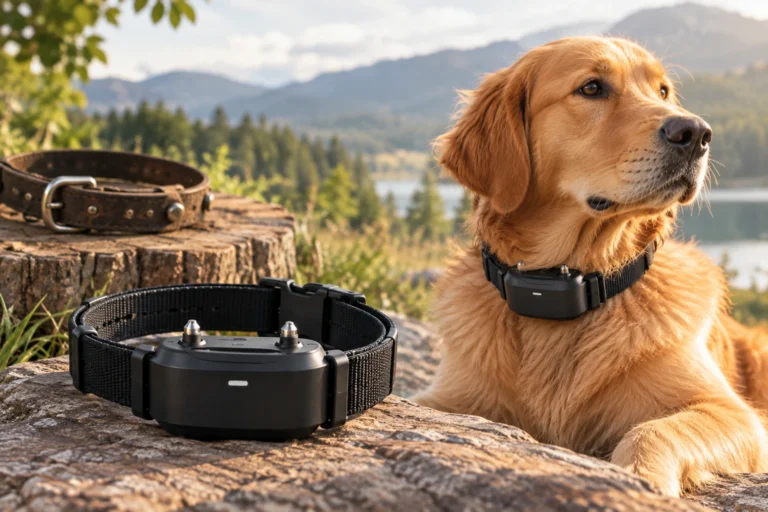
A receiver on the dog’s neck, a handheld transmitter in your hand, and a signal that travels between them the moment you press a button. What that signal actually is, and how different it is from the “shock collar” people picture, is where most of the confusion starts.
E-Collar vs Shock Collar: Why the Name Matters ?

The two terms get used interchangeably, and technically they describe the same category of device. The difference is generational.
Early collars from the 1950s onward were built for hunting dogs and had very few settings, sometimes just a single high-intensity output. That imprecision is where the “shock collar” reputation came from, and it was earned.
Modern e-collars work differently. Most offer 20 to 100 or more stimulation levels, plus tone and vibration modes that involve no static at all. At the level most trainers actually use, dogs typically experience the sensation as something like a phone vibrating against the skin: noticeable enough to get attention, but not painful. Our e-collar vs shock collar comparison covers this distinction in more detail.
The Three Things an E-Collar Can Actually Do
- Tone (beep). An audible marker, often used like a whistle or clicker, with no physical sensation at all.
- Vibration (pager). A buzz against the neck, useful for dogs that respond well to a physical cue without static, and the standard choice for deaf dogs.
- Static stimulation. A brief, adjustable electrical stimulus delivered through two contact points.
What Trainers Mean by Your Dog’s “Working Level”?
The working level is the lowest stimulation setting your dog can actually detect. It’s the number nearly all serious e-collar training is built around, and finding it is the first real step.
The process: with your dog calm and the collar fitted snugly, start at level one and tap the button. Watch the dog, not the dial. You’re looking for a small acknowledgment, an ear flick, a head turn, a slight change in posture, as though a bug landed on their neck. If nothing happens, go up one level and repeat. When you get that small reaction, that’s the working level.
What you don’t want is a yelp, a jump, or a fearful reaction. That means the level is too high and needs to come back down.
Why Does the Right Level Change?
Trainers often use a coffee shop and concert analogy. In a quiet room, you’d speak normally to be heard. At a loud concert, you’d have to shout, not because you’re angry but because the environment demands more volume.
E-collar levels work the same way. A dog training in the backyard responds at their working level. That same dog chasing a squirrel across a park is flooded with adrenaline and genuinely feels less, so the level needs to go up temporarily, then come straight back down once the distraction passes.
Collar Fit Changes the Level You Need

A loosely fitted e-collar makes inconsistent contact, which means the same level feels different from one session to the next. The contact points need to sit snugly against the skin, high on the neck, with enough tension to maintain contact but not so much that it’s uncomfortable.
Mark the strap hole you use so you can return to identical tightness every session. For general collar fitting technique, see our dog collar sizing guide.
E-Collar vs Automatic Bark Collar
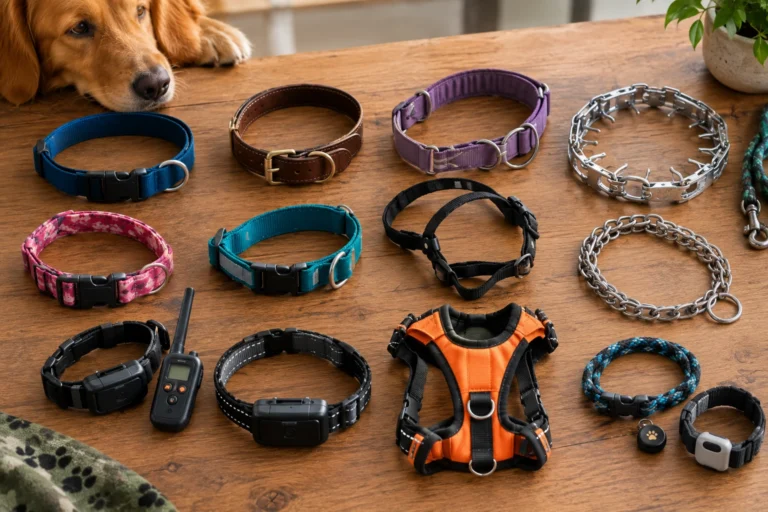
They’re related but not interchangeable. An e-collar is remote-controlled: you decide when it activates, which makes it a general obedience and recall tool. An automatic bark collar fires on its own when it detects barking, with no owner input at all, which makes it a single-purpose device. Our best dog bark collar guide covers those separately.
When an E-Collar Is the Wrong Tool?
E-collars are generally not appropriate for puppies, for dogs with anxiety or fear-based behavior, or for aggression cases, where adding aversive stimulation can make the underlying problem worse rather than better. They also require conditioning first: introducing stimulation to a dog who hasn’t been taught what it means creates confusion, not learning. If the goal is simply reducing leash pulling, a no-pull harness is a far simpler starting point.
Conclusion
An e-collar is a remote communication tool, not a punishment device, and almost everything about whether it works comes down to two things: finding your dog’s true working level and fitting the collar consistently. Used at the right level with proper conditioning, most dogs barely register it. Used carelessly, it teaches fear instead of behavior.
Frequently Asked Questions
Q: Is an e-collar the same thing as a shock collar?
A: Technically the same category, but modern e-collars offer tone and vibration modes plus a wide range of low static levels, which is very different from the single-intensity collars that created the shock collar reputation.
Q: What does an e-collar feel like to a dog?
A: At working level, most dogs feel it as a light tap, similar to a phone vibrating against the skin, not something that causes real pain.
Q: How do I find my dog’s working level?
A: Start at level one and increase one step at a time until you see a small acknowledgment like an ear flick or head turn. For most dogs, that lands in the single digits to low 20s out of 100, often lower than owners expect.
Q: At what age can a dog use an e-collar?
A: Most trainers recommend waiting until at least 6 months, and only once the dog reliably understands leash pressure and basic commands. Age alone is not the deciding factor. Readiness is.
Q: How long can a dog wear an e-collar each day?
A: Most trainers recommend 2 to 4 hours of active wear per session, though manufacturers cap continuous wear at 8 to 12 hours with rotation every 2 to 3 hours.
Q: Are e-collars safe for anxious or fearful dogs?
A: Generally, no. Adding aversive stimulation to fear-based behavior tends to worsen it, and a certified trainer or veterinary behaviorist is the better starting point for those cases.




3 Comments