
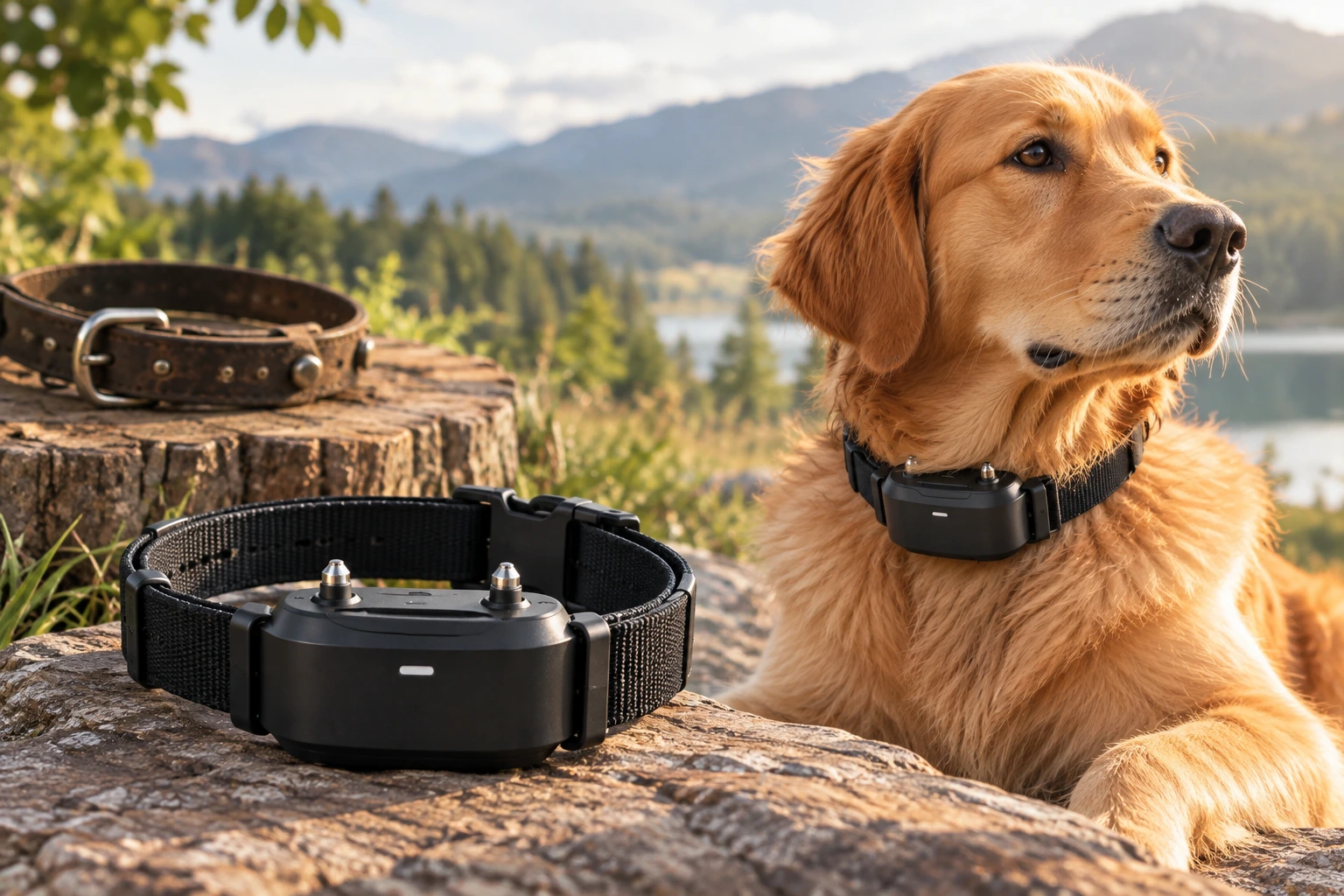
E-Collar vs Shock Collar: Same Device, Different Decade
Search e-collar vs shock collar and you’ll find two camps: trainers insisting they’re completely different tools, and critics insisting it’s a marketing spin on the same device. Both are partly right. Technically, the terms describe the same category of equipment. Practically, the gap between a 1970s shock collar and a modern e-collar is wide enough that treating them as identical misses what actually matters.
The Terms Describe the Same Device
There’s no separate product category called a “shock collar” sitting on a shelf next to e-collars. Both refer to a remote-controlled electronic training collar: a receiver on the dog’s neck and a handheld transmitter with the owner.
The word choice signals attitude, not hardware. “Shock collar” carries the negative connotation and is often used by critics. “E-collar” is the term the training industry adopted and the one most manufacturers use.
What Actually Changed Since the 1970s?
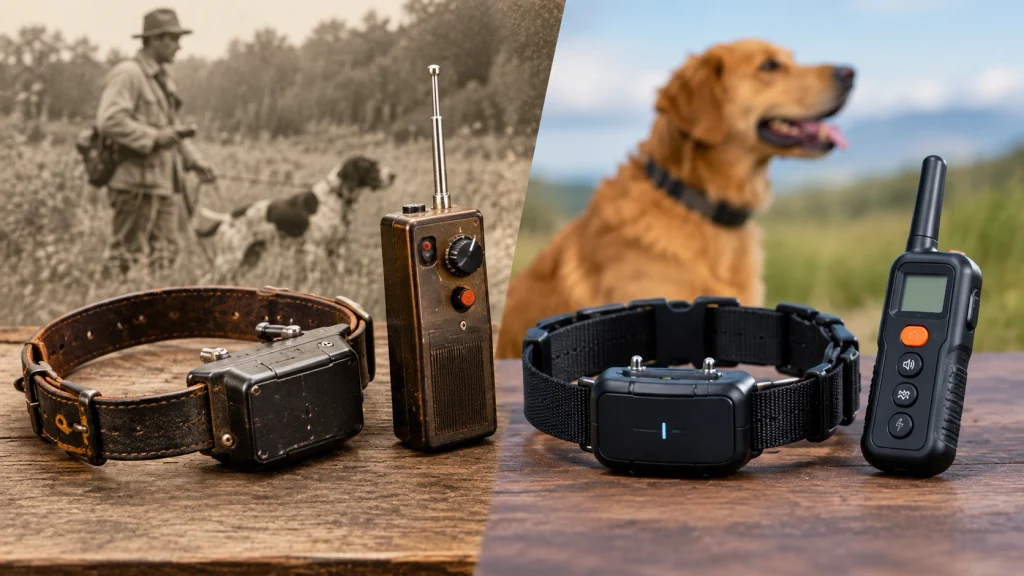
The original collars, built for hunting dogs in the mid-twentieth century, had very few settings, sometimes as few as 10 to 20 levels, and delivered corrections that were often far stronger than the situation needed. That imprecision earned the shock collar reputation, and it earned it fairly.
Modern e-collars typically offer 60 to 100 or more stimulation levels, plus tone and vibration modes that involve no static at all. The difference isn’t that the technology became something entirely new. It’s that it became precise enough to use at a level the dog barely registers.
The TENS Unit Comparison
The most useful way to understand what modern stimulation feels like is the comparison trainers use constantly: the technology is closely related to a TENS unit, the FDA-approved device physical therapists use for human pain management.
Both apply low-level, adjustable electrical pulses through skin contact. The hardware principle is essentially the same. At the low levels used in proper training, the sensation is commonly described as a tap on the shoulder to get your attention, not a jolt.
Where the Real Difference Lies: Quality Tier
Here’s the distinction that matters more than terminology. There’s a genuine gap between cheap collars and quality ones, and it’s not about what they’re called.
Budget collars, roughly $25 to $50, tend to have few levels, coarse jumps between them, unreliable output, and hardware that fails. Marketed as quick fixes, they’re the products that generate the worst outcomes.
Quality e-collars, roughly $150 to $250 or more, offer fine-grained level control, consistent output, and durable construction. The higher level count is the point: it lets you find the setting your dog barely notices instead of jumping past it.
If a collar only has ten levels, level one might already be too strong for a sensitive dog. That’s a hardware limitation, not a training philosophy.
E-Collar vs Bark Collar: A Different Distinction
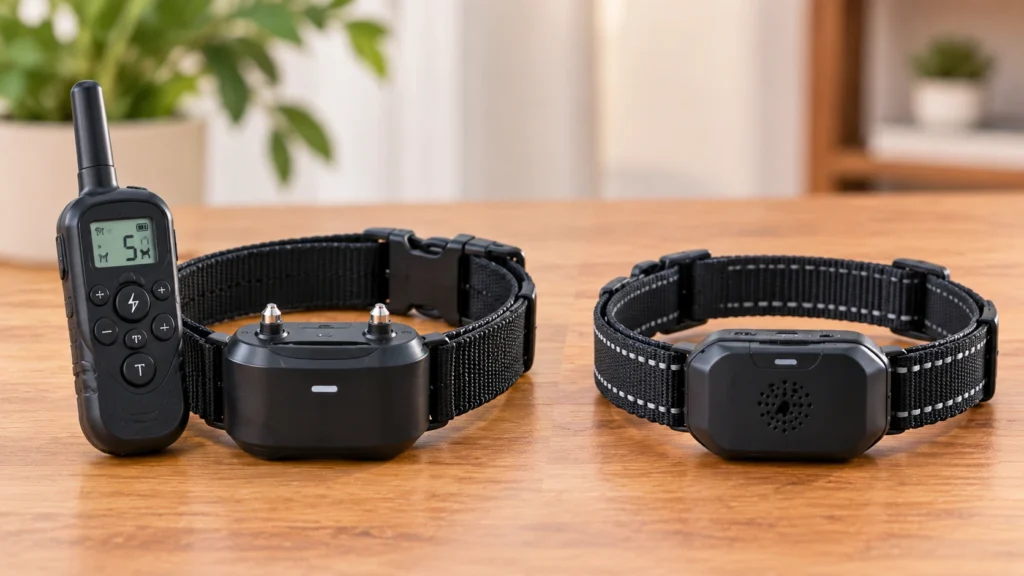
The main difference between an e-collar and a bark collar is that an e-collar is remote-controlled, meaning you decide when it activates. A bark collar activates automatically when it detects barking, with no owner input.
Same underlying technology, completely different use case. Our best dog bark collar guide covers the automatic category separately.
What Both Sides Actually Agree On?
The debate is less polarized than it appears once you strip out the terminology fight.
Misuse causes real harm. Used at too high a level, with poor timing, or without teaching the dog what the sensation means first, these collars can create fear, anxiety, or aggression. Nobody disputes this.
Level matters more than the tool. Proper use means finding the dog’s working level, the lowest setting they can detect, and training there.
Some dogs shouldn’t wear one at all. Puppies, anxious or fear-reactive dogs, and aggression cases are widely agreed to be poor candidates.
For the full breakdown of how stimulation levels work and how to find a working level, see our what is an e-collar for dogs guide.
Conclusion
E-collar and shock collar name the same device, but the products behind those names have changed enormously since the 1970s. The question worth asking isn’t which term is accurate. It’s whether the specific collar has enough levels to be used gently and whether the person holding the remote knows how to find the right one.
Frequently Asked Questions
Q: Are e-collars and shock collars the same thing?
A: Yes, both terms describe a remote-controlled electronic training collar. The difference is connotation, not hardware.
Q: How many stimulation levels should a good e-collar have?
A: Look for 60 to 100 or more levels. Fewer than that means the jumps between settings are too coarse to find a low working level.
Q: Does an e-collar hurt a dog?
A: At a proper working level, most dogs show only a small ear flick. Higher levels or poor timing can cause real stress.
Q: What does e-collar stimulation feel like?
A: Similar to a TENS unit used in human physical therapy. At the working level, trainers describe it as a light tap on the shoulder.
Q: How much should I spend on an e-collar?
A: Budget collars run $25 to $50 but have too few levels. Quality collars start around $150 to $250.
Q: Is an e-collar the same as a bark collar?
A: No. An e-collar is remote-controlled by the owner. A bark collar activates on its own when it detects barking.





2 Comments