
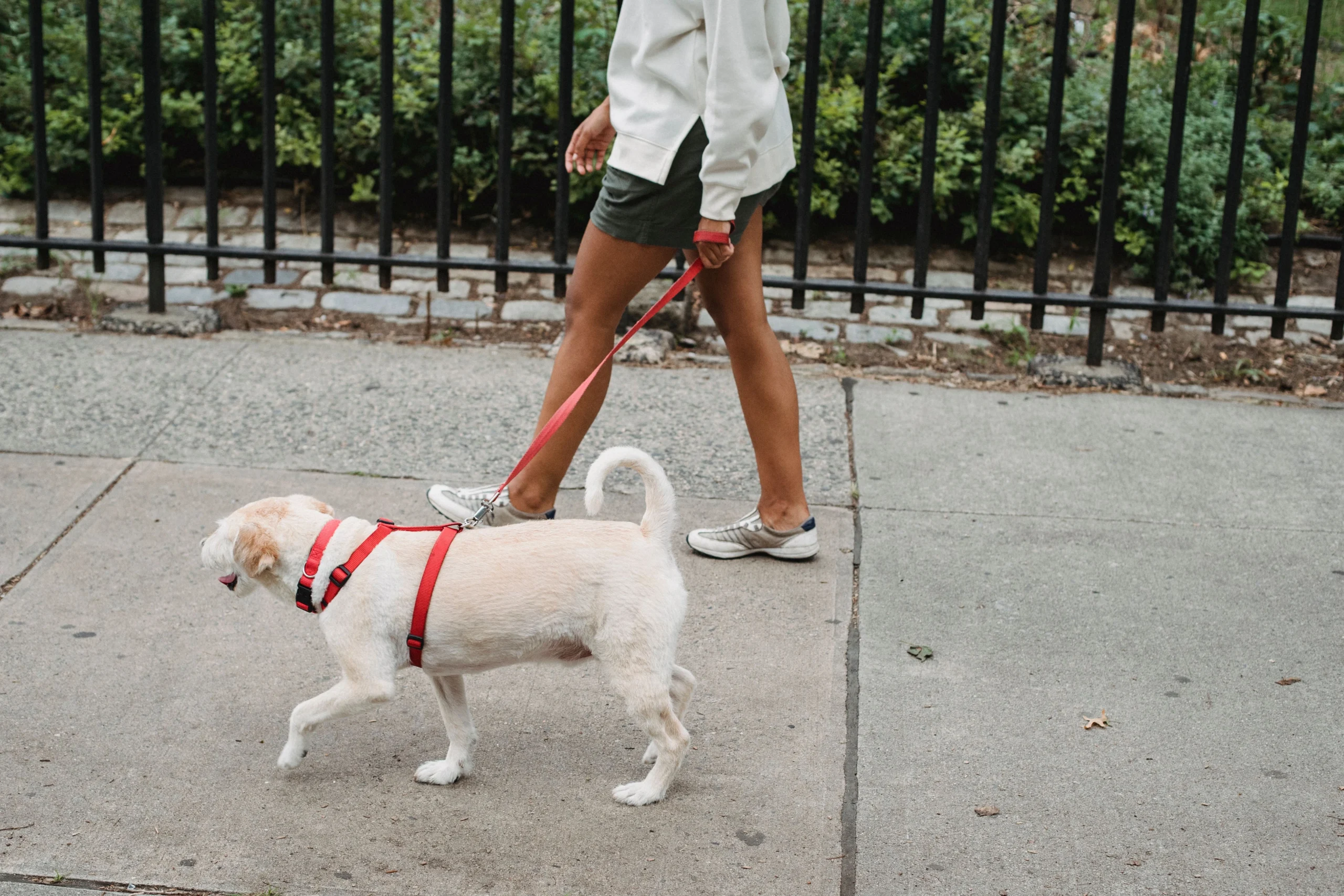
5 Best Hands-Free Dog Leashes for 2026
A hands-free dog leash clips to a waist belt or crossbody strap instead of your hand, which frees you up to run, hold a coffee, push a stroller, or pick up after your dog without juggling anything.
The catch nobody mentions upfront: this only works if your dog already walks at a steady rhythm. A dog that lunges sideways after a squirrel will pull you off balance, and that force now lands on your lower back instead of your arm.
Get that part right first, and the five below are the ones worth buying.
Quick Comparison
| Product | Best For | Belt Range | Leash Length | Amazon |
|---|---|---|---|---|
| Ruff wear Roamer | Overall pick | Waist or handheld | 5.5 to 11 ft | View on Amazon |
Stunt Puppy Stunt Runner | Running | 28 to 49 in | 42 to 66 in | View on Amazon |
Tuff Mutt Hands-Free Leash | Dual-handle control | Adjustable | 4 to 5 ft bungee | View on Amazon |
| Kurgo Quantum 6-in-1 | Versatility | Waist or crossbody | 3 ft or 6 ft | View on Amazon |
Pet Safe Hands Free Leash | Budget pick | 28 to 48 in | Bungee section | View on Amazon |
Best Hands-Free Dog Leash
1. Ruffwear Roamer -(Best Hands-Free Dog Leash Overall)
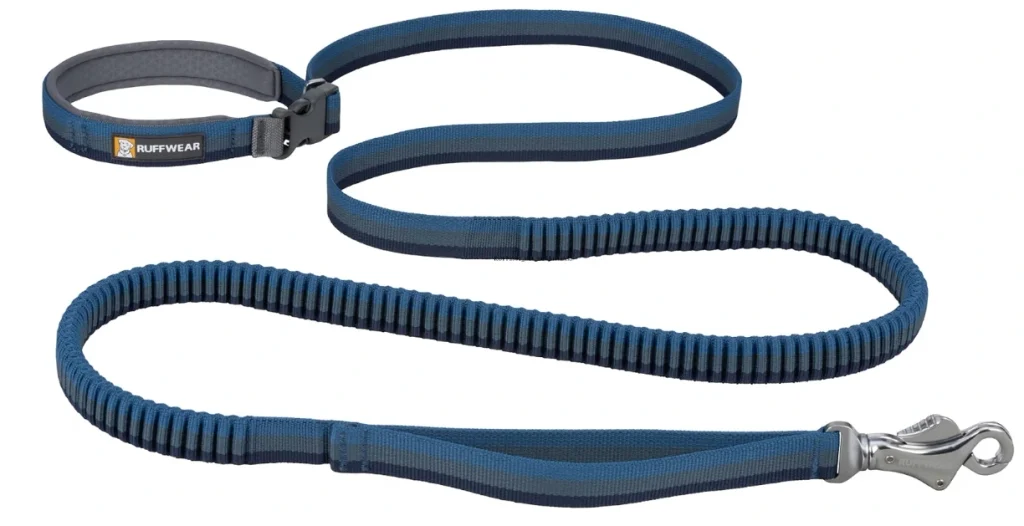

This is the pick that shows up at the top of nearly every tested roundup, and the reason is versatility. It works waist-worn, handheld, or as a hitching system, and the bungee section is tuned to absorb surges without being so stretchy that you lose control.
The built-in traffic handle sits close to the clip, so you can grab short control near roads without switching gear.
| Pros | Cons |
|---|---|
| Converts between waist-worn, handheld, and tether use without extra parts | Premium pricing compared to basic bungee waist leashes |
| Bungee is tuned to absorb pulls without the excessive stretch cheaper leashes have | Owner reports suggest it’s less suited to very strong pullers over roughly 90 pounds |
| Traffic handle gives instant close control in crowded or roadside situations | Some configurations sell the waist belt separately |
Best for: owners who want one leash that adapts across walking, running, and hiking.
2. Stunt Puppy Stunt Runner – (Best for Running)
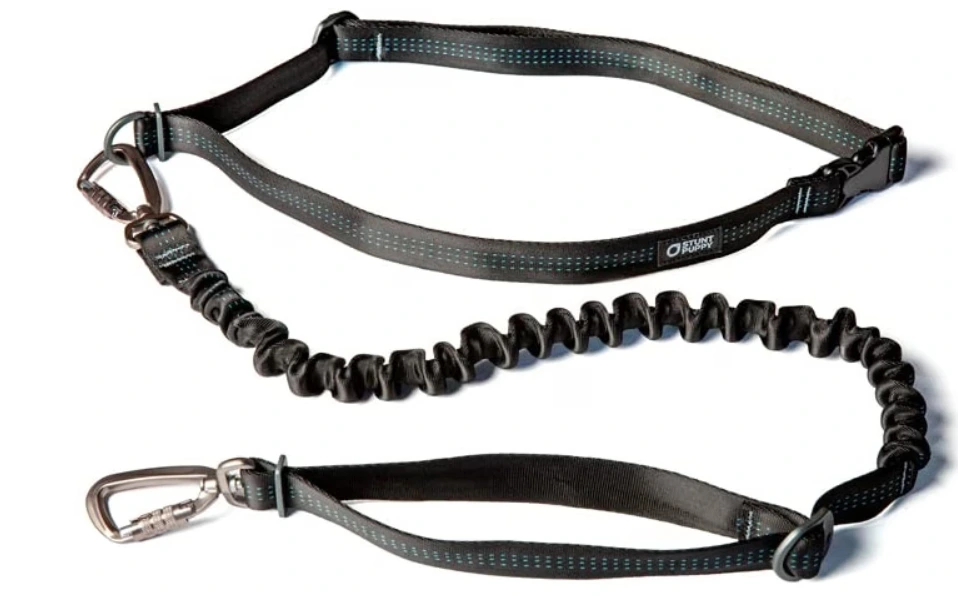
Built from tubular nylon webbing rated over 4,000 lbs tensile strength, this is the pick built specifically around running mechanics rather than adapted from a walking leash. The extension adjusts from 42 to 66 inches, so you can run your dog single file on narrow trails or shorten it for side-by-side road running.
A detail most competitors miss: the D-ring slides along the waist belt and can be locked into a specific position, which keeps your dog in one lane without tugging the belt around your hips.
| Pros | Cons |
|---|---|
| Repositionable belt the D-ring keeps the dog in a consistent position instead of dragging the belt sideways | A waist belt and leash are two separate pieces, which some owners find fussier |
| Length adjusts on the move, so trail and road running use the same leash | Minimal padding compared to lumbar-support running belts |
| 4,000+ lb. tensile webbing with anodized aluminum hardware in a genuinely light package | Made to order by a small brand, so shipping takes longer than Amazon Prime standard |
Best for: runners who want a light, precisely adjustable setup for road and trail.
3. Tuff Mutt Hands-Free Leash -(Best for Dual-Handle Control)
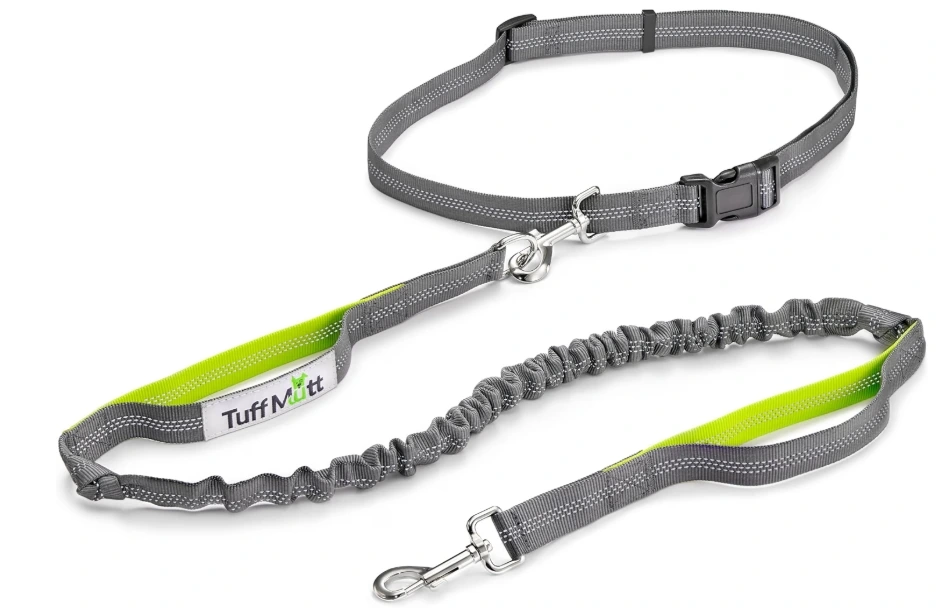
The standout feature here is the easy-glide belt clip, which lets the leash slide freely from your left side to your right as your dog moves. That single detail solves the most common hands-free complaint: the leash wrapping around your legs mid-stride.
Two handles give you a relaxed grip at hip level and a closer one near the clip for tight spots.
| Pros | Cons |
|---|---|
| Gliding belt clip genuinely stops the leash from tangling around your legs | Sized for medium to large dogs, so it’s overbuilt for small breeds |
| Two handles cover both relaxed running and close control without changing gear | The 4- to 5-foot bungee stretch feels loose to owners who prefer a firmer connection |
| Reflective stitching runs the full length of both the leash and the belt | Belt sizing runs brand-specific and needs checking against the chart |
Best for: runners and hikers with a medium to large dog who want two levels of control.
4. Kurgo Quantum 6-in-1 -(Best for Versatility)
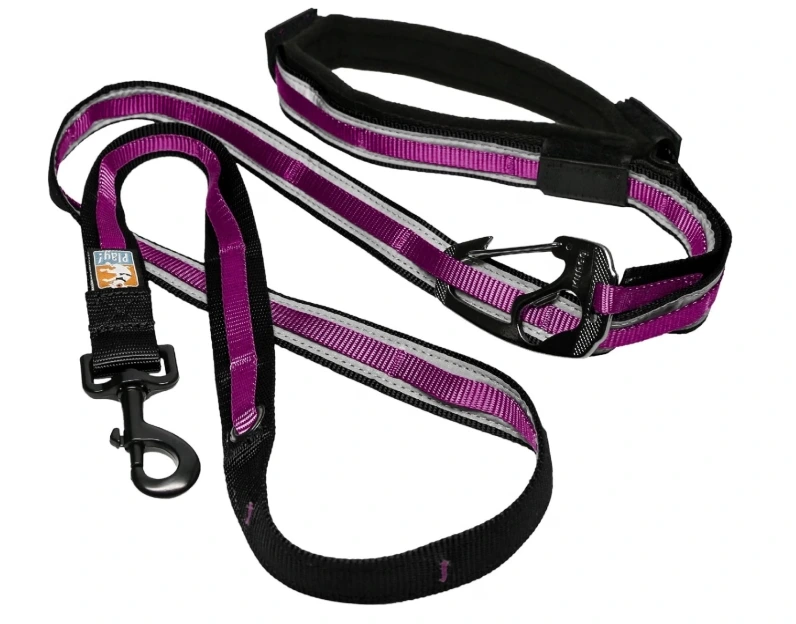
This converts between six configurations: 6-foot lead, 3-foot training leash, waist-worn, crossbody, double-dog walker, and temporary tether. All of it works through carabiner repositioning, no extra hardware.
If your week involves a mix of walking, running, and errands where the dog waits outside briefly, this replaces three separate leashes.
| Pros | Cons |
|---|---|
| Six genuinely usable configurations rather than hands-free bolted onto a normal leash | Heavier hardware than dedicated running leashes, which adds up over distance |
| Crossbody mode distributes weight across the torso instead of loading the waist | Carabiner conversion takes a few seconds, unlike a purpose-built waist leash |
| Backed by Kurgo’s lifetime warranty against manufacturer defects | Less waist padding than lumbar-support belts |
Best for: owners who want one leash covering walking, running, training, and travel.
5. Pet Safe Hands-Free Leash -(Best Budget Pick)
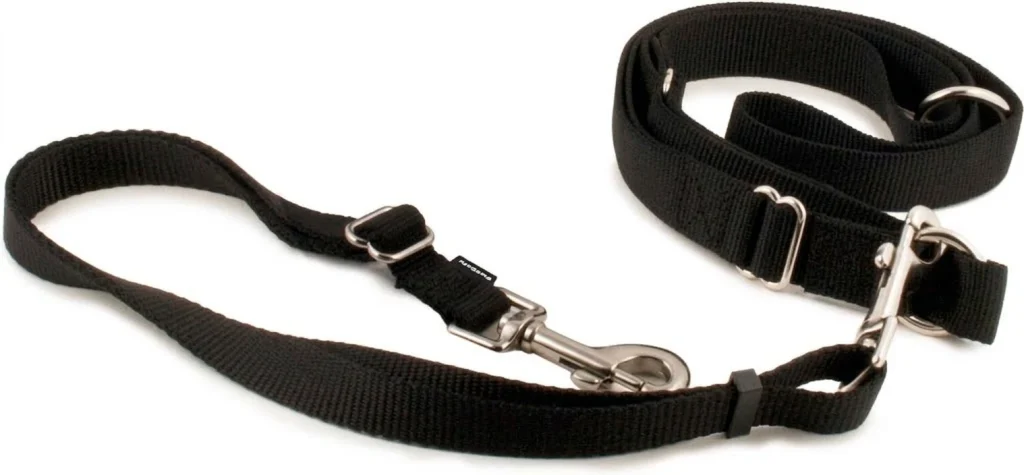
The cheapest reliable way to find out whether hands-free suits you and your dog. The belt adjusts across a 28- to 48-inch range, the bungee absorbs light pulls, and the quick-release buckle works consistently.
It’s noticeably less refined than the Ruffwear or Stunt Puppy options, but for a first-hand-free leash on a mid-sized dog, it does the job.
| Pros | Cons |
|---|---|
| Lowest-risk way to test whether hands-free walking works for you | Bungee tuning is basic, so it absorbs light pulls but not hard surges |
| A wide 28-to-48-inch belt range fits most adults over layers | No traffic handle, so close control means grabbing the leash body |
| The quick-release buckle is reliable despite the budget price | Build quality won’t match premium options over years of daily use |
Best for: first-time hands-free users with a calm, mid-sized dog.
Buying Guide: How to Choose a Hands-Free Dog Leash
Your Dog Needs Leash Manners First
This matters more than any product spec. A hands-free leash transfers pulling force from your arm to your core and lower back, which is more comfortable when the dog moves steadily and genuinely worse when they don’t.
If your dog still lunges or pulls hard, fix that first. Our best no-pull dog harness guide covers front-clip designs that redirect pulling, which is the right starting point.
Bungee Tuning, Not Just Bungee Presence
Almost every hands-free leash advertises a bungee. What separates good from bad is how much it stretches. Too little and every surge hits your back at full force. Too much and you lose the ability to correct quickly, since the dog is already several feet ahead before the tension registers.
Tested picks like the Roamer and Stunt Runner are specifically praised for tuning that sits in the middle.
The Belt Clip Should Slide
A fixed clip on the waist belt means the leash wraps your legs every time the dog crosses behind you. A sliding or gliding clip lets the leash travel around the belt as the dog changes sides. This is a small feature that makes a large practical difference over a few miles.
Belt Range and Padding
Most belts adjust across roughly 28 to 48 inches, which covers most adults over base layers or a light pack. Check the range if you’re at either extreme.
Lumbar-padded belts distribute force better for larger dogs, at the cost of extra weight. Minimal belts suit running, where every ounce matters.
Traffic Handle
A traffic handle is a short grip positioned close to the clip. It lets you take instant, close control at a crossing or when passing another dog, without unclipping anything. On a hands-free setup, where your default state is not holding the leash, this is more useful than it sounds.
Match It to the Dog, Not the Weight Class
A leash rated for medium- to large-sized dogs may not hold a 90-plus-pound dog that lunges. Equally, a heavy-duty setup is unnecessary bulk on a calm 25-pound dog. For collar and harness pairings, see our best dog collar for large dogs and best small dog harness guides, and our dog collar vs harness comparison for which attachment point to clip to.
Price
Basic hands-free leashes run $15 to $25. Dual-handle or gliding-clip designs sit between $25 and $40. Premium options from Ruffwear, Kurgo, and Stunt Puppy run $40 and up.
Conclusion
For most active owners, the Ruffwear Roamer offers the best mix of adaptability, bungee tuning, and control. Dedicated runners get more from the lightweight Stunt Puppy Stunt Runner, while the Tuff Mutt solves leg-tangling better than anything else on this list. Owners wanting maximum flexibility should look at the Kurgo Quantum 6-in-1, and anyone testing hands-free for the first time can start with the PetSafe Hands Free Leash.
Frequently Asked Questions
Q: Are hands-free leashes safe for dogs that pull?
A: Not really. The force transfers to your lower back instead of your arm. Fix pulling with a front-clip harness first.
Q: How much bungee stretch should a hands-free leash have?
A: Enough to soften surges, but not so much the dog gets several feet ahead before you feel it. Mid-range tuning works best.
Q: What waist size do hands-free belts fit?
A: Most adjust from about 28 to 48 inches, which covers most adults over layers. Check the chart if you’re at either extreme.
Q: What is a traffic handle for?
A: A short grip near the clip that gives instant close control at crossings or when passing other dogs, without unclipping.
Q: Should I clip a hands-free leash to a collar or harness?
A: A harness. It spreads the force across the chest, which matters more when the pull reaches your body rather than your hand.
Q: Can I use a hands-free leash for two dogs?
A: Only with a double-dog configuration like the Kurgo Quantum. Most single-leash designs are built for one dog.
4 Comments