
5 Best Collars for Small Dogs: Safe Picks
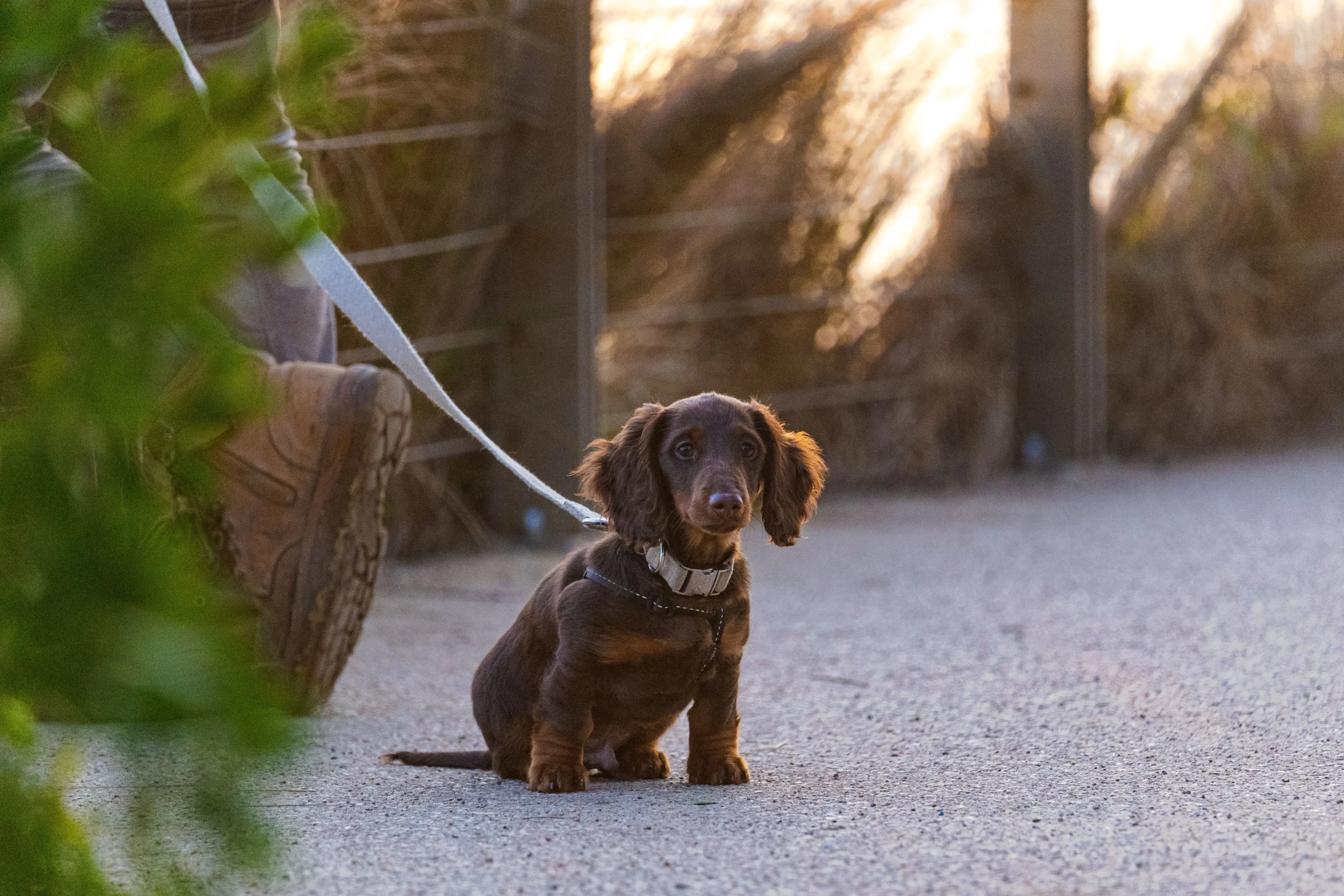
Finding the best collars for small dogs means looking past the “just buy a smaller size” mindset. Chihuahuas, Yorkies, Pomeranians, and other toy breeds have narrower heads, more delicate necks, and lighter frames than a scaled-down Labrador, so a collar built for a big dog and shrunk down still feels heavy and clunky.
Below are five of the best small dog collars that actually fit small breeds, followed by a full buying guide covering sizing, material, and escape-proof design.
Quick Comparison
| Product | Best For | Material | Neck Size Range | Amazon |
Blueberry Pet Reflective Neoprene Collar | Overall pick | Neoprene-padded polyester | 12 to 16 in | View on Amazon |
| TagME Small Dog Collar | Toy breeds and teacup dogs | Nylon, 3/8 in width | 8 to 12 in | View on Amazon |
| PetSafe Martingale Quick-Snap Collar | Dogs that slip out of collars | Nylon, martingale design | Small, 3/4 in width | View on Amazon |
Logical Leather Padded Dog Collar | Classic leather look | Full-grain leather, sheepskin lining | 11 to 13 in | View on Amazon |
AirTag-Compatible Dog Collar | Off-leash tracking | Nylon with silicone AirTag holder | 6 to 16 in | View on Amazon |
5 Best Collar for Small Dogs
1. Blueberry Pet Reflective Neoprene Collar – (Best Collar for Small Dogs Overall)
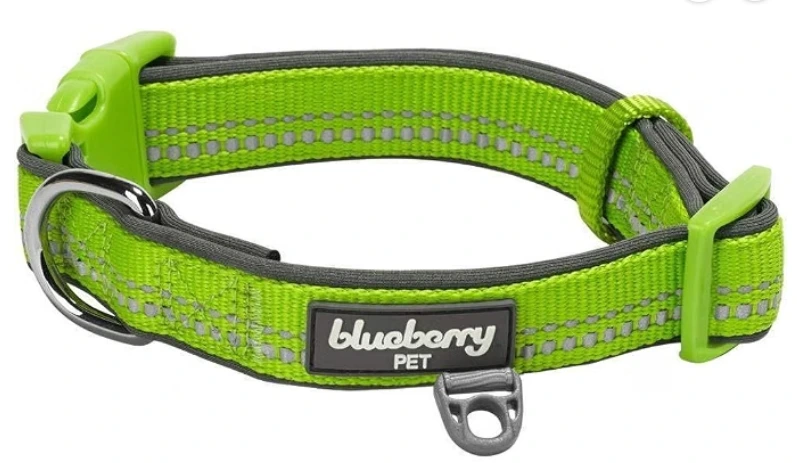

This collar pairs soft neoprene padding with a durable polyester webbing shell, which keeps it comfortable against a small dog’s neck without adding real bulk. It uses a chromed steel D-ring for the leash, an eco-friendly plastic buckle, and 3M reflective threading for visibility on evening walks.
| Pros | Cons |
| Neoprene padding is noticeably gentler on the neck than plain nylon webbing | Sized for the 12-to-16-inch range, so extra-small breeds like teacup Chihuahuas may need a smaller option |
| Quick-release buckle clicks on and off easily, and the collar washes clean without holding odor | Not intended for tie-out or unattended use, per the brand’s own guidance |
| 3M reflective threading stays visible in low light without adding bulk | Neoprene can hold moisture longer than plain nylon after a wet walk |
Best for: small dogs in the medium-small-size range who need daily comfort plus visibility.
2. TagME Small Dog Collar – (Best Dog Collar for Toy Breeds and Teacup Dogs)
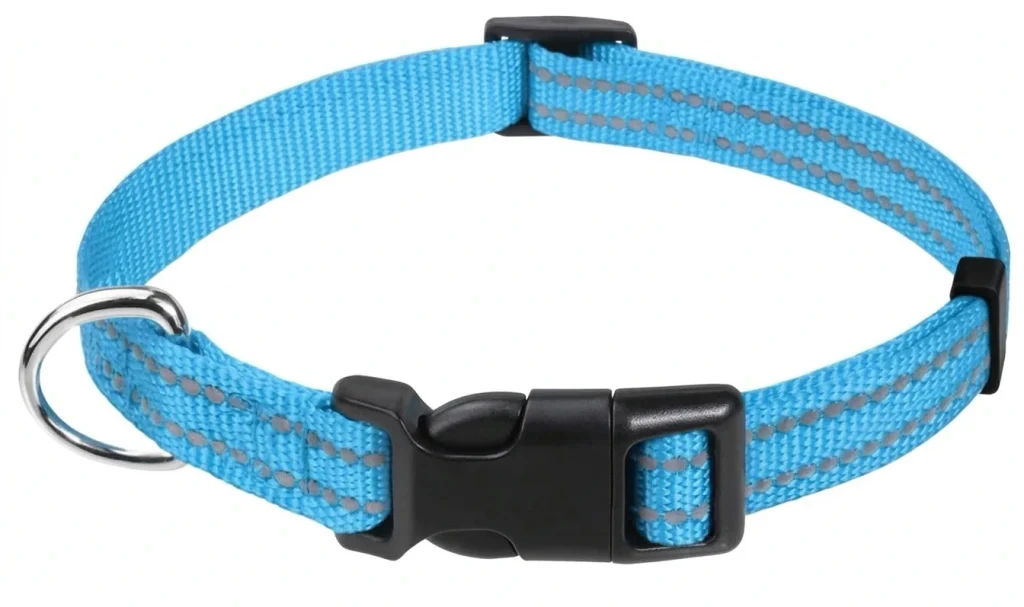
Built specifically for tiny necks, this collar uses a slim 3/8-inch width and high-density, silky-soft nylon that minimizes pressure on the throat. The inward-facing stitching is designed to avoid the chafing that thicker collars can cause on Chihuahuas, Yorkies, and Maltese.
| Pros | Cons |
| Slim 3/8-inch width keeps weight off a toy breed’s throat, where a standard 1-inch collar would feel heavy | The narrow 3/8-inch width is not rated for strong pullers, so a harness is a better fit for high-energy small dogs |
| Inward-facing stitching sits smoothly against the skin, which reduces the chafing thicker collars cause on fine-coated breeds | Sizing tops out at 12 inches, so it will not fit medium-small breeds like Beagles or Pugs |
| Priced well below premium small-dog collars while using genuinely soft, high-density nylon | Slide adjustment can loosen slightly with very active dogs and needs occasional rechecking |
Best for: Chihuahuas, Yorkies, Maltese, and other toy breeds with delicate necks.
3. PetSafe Martingale Quick-Snap Collar (Best Collar for Small Dogs That Slip Out)
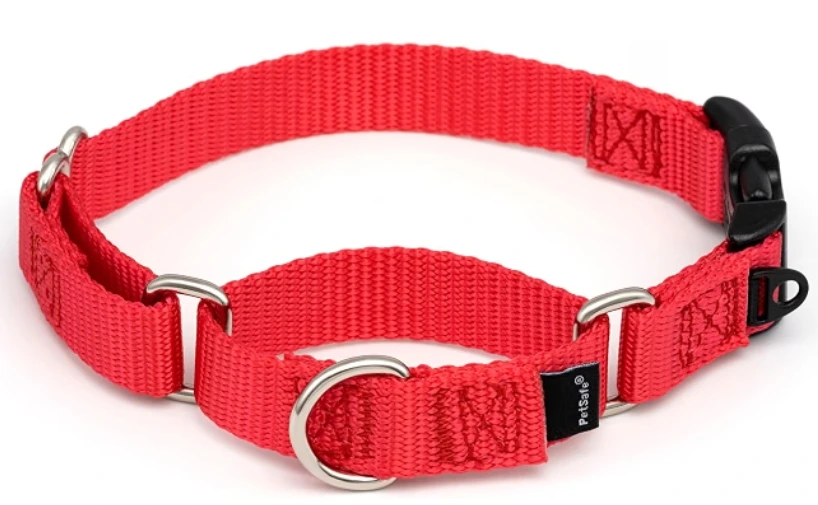

Small breeds with a narrow head relative to their neck, such as Italian Greyhounds, Whippets, and some terriers, can back straight out of a standard flat collar. This martingale design tightens gently when the dog pulls and loosens again once they stop, which keeps it secure without choking.
| Pros | Cons |
| Martingale design meaningfully reduces the risk of a small dog backing out and escaping | Needs a proper fit check, since a martingale that is sized too loose defeats the escape-proof design |
| Quick-snap buckle means the collar comes off without loosening it or pulling it over the head, which suits head-shy dogs | Not a substitute for a harness on dogs with a collapsing trachea or breathing sensitivity |
| Durable nylon holds up to regular walking and cleans easily after muddy walks | Fewer color and pattern options than fashion-focused small dog collars |
Best for: small dogs with narrow heads or a history of slipping out of flat collars.
4. Logical Leather Padded Dog Collar – (Best Leather Collar for Small Dogs)
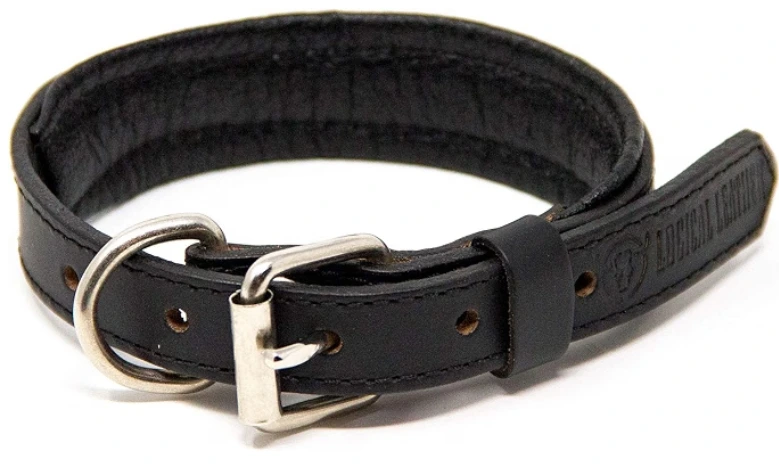
For owners who want a classic look, this collar uses full-grain leather with a padded sheepskin lining, which adds comfort without the bulk of a thick tactical strap. It comes with a lifetime guarantee and is sized specifically for an 11-to-13-inch neck.
| Pros | Cons |
|---|---|
| Padded sheepskin lining spreads pressure across the neck, which plain leather collars don’t do | Leather needs occasional conditioning to stay soft and avoid cracking |
| Full-grain leather softens with wear instead of cracking, and solid brass hardware resists tarnishing | Heavier than nylon options, which matters more on the smallest toy breeds |
| Backed by a lifetime guarantee, which is rare at this price point | Not machine washable, so cleaning takes more care than a wipe-down nylon collar |
Best for: small and medium-small dogs where owners want durability with a classic look.
5. AirTag-Compatible Dog Collar – (Best Small Dog Collar for Off-Leash Tracking)
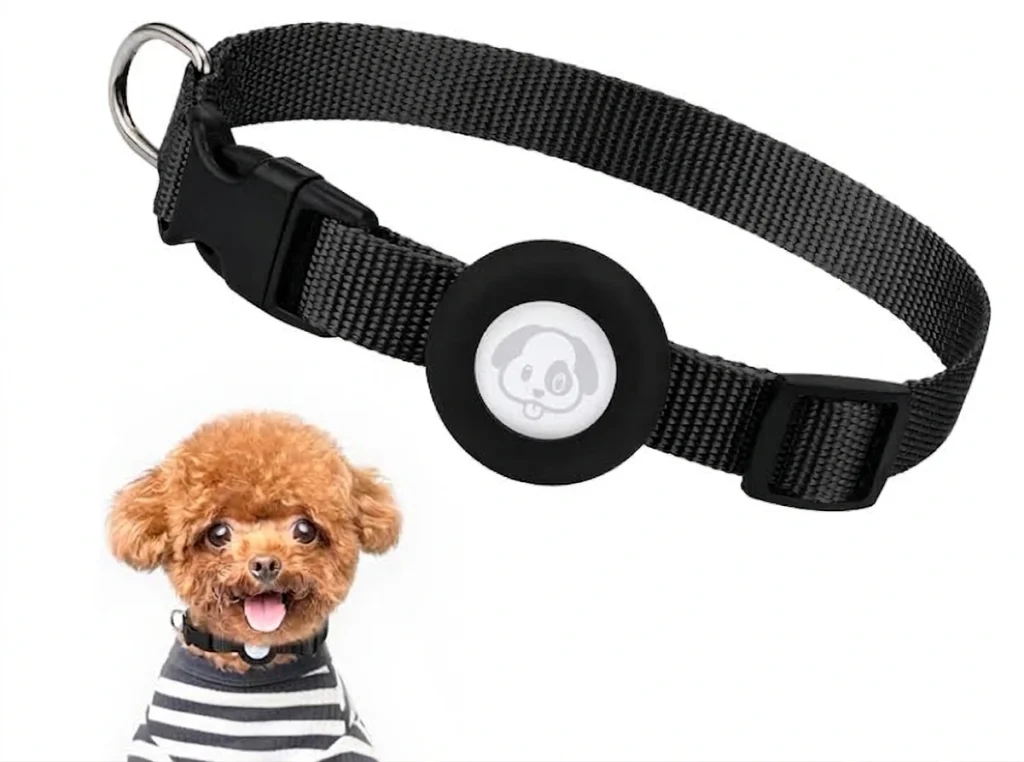
Small dogs are quick to slip through a gap in the yard or bolt at the dog park, which is where this collar’s built-in AirTag holder earns its place. The waterproof silicone holder slides directly onto the collar, so an Apple AirTag can be tracked through the Find My app without a dangling attachment.
| Pros | Cons |
|---|---|
| Slide-on silicone holder keeps the AirTag flush against the strap instead of dangling like a clip-on case | Requires buying an Apple AirTag separately, which adds to the total cost |
| Waterproof and scratch-resistant design holds up to normal outdoor wear | AirTag tracking depends on nearby Apple devices, so it is less reliable than a dedicated GPS collar in rural areas |
| Narrow, lightweight strap that most small dogs accept without fussing over the added tracker | The holder adds a small amount of bulk compared to a plain flat collar |
Buying Guide: How to Choose the Best Collar for a Small Dog
Sizing and Width
Small breed collars generally fall into two size bands. Extra-small dogs like Chihuahuas, teacup Yorkies, and young puppies typically need an 8 to 11 inch neck length in a narrow 5/8-inch or 3/8-inch width. Medium-small breeds like Beagles, Boston Terriers, French Bulldogs, and Pugs usually need an 11 to 15 inch length, and can comfortably wear a slightly wider 5/8 to 1 inch collar. Measure your dog’s neck where the collar will actually sit, then leave room for two fingers between the collar and the skin.
Material
Nylon is the lightest and most affordable option, dries quickly, and comes in the widest range of colors and widths, which makes it easy to find a true extra-small size. Leather provides more natural support for a small dog’s neck because of its thickness and structure, and it tends to be gentler than nylon for dogs with sensitive skin, though it needs occasional conditioning. Neoprene-padded collars add cushioning that helps prevent chafing on dogs that wear their collar all day.
Escape-Proof Design
Small dogs with a head that is close in size to their neck, including Italian Greyhounds, Whippets, and some terrier mixes, are the most likely to back out of a standard flat collar. A martingale collar solves this by tightening gently under tension instead of staying loose, without choking the dog the way an old-style choke chain would. This matters most for dogs walking off a fenced yard or near roads.
Comfort and Trachea Sensitivity
Small and toy breeds have more delicate windpipes than large dogs, so a heavy collar that yanks on the throat during a pull can cause more strain than it would on a bigger dog. A lightweight collar with a soft lining reduces this risk for everyday wear, but dogs that pull hard on leash are usually safer in a harness that shifts pressure to the chest. For a closer comparison, see our dog collar vs harness guide and our best small dog harness picks if your dog is a strong puller.
Safety Features
Reflective threading is a low-cost way to improve visibility on evening walks, and it is worth prioritizing since small dogs are harder for drivers to see than larger breeds. Some owners also add an ID tag or a slide-on AirTag holder for extra peace of mind, particularly for dogs that are quick and small enough to slip through a gap in a fence.
Price
Basic nylon collars for small dogs typically run under $12. Padded, reflective, or martingale options usually fall between $12 and $20. Genuine leather collars with a lifetime guarantee, like the pick above, run closer to $15 to $25. For general sizing across all dog sizes, our dog collar sizing guide walks through the full measuring process, and our martingale collar guide covers picks for other sizes. If your dog also needs a leash, our dog leash guide covers lightweight options that pair well with a small collar.
Conclusion
For most small dog owners, the Blueberry Pet Reflective Neoprene Collar offers the best mix of comfort, safety, and everyday durability. Owners of true toy and teacup breeds get a better fit from the TagME Small Dog Collar, while dogs prone to slipping out of a flat collar are safer in the PetSafe Martingale Quick-Snap Collar. Owners who want a classic leather look should look at the Logical Leather Padded Collar, and those who want basic off-leash tracking should consider the AirTag-Compatible Dog Collar.
Frequently Asked Questions
Q: What size collar does a small dog need?
A: Extra-small breeds like Chihuahuas need 8 to 11 inches, while Pugs and Beagles usually need 11 to 15 inches. Always check the product’s size chart.
Q: Is nylon or leather better for a small dog collar?
A: Nylon is lighter and comes in more true extra-small sizes. Leather lasts longer and is gentler on sensitive skin, but costs more.
Q: Are martingale collars safe for small dogs?
A: Yes, when sized correctly. It tightens to a fixed limit to stop escapes, then loosens, unlike a choke collar.
Q: How wide should a collar be for a small dog?
A: Extra-small dogs do best in 3/8 to 5/8 inch. Medium-small breeds can wear up to 1 inch comfortably.
Q: Is a collar or harness better for a small dog?
A: A collar suits calm dogs and ID tags. A harness is safer for pullers or dogs with a sensitive trachea.
Q: How often should I replace my small dog’s collar?
A: Check the stitching, buckle, and D-ring every 2 to 3 months, and sooner for a growing puppy.
7 Comments