Best Dog Harness for a Pug: 5 Top Picks for 2026
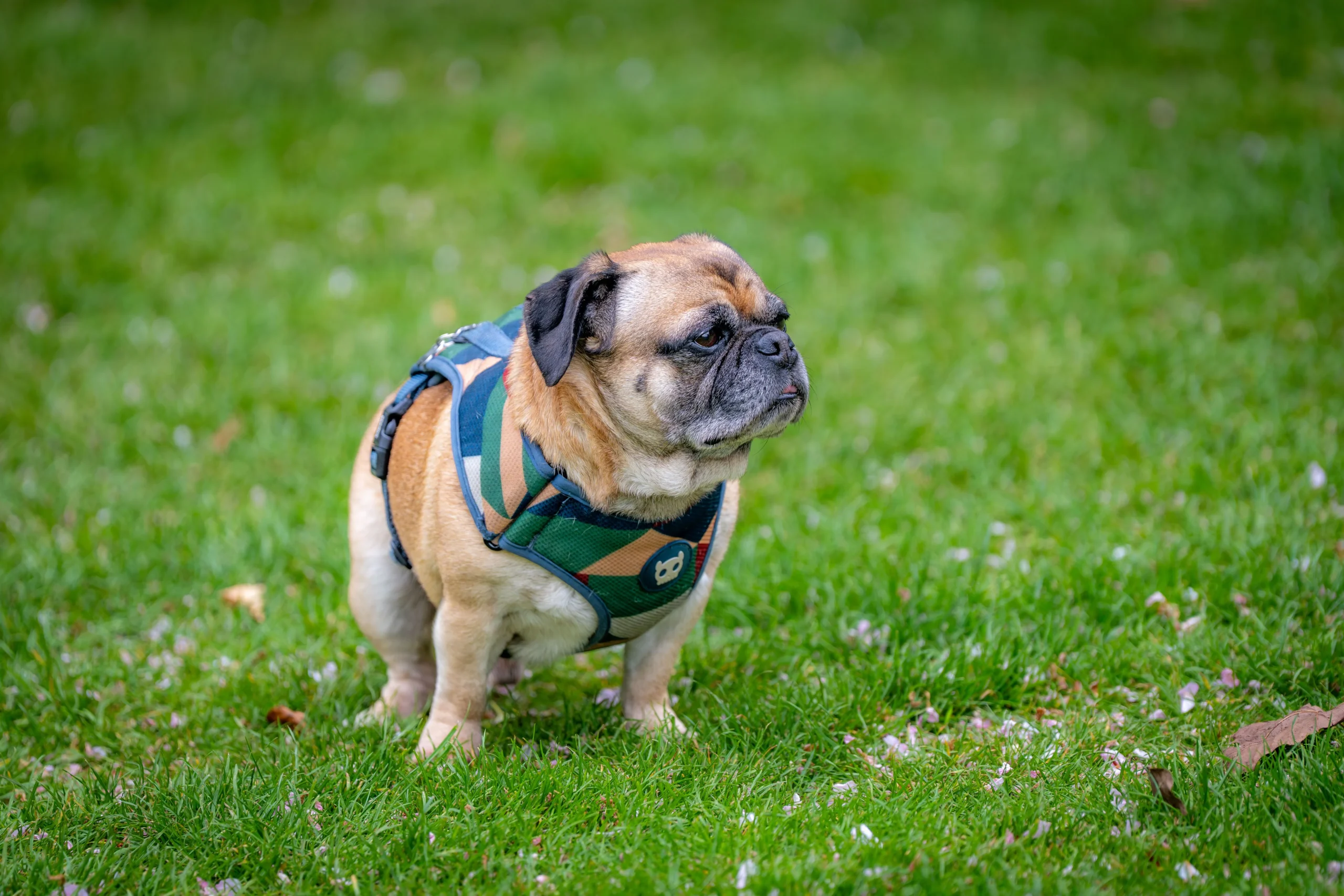
The best dog harness for a pug has to solve a problem specific to the breed: Pugs are brachycephalic, meaning their short muzzle already gives them less breathing margin than most dogs. Hence, any extra pressure on the neck from a collar or a poorly designed harness makes that worse. Pugs also have a distinctly broad, barrel chest and a compact neck that many generic harnesses were never shaped for.
Below are five harnesses that actually fit a pug’s proportions, followed by a full buying guide covering sizing, breathing safety, and fit.
Quick Comparison
Product | Best For | Style | Fit Range | Amazon |
|---|---|---|---|---|
Voyager Step-in Flex Harness | Overall pick | Step-in mesh vest | Small (15 to 18 in chest) | view on Amazon |
PUPTECK No Pull Dog Harness | Everyday no-pull use | Front and back clip, handle | Small | view on Amazon |
BULLHUG Adjustable Dog Harness | Broad-chested, no-choke fit | No-choke vest, handle | Small (bulldog-specific) | view on Amazon |
Frisco Small Breed Soft Vest | Budget pick | Step-in, back clip | 11 to 13 in chest | view on Amazon |
Kurgo Tru-Fit Smart Harness | Car travel and daily walks | Front and back clip, seatbelt tether | Small | view on Amazon |
Best Dog Harness for a Pug
1. Voyager Step-in Flex Harness – (Best Dog Harness for a Pug Overall)
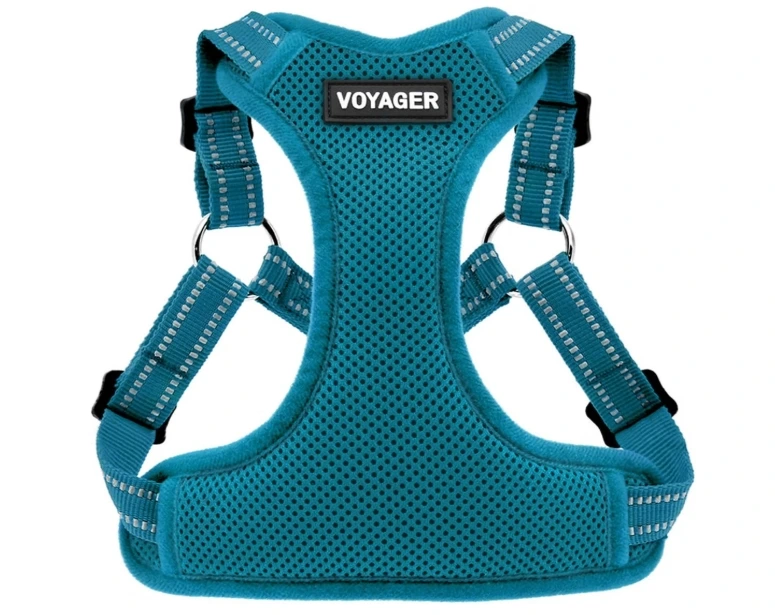

This harness uses three adjustable straps and a breathable air mesh body, which handles a pug’s wide chest and narrow-chest dogs alike without needing a special custom fit. The step-in design lets a pug’s front paws go through two openings before the harness clips at the back, avoiding anything pulled tightly over the head and skin folds.
| Pros | Cons |
|---|---|
| Three-point adjustment genuinely accommodates a Pug’s wide chest better than a fixed two-strap design | Single leash attachment point, so no front-clip no-pull redirect |
| Breathable air mesh helps a short-snouted breed stay cooler on warm walks. | Reflective bands are functional but basic rather than a dedicated safety feature. |
| Step-in fit avoids friction near facial skin folds that an over-the-head harness can cause. | Lightweight mesh offers less structure for a pug that pulls hard. |
Best for: everyday walks where comfort and an accurate chest fit matter most.
2. PUPTECK No-Pull Dog Harness – (Best No-Pull Harness for Pugs)
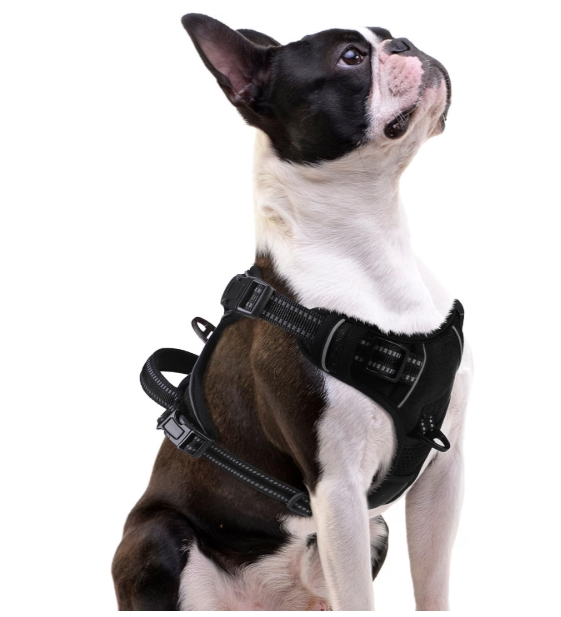
Built with a triangular design that spreads pressure evenly across the chest and shoulders, this harness gives Pugs two leash attachment points: a front clip for no-pull training and a back clip for calm walks. A bungee-style handle absorbs sudden tugs instead of transferring the full jolt to the dog’s body.
| Pros | Cons |
|---|---|
| Two leash attachment points cover both training and casual walking without buying two harnesses. | Slightly bulkier than a minimal step-in mesh design |
| A bungee handle absorbs sudden pulls more gently than a rigid handle. | Best results depend on correct sizing, since an ill-fitting no-pull harness loses its redirect effect. |
| Sizing guidance specifically references young Pugs, which most competitors don’t call out. | Fewer color options than fashion-focused small dog brands |
Best for: Pugs with a genuine pulling habit that need both a training option and a daily clip.
3. BULLHUG Adjustable Dog Harness – (Best No-Choke Harness for Broad Chests)
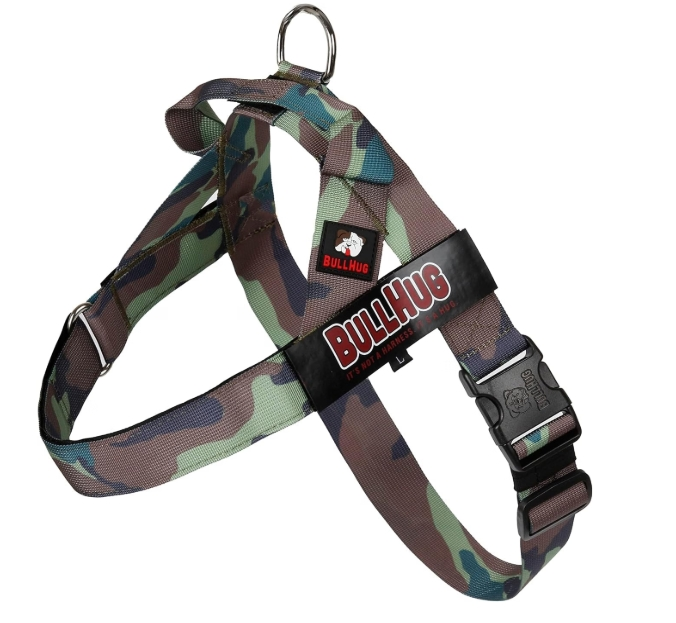
Purpose-built for broad-chested, brachycephalic breeds, this harness is completely non-choking and routes all leash pressure across the chest instead of the throat. A beefy metal leash ring and an easy-grip handle are sized specifically around bulldog and pug body proportions rather than a generic small-dog template.
| Pros | Cons |
|---|---|
| Designed specifically for the broad chest and compact neck shared by Pugs and Bulldogs | Velcro-based adjustment needs occasional cleaning to hold its grip over time. |
| No-choke construction is a genuine safety consideration for a breed with a limited breathing margin. | Single leash attachment point rather than a front and back clip combination |
| Handle gives real control in tight spaces without adding bulk elsewhere. | Sizing is brachycephalic-breed specific, so checking the brand’s own chart matters more than usual. |
Best for: owners who want a harness engineered specifically around a Pug’s body shape.
4. Frisco Small Breed Soft Vest – (Best Budget Harness for Pugs)
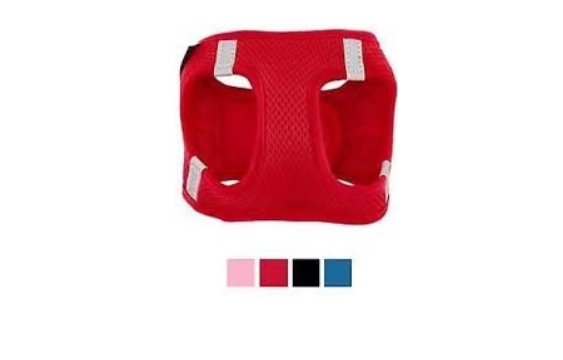
A simple, soft mesh vest with a step-in design and a fast-release buckle, this harness covers the essentials without extra features driving up the price. It’s a practical, comfortable option for a Pug’s short daily walks and potty breaks.
| Pros | Cons |
|---|---|
| Genuinely affordable while still covering the core comfort and safety basics | Back-clip only, with no front-clip redirect for a dog still learning leash manners |
| Soft mesh construction is gentle on a Pug’s skin and coat | Narrow chest bands mean careful measuring matters more than with adjustable designs |
| Step-in design with a fast-release buckle makes quick outings simple | Basic reflective elements rather than a dedicated visibility feature |
Best for: budget-conscious owners who want a simple, comfortable harness for short walks.
5. Kurgo Tru-Fit Smart Harness – (Best for Car Travel and Daily Walks)
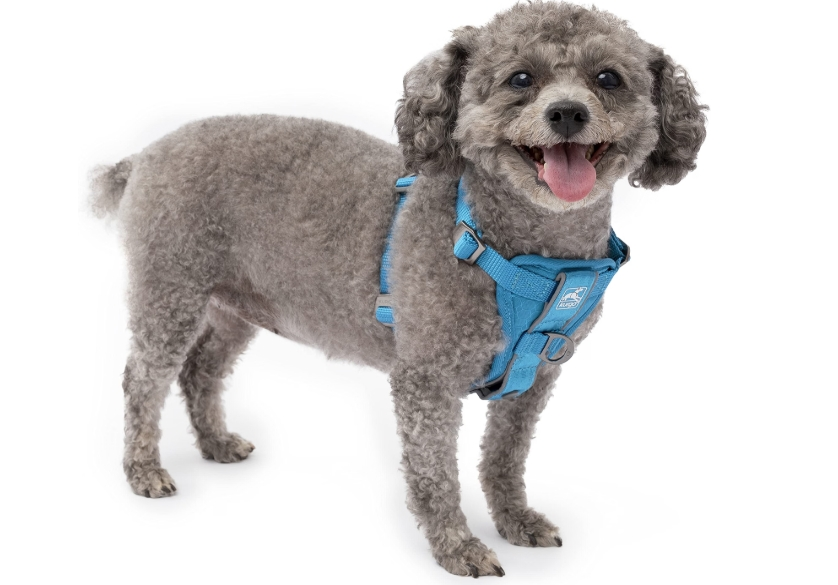
This harness pairs a padded chest plate with five adjustment points for a precise fit, plus front and back leash attachments for either no-pull training or casual walking. A built-in seatbelt tether extends the harness into a car restraint, which is useful for Pug owners who travel with their dog regularly.
| Pros | Cons |
|---|---|
| Doubles as a walking harness and a car restraint without buying a second product | The seatbelt tether is for restraint purposes only, not officially crash-tested. |
| A padded chest plate disperses pressure evenly, which suits a Pug’s sensitive chest and neck area. | Five adjustment points take a bit longer to dial in on the first fitting. |
| Five adjustment points allow a more precise fit than a simpler two-strap harness. | Costs more than basic step-in or vest designs |
Best for: Pug owners who travel by car regularly alongside daily neighborhood walks.
Buying Guide: How to Choose a Harness for a Pug
Why Pugs Need Specific Gear
Pugs are a brachycephalic breed, meaning their short muzzle and compact airway already give them less breathing margin than longer-nosed dogs. A collar concentrates leash pressure directly on the throat, which adds unnecessary strain on top of that. A harness that rests fully across the chest, with no pressure point on the neck, is the safer default for a Pug from the start.
Chest Girth Matters More Than Weight
Pugs can be heavier through the chest than other small dogs of similar weight, which means sizing by weight alone is often misleading. Measure around the widest part of the rib cage, just behind the front legs, and match that number to the specific harness’s size chart. After buckling, use the standard two-finger rule: two fingers should fit comfortably under the harness at both the neck and chest.
Step-In vs. Over-the-Head
Both styles work for Pugs, but each solves a different problem. A step-in harness avoids pulling anything over the dog’s head, which matters for Pugs that dislike having gear near their face and skin folds. An over-the-head harness with a wide front opening can also work well and tends to sit more securely once fitted, since there’s no risk of a pug backing out of a loose step-in fit. Try both styles if your pug resists one.
Preventing Skin Fold Irritation
Pugs have facial and body skin folds that can rub if a harness sits incorrectly or shifts during a walk. Look for a harness that sits securely behind the shoulders without sliding forward, since one that creeps toward the head under backward pressure is more likely to rub against skin folds and the neck.
Mobility and Shoulder Room
A harness that protects the throat but restricts the front legs is still the wrong harness. Pugs may not be endurance athletes, but many are surprisingly active, so check that the harness allows a full, unrestricted stride rather than cutting across the shoulder joint.
Collar or Harness
Most Pug owners keep a lightweight collar for ID tags and use the harness for actual leash walking, since a harness that comes on and off daily isn’t a reliable place for permanent identification. See our best collars for small dogs guide for matching picks, and our dog collar vs. harness comparison for a deeper look at when each makes sense. For a related brachycephalic breed with similar fit challenges, our best harness for a bulldog puppy guide covers the same body-shape considerations. For a broader look at redirecting a pulling dog, see our best no-pull dog harness guide.
Price
Basic step-in or vest harnesses for Pugs typically run $12 to $22. No-pull designs with front and back clips usually fall between $22 and $35. Premium harnesses with car-travel features or specialized brachycephalic sizing can run $35 and up.
Conclusion
For most Pugs, the Voyager Step-in Flex Harness offers the best everyday fit and comfort for the breed’s wide chest. Pugs with a genuine pulling habit do well in the PUPTECK No Pull Dog Harness, while owners who want gear engineered specifically around brachycephalic proportions should consider the BULLHUG Adjustable Dog Harness. Budget-conscious owners get solid basics from the Frisco Small Breed Soft Vest, and owners who travel by car regularly will appreciate the added functionality of the Kurgo Tru-Fit Smart Harness.
Frequently Asked Questions
Q: Why do Pugs need a harness instead of a collar?
A: Pugs are a brachycephalic breed with an already effortful airway, so a harness that rests across the chest instead of the throat avoids adding extra pressure on the neck during walks.
Q: How do I size a harness for a pug?
A: Measure around the widest part of the chest, just behind the front legs, rather than relying on weight alone, since Pugs can be heavier through the chest than other dogs their size.
Q: Should I get a step-in or over-the-head harness for a pug?
A: Both can work well. Step-in designs avoid pulling anything over the head and near facial skin folds, while a well-fitted over-the-head harness with a wide opening tends to sit more securely and resist backing out.
Q: Can a harness rub a pug’s skin folds?
A: It can if the harness shifts or slides forward during walks. Choose a harness that sits securely behind the shoulders and stays in place under backward leash pressure.
Q: Is a front-clip harness good for a Pug that pulls?
A: Yes. A front-clip attachment redirects a pulling Pug sideways rather than letting them lean forward, which helps when leash manners are still developing.
Q: How often should I check my Pug’s harness fit?
A: Check the fit every few months, and more often for a growing puppy, since weight changes can affect how the harness sits on a Pug’s distinctive chest and neck shape.