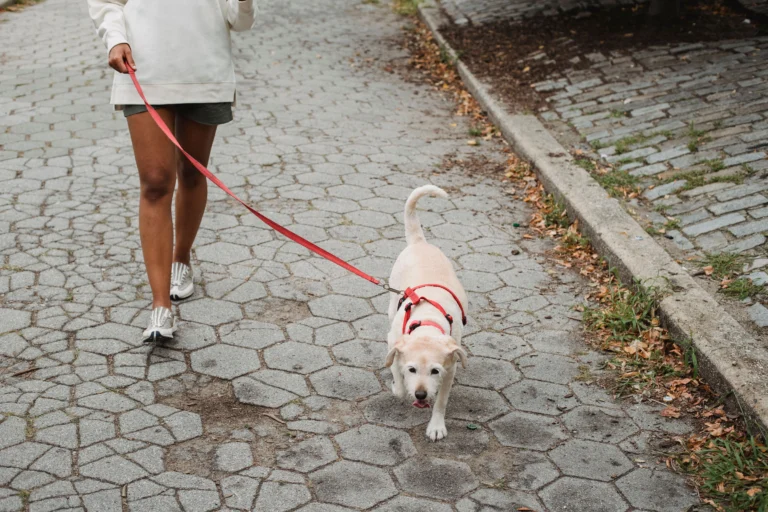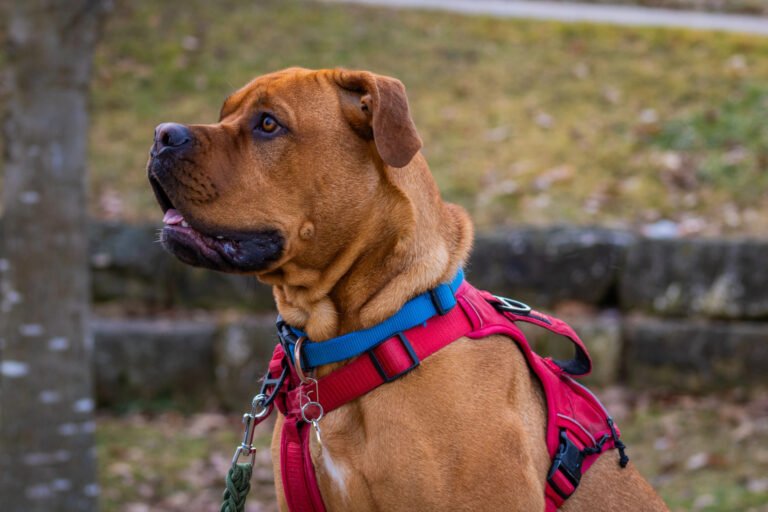
Y-Harness vs. H-Harness [What Changes Your Dog’s Gait]
Look at a Y-harness vs. H-harness from the front, and the name explains itself: one forms a Y down the chest, the other forms an H across it. That single difference in strap placement changes how freely a dog’s shoulders move, which matters more than most buyers realize when picking between them.
What the Letters Actually Describe

A Y-harness has a single strap running down the center of the chest that splits into two before reaching the shoulders, forming the Y shape. That split keeps the strap away from the point of the shoulder joint, leaving the front legs free to extend fully with each stride.
An H-harness uses a horizontal strap connecting two loops, one around the base of the neck and one around the chest, forming the H when viewed from above. It sits more rigidly across the front of the shoulders.
Why the Shoulder Strap Position Matters
This is the detail most product listings skip. A strap sitting directly across the shoulder joint restricts how far the front legs can reach forward. On a calm dog taking a short walk, that’s barely noticeable. On an active dog, or a long-backed breed like a Dachshund or Corgi, it can shorten the stride enough to cause an awkward gait or outright reluctance to walk.
The Y-shape avoids this by keeping the strap in front of or below the shoulder rather than across it, which is why it’s the more common recommendation for breeds with restricted movement to spare.
Which One Gives Better Control?
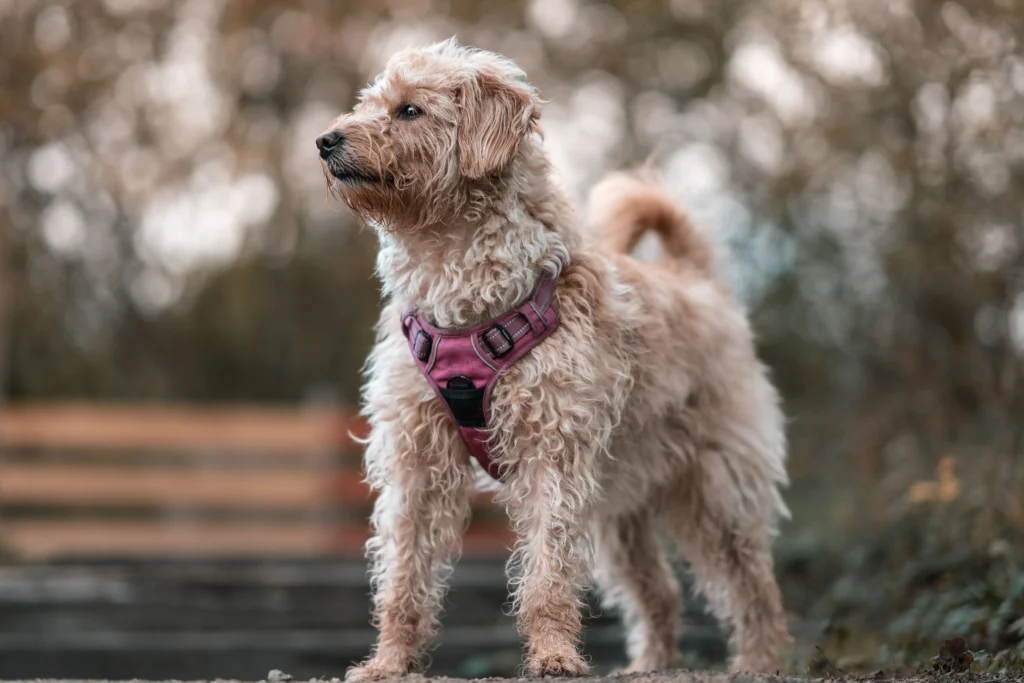
Sources genuinely disagree here, and that’s worth knowing before you buy based on a single claim. Some argue the H-harness gives more control since the rigid structure and multiple contact points hold a pulling dog more firmly. Others argue the Y-harness is better for active or pulling dogs because unrestricted shoulders let the dog move naturally instead of straining against the strap.
In practice, control comes more from clip placement than shape. A front-clip Y or H-harness will redirect a pulling dog. A back-clip version of either won’t. Shape affects comfort and range of motion more than it affects pulling behavior on its own.
The Overlap Nobody Mentions
Many modern harnesses blur the line entirely. If the front straps connect at a ring rather than being sewn into a fixed panel, the same harness can look like an H from above and a Y from the front at the same time. Manufacturers often use the two terms interchangeably, which is part of why the comparison confuses more people than it should.
Conclusion
The Y and H names describe where the strap sits relative to the shoulder joint, not which harness stops pulling better. Y generally wins for freedom of movement and narrow or long-backed breeds. H generally wins for a snugger fit on dogs with less space between the front legs. Either shape works well when it’s sized and fitted correctly, and clip placement matters more than shape for actual pulling control.
Frequently Asked Questions
Q: What is the main difference between a Y-harness and an H-harness?
A: A Y-harness has a vertical strap down the chest that splits before the shoulders. An H-harness uses a horizontal strap across the shoulders.
Q: Which harness gives a dog more freedom of movement?
A: The Y-harness, since its strap sits away from the shoulder joint and allows fuller extension of the front legs.
Q: Is a Y-harness or H-harness better for a dog that pulls?
A: Clip placement matters more than shape. A front-clip design redirects pulling in either the Y or H style.
Q: Which harness is better for a Dachshund or long-backed breed?
A: Generally, the Y-harness, since it avoids restricting the shoulder joint that affects a long-backed dog’s stride.
Q: Can a harness be both Y-shaped and H-shaped?
A: Yes. Many modern harnesses use a connecting ring instead of a fixed panel, forming both shapes depending on the angle.
Q: Does shape affect how a harness should be sized?
A: No. Both are sized by chest girth and the standard two-finger rule, regardless of the strap layout.