
Best Bark Collar for Small Dogs: 5 Top Picks and Buying Guide (2026)
The best bark collar for small dogs is not just a scaled-down version of a large-dog collar. Small breeds need a lighter receiver, contact points sized for a smaller neck, and correction levels calibrated for a lighter body, since a collar built for a 60-pound dog can be genuinely uncomfortable on a Chihuahua or Yorkie.
Below are five bark collars sized and calibrated specifically for small dogs, followed by a full buying guide covering correction type, sizing, and safe use.
Quick Comparison
| Product | Best for | Correction | Weight/Neck Range |
Amazon |
|---|---|---|---|---|
PetSafe NanoBark 2.0 |
Overall pick, smallest design | Static, 10 levels |
8 lb+, 4 to 15 in. neck |
View on Amazon |
Dogtra iQ Vibe |
Vibration-only, sensitive dogs |
Vibration only, 3 levels |
10 lb+ | View on Amazon |
PetSafe Elite Little Dog Bark Control |
Budget-friendly static option |
Static, 10 levels |
8 to 55 lb, up to 22 in neck |
View on Amazon |
DogRook Humane No-Shock Bark Collar |
No-shock training |
Beep and vibration only |
12 to 110 lb |
View on Amazon |
Educator BP-504 Bark-Less Pro |
Most customizable |
Tone, static (8 levels), or auto mode |
5 lb+, 6 to 23 in neck |
View on Amazon |
Best Bark Collar for Small Dogs
1. PetSafe NanoBark 2.0 – (Best Bark Collar for Small Dogs Overall)
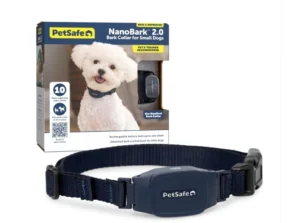
 Built with the size and weight of a smartwatch, this is one of the smallest bark collars on the market and is specifically designed for breeds like Chihuahuas, Yorkies, Dachshunds, and Beagles. Perfect Bark detection responds only to the wearer’s own bark, and the collar alternates between 10 auto-adjusting correction patterns to prevent a dog from growing used to a fixed level.
| Pros | Cons |
|---|---|
| Genuinely low-profile and lightweight, sized for small necks rather than adapted from a large-dog design | Static correction only, with no vibration-only alternative on this specific model |
| Bark-specific detection reduces false corrections from other pets or household noise. | Minimum weight of 8 pounds, so it is not suited to extremely tiny toy breeds under that threshold. |
| Variable correction patterns help prevent a dog from tuning out a fixed stimulation level over time. | Battery life (up to 7 days) is shorter than some bulkier competitors. |
Best for: owners of small and toy breeds who want the most purpose-built, comfortable fit available.
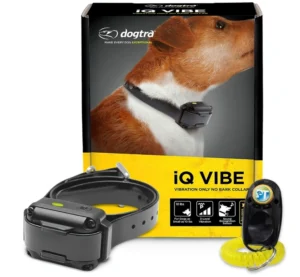
This collar skips static correction entirely and relies on vibration alone, delivered through a high-performance pager that Dogtra rates as roughly four times stronger than a phone’s vibration. A sound recognition sensor distinguishes the dog’s own bark from surrounding noise, and three vibration duration levels allow fine-tuning.
| Genuinely gentle option for dogs that respond poorly to static correction or owners who prefer to avoid it | Without a static option, it may be less effective on dogs that are highly motivated or persistent barkers. |
| Vibration strength is noticeably firmer than a typical phone buzz, so it registers clearly without shock. | A minimum weight of 10 pounds excludes the smallest toy breeds. |
| Automatic shutoff and a built-in delay between corrections prevent overcorrection. | Fewer color and strap options than some competing brands |
Best for: small dogs with sensitive temperaments and owners who want a shock-free approach.
Calibrated specifically for dogs under 55 pounds rather than a scaled-down large-dog collar, this model uses PetSafe’s Perfect Bark detection to minimize corrections triggered by another dog’s bark or background noise. Ten levels of progressive correction only increase if barking continues, which keeps the response proportionate to the behavior.
| Pros | Cons |
|---|---|
| Purpose-calibrated for small and medium dogs rather than adapted for large-dog hardware | Uses a replaceable PetSafe RFA-188 battery rather than USB rechargeable |
| Progressive correction that escalates only with continued barking keeps the response fair. | Static correction only, with no gentler vibration-only alternative on this model |
| Genuinely more affordable than premium small-dog-specific models like the NanoBark | Bulkier receiver than the NanoBark, which matters more on the smallest toy breeds |
Best for: owners who want static correction calibrated for small dogs without paying premium pricing.
4. DogRook Humane No-Shock Bark Collar – (Best No-Shock Budget Pick)
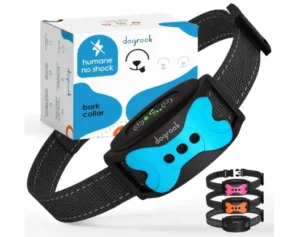
This collar uses beeps and vibration exclusively, with no static correction option, making it a common starting point for owners of small dogs who want to avoid electrical stimulation altogether. A microphone detects the dog’s bark pattern, and five sensitivity levels help match different barking styles.
| Pros | Cons |
|---|---|
| A completely shock-free design appeals to owners who want the gentlest possible first step. | Rated from 12 pounds and up, so it runs larger than some dedicated toy-breed options |
| The rechargeable battery lasts up to 14 days per charge, which reduces ongoing maintenance. | Microphone-only detection can be less precise in noisy multi-dog households. |
| Genuinely affordable compared to premium small-dog-specific collars | Without a static option, it may not be strong enough for a persistent, highly motivated barker. |
Best for: budget-conscious owners who want to try a fully shock-free approach first.
5. Educator BP-504 Bark-Less Pro (Best for Customizable Correction)
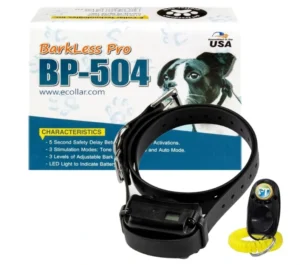
This collar offers three distinct modes: tone-only, 8 levels of static stimulation, and a fully automatic mode, plus three adjustable sensitivity settings that can detect not just barking but also howling and whining. The correction is designed to feel blunt rather than sharp, which the manufacturer positions as gentler than typical static bark collars.
| Pros | Cons |
|---|---|
| Three correction modes and three sensitivity settings give real flexibility to match a specific dog’s temperament. | More modes and settings mean a longer setup process than a simpler single-mode collar. |
| Detects whining and howling in addition to barking, which most competitors don’t offer | Short 2-hour battery life per charge compared to some longer-lasting competitors |
| Rated for dogs as light as 5 pounds, covering genuinely tiny breeds other collars exclude | Premium pricing relative to basic single-mode small-dog collars |
Best for: owners who want maximum flexibility to fine-tune correction type and sensitivity for a specific dog.
Buying Guide: How to Choose a Bark Collar for a Small Dog
Why Small Dogs Need Different Calibration
Small dogs bark for the same reasons large dogs do: alerting, boredom, anxiety, or a territorial response. The problem is that standard bark collars are often built around a 60-pound dog’s proportions, with receivers that are too heavy, contact points too large for a small neck, and stimulation output calibrated for a much bigger body. A collar that’s oversized or overpowered for a small breed can cause genuine stress rather than solve the barking problem, so choosing a model specifically sized and calibrated for small dogs matters more here than in almost any other collar category.
Correction Type for Sensitive Dogs
Vibration-only collars, like the Dogtra iQ Vibe, skip static correction entirely and rely on a physical buzz, which many small and sensitive dogs respond to well. Static correction, delivered in small, adjustable levels, tends to work faster on more persistent or highly motivated barkers but should be introduced gradually. Tone or beep-only collars offer the gentlest option but may be less effective for dogs already accustomed to background noise. If one correction type isn’t producing results after a couple of weeks of consistent use, switching types is usually more effective than simply increasing the level.
Sizing and Weight Minimums
Check both the neck circumference range and the minimum weight listed for each collar, since both affect fit and safety. Most reputable brands do not recommend bark collars for dogs under 8 pounds, since the contact points can’t maintain consistent contact on a very small neck, and correction levels considered mild for a medium dog may be disproportionate for a toy breed. For general collar sizing and measuring technique, see our dog collar sizing guide.
Detection Accuracy
A bark collar that misfires on other dogs, doorbells, or household noise teaches nothing except confusion. Look for collars with dedicated bark-detection technology, whether that’s a dual sound-and-vibration sensor or a sound recognition sensor tuned to the dog’s own voice, since detection accuracy matters more than raw correction strength for actually solving the barking problem. For a broader comparison of detection types across all dog sizes, see our best dog bark collar guide.
Using a Bark Collar Responsibly
Bark collars work best as part of a broader approach, not a standalone fix, and should generally be worn only during the specific situations where barking is a problem rather than as an all-day accessory. Puppies, dogs that are deaf, and dogs barking due to anxiety or an underlying medical issue are not good candidates for a correction-based bark collar, and a vet or certified trainer is worth consulting first in those cases.
Price
Basic vibration or tone-only collars for small dogs typically run $20 to $35. Static-correction models calibrated specifically for small breeds usually fall between $35 and $55. Premium, ultra-compact collars like the NanoBark or highly customizable models like the Educator BP-504 can run $55 and up.
Conclusion
For most small dogs, the PetSafe NanoBark 2.0 offers the best combination of a genuinely small, comfortable fit and reliable bark-specific detection. Sensitive dogs and owners who want to avoid static correction should look at the Dogtra iQ Vibe, while budget-conscious owners who still want static correction can consider the PetSafe Elite Little Dog Bark Control. Owners who want to start with a fully shock-free approach will do well with the DogRook Humane No-Shock Bark Collar, and those who want maximum flexibility to fine-tune correction type and sensitivity should look at the Educator BP-504 Bark-Less Pro.
Frequently Asked Questions
Q: What is the smallest dog a bark collar is safe for?
A: Most reputable brands don’t recommend bark collars for dogs under 8 pounds. Contact points can’t maintain consistent skin contact on a very small neck.
Q: Is a vibration or static bark collar better for a small dog?
A: Neither is universally better; vibration is gentler for sensitive dogs, and static works faster on persistent barkers. Switch types (not levels) if it isn’t working after two weeks.
Q: Can I use a large-dog bark collar on a small dog by turning it to the lowest setting?
A: It’s not recommended. Large-dog collars have heavier receivers and longer contact points that won’t fit a small neck comfortably.
Q: How do I know if a bark collar fits my small dog correctly?
A: Check the neck circumference and minimum weight listed for that model. Contact points should sit snugly against the skin without being tight.
Q: Are bark collars safe for puppies?
A: No. Most bark collars are intended for adult dogs above a certain age and weight, so check the manufacturer’s guidance first.
Q: How long does it take for a bark collar to work on a small dog?
A: Most dogs show noticeable improvement within one to two weeks of consistent, correctly fitted use, though results vary by dog.


One Comment